

Table of Contents
- What You'll Need for Small Batch Hot Sauce
- Step-by-Step: How to Make Small Batch Hot Sauce
- How to Sterilise Glass Bottles for Hot Sauce
- Hot Sauce pH Levels for Food Safety
- How to Thicken Homemade Hot Sauce
- Troubleshooting Common Small Batch Hot Sauce Problems
- Storing, Gifting and Using Your Small Batch Hot Sauce
- Frequently Asked Questions
Last Updated: September 26, 2026
What You'll Need for Small Batch Hot Sauce
Making small batch hot sauce at home starts with four things: fresh or dried chillies, an acid, aromatics, and clean equipment. Get those right and the rest is technique. This guide walks you through the whole process, from pepper choice to bottling.
The appeal is control. You decide the heat, the sweetness, and the smoke. A single batch fills two to four bottles, so you can test ideas without committing a whole afternoon.
Choosing the Right Peppers and Aromatics
Heat level is the first decision. The Scoville scale rates capsaicin content, and it ranges from mild jalapeños to fierce habaneros. Match the pepper to the mouth you're feeding.
- Jalapeño: grassy and mild, good for a green sauce
- Chipotle: smoked and dried jalapeño, deep and earthy
- Scotch bonnet: fruity and hot, built for Caribbean-style sauces
- Habanero: tropical and fiery, use with care
Aromatics do the heavy lifting on flavour. Charred onion, confit garlic, and a spoon of brown sugar or maple syrup round out the heat. Cider vinegar brings the tang that keeps everything balanced.

Equipment for Blending, Straining and Bottling
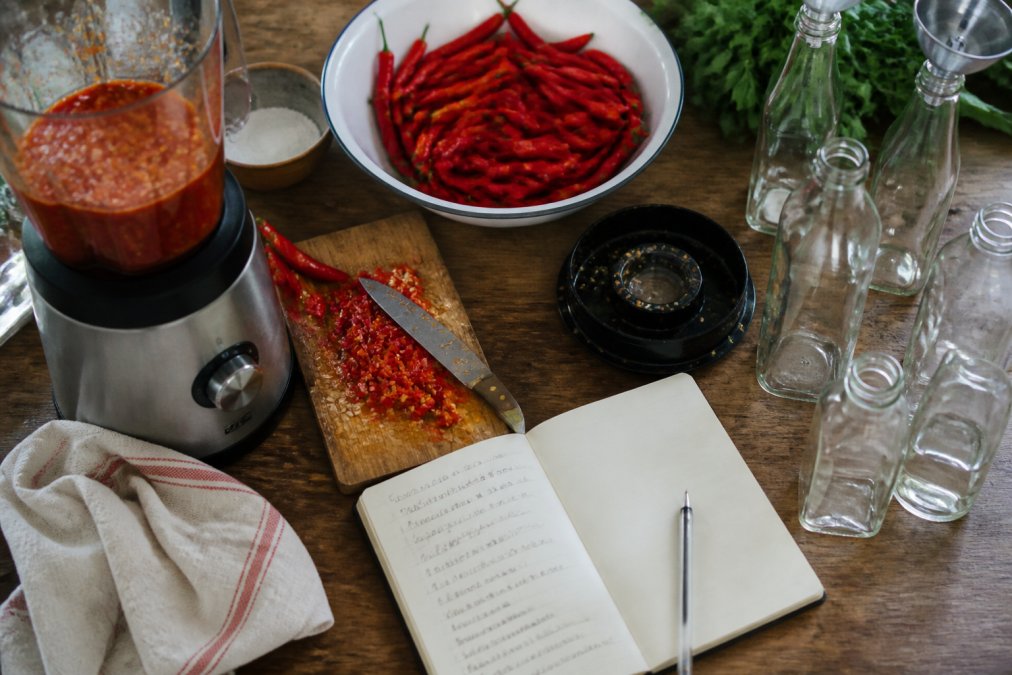
You don't need a professional setup. A blender or immersion blender handles the bulk of the work. A fine-mesh strainer smooths the texture. Glass bottles or mason jars hold the finished sauce.
Add a funnel, a ladle, and a pH meter or test strips. That last item matters more than most guides admit, and we'll come back to why.
Step-by-Step: How to Make Small Batch Hot Sauce
Here is the core method in seven steps. Total time runs about 90 minutes, most of it hands-off.
- Prep the peppers. Wash them, then remove stems. Keep seeds for more heat, discard for less.
- Char or smoke the peppers. Dry-roast in a pan or smoke low for depth.
- Soften the aromatics. Cook onion and garlic until sweet and golden.
- Blend everything. Add vinegar, salt, and any sweetener, then blitz smooth.
- Simmer the mix. Cook gently for 15 to 20 minutes to marry the flavours.
- Strain if you like. Skip this for a rustic sauce, strain for a glossy one.
- Bottle and cool. Fill sterilised bottles and refrigerate once cool.
Smoking, Charring and Layering Flavour
Smoke is where homemade sauce pulls ahead of shop-bought. If you own a smoker, cherry or oak wood gives a clean, sweet smoke. Smoke halved peppers for 60 to 90 minutes at low heat.
No smoker? You have options. A stovetop smoker works. So does a dry cast-iron pan over high heat, which chars the skins and adds a bitter-sweet edge. A drop of liquid smoke is the beginner-friendly shortcut, though it's easy to overdo. Start with a quarter teaspoon.
Blending, Simmering and Emulsifying
Emulsification is what separates a watery sauce from a glossy one. It happens when fat and liquid bind together into a stable mix. A small amount of oil, blended slowly, creates that silky body.
Simmering is the other half. Heat breaks down the peppers and lets the vinegar, sugar, and spice settle into one flavour profile. Keep it gentle. A hard boil dulls the brightness you worked for.
How to Sterilise Glass Bottles for Hot Sauce
You sterilise glass bottles for hot sauce by washing them in hot soapy water, rinsing well, then heating them in an oven at 140°C for 15 minutes. Fill them while still warm.
Here's the full method:
- Wash bottles and caps in hot soapy water
- Rinse until no soap remains
- Stand bottles on a baking tray, not touching
- Heat at 140°C for 15 minutes
- Fill while warm, then seal
Clean bottles stop mould and off-flavours before they start. Skipping this step is the most common reason a homemade batch spoils early.
Hot Sauce pH Levels for Food Safety
pH 4.6 is the line that matters. Below it, the sauce is acidic enough that Clostridium botulinum cannot grow, which is what makes a bottled sauce safe to keep at room temperature. Above it, you are relying on refrigeration, and even then the risk is not zero. This is the single most important number in home hot sauce making, and most guides skip it.
Why 4.6 and not something else. The figure comes from the acidity threshold below which the botulinum bacterium cannot produce its toxin. It is the same threshold used in home canning guidance, and it is why vinegar, not water, is the base liquid in almost every shelf-stable hot sauce.
How to test properly. A calibrated digital pH meter is the reliable option; strips are cheaper but read inconsistently on coloured, pulpy sauces. Calibrate the meter against the buffer solutions it ships with before every batch. Test the sauce once it has cooled to room temperature, not while hot, temperature skews the reading. Stir the sample, dip the probe, and wait for the number to settle. If it reads above 4.6, add vinegar in small increments, re-blend, and retest. Do not guess.
What actually lowers pH. Vinegar is the workhorse. Cider, white wine, and distilled vinegar all work; distilled has the most predictable acidity. Lime and lemon juice lower pH too but are less consistent bottle to bottle. Sugar and salt do not lower pH, they affect water activity, which is a separate safety lever. A sauce can be high in sugar and still spoil if the pH is wrong.
The shelf-stability decision. If the sauce tests at or below 4.6 and the bottles were properly sterilised, it can be stored in a cool, dark cupboard and will typically hold for several months. If it tests above 4.6 and you cannot bring it down, treat it as a fresh product: refrigerate and use within two weeks. There is no middle ground where a high-pH sauce sits on a shelf safely.
Water activity, briefly. Even at a safe pH, a sauce with a lot of fresh fruit or a low acid content can support mould. This is why simmering matters, it drives off water and concentrates the acid, and why you should never top up a finished sauce with fresh juice or water after bottling.
How to Thicken Homemade Hot Sauce
You thicken homemade hot sauce with a little xanthan gum, a cornflour slurry, or by simmering longer to reduce the liquid. Each gives a different result.
- Xanthan gum: a quarter teaspoon per batch, blends smooth, no cooking needed
- Cornflour slurry: mix with cold water first, then simmer to activate
- Reduction: simmer uncovered for 10 to 15 minutes, the simplest route
- Extra solids: blend in roasted carrot or tomato for body and sweetness
Xanthan gum is the pro choice because it doesn't dull the flavour. Cornflour can mute brightness if you use too much. Reduction is foolproof but concentrates the heat along with everything else.
Troubleshooting Common Small Batch Hot Sauce Problems
Most small batch hot sauce failures come down to four issues: separation, bitterness, mould, and heat that's either too fierce or too flat. Each has a fix.
| Problem | Likely Cause | Fix |
|---|---|---|
| Sauce separates | Not emulsified | Blend in a little oil slowly |
| Bitter taste | Over-charred skins | Peel skins, add sweetener |
| Mould on top | Dirty bottles or high pH | Sterilise properly, retest pH |
| Too hot | Too many seeds | Strain, add roasted carrot |
| Too mild | Weak peppers | Add cayenne or dried chillies |
A common mistake is blaming the peppers when the real issue is technique. Bitter sauce usually means scorched skins, not bad chillies. Watery sauce usually means you skipped emulsifying.
If your sauce tastes flat, it's often under-salted or under-acidified. A pinch of salt and a splash more cider vinegar can wake up a dull batch in seconds.
Storing, Gifting and Using Your Small Batch Hot Sauce
Store bottled hot sauce in a cool, dark cupboard if properly acidified. Once opened, keep it in the fridge. A well-made batch holds its flavour for months.
Gifting is half the fun. Small bottles with handwritten labels make a genuine present, and a homemade sauce beats most novelty gifts. Pair a bottle with a good vinegar and you have a ready-made hamper.
For everyday use, think beyond the chip.
Frequently Asked Questions
How long does homemade small batch hot sauce last in the fridge?
Most cooked, properly acidified sauces keep for 3 to 6 months in the fridge once opened. Shelf-stable versions that hit a pH below 4.6 and are bottled in sterilised jars can last up to a year unopened. Always check for off smells, mould or fizzing before use. If you used fresh fruit or a low-acid recipe, aim to finish it within a month for the best flavour.
Do I need to ferment my small batch hot sauce?
No. Fermentation adds tang and complexity, but a cooked or blended vinegar-based sauce is faster and safer for beginners. A vinegar-forward method takes about 30 minutes from start to bottle and still delivers bold flavour. If you do ferment, keep the mash submerged, use a clean jar and monitor for kahm yeast. Both routes work well as long as you manage acidity and sterilisation.
What is the best way to get a smoky flavour without a smoker?
You can char peppers directly in a dry cast-iron pan, under a grill, or with a kitchen blowtorch until the skins blacken. Chipotle vinegar or a few drops of liquid smoke can also add smokiness. For a deeper result, toast dried chillies briefly in a dry pan before rehydrating. These methods give a comparable depth to a full smoker for small batch hot sauce.
How do I know if my hot sauce is safe to eat?
If you are making a shelf-stable sauce, ensure it is properly acidified. If you cannot test, add enough vinegar or lime juice to taste clearly sharp and store the sauce in the fridge. Discard any jar with mould, a swollen lid or an off smell.