

Table of Contents
- Why Chicken Needs Umami (And How to Add It Fast)
- Umami-Rich Ingredients for Chicken You Already Own
- How to Make Chicken Taste Better With Marinades and Brines
- Best Umami Sauces for Poultry: A Buyer's Guide
- Cooking Techniques That Build Umami in Chicken
- Umami Pairing Guide by Chicken Cut
- Vegetarian and Vegan Umami Boosters for Chicken Alternatives
- Frequently Asked Questions
Last Updated: September 26, 2026
Why Chicken Needs Umami (And How to Add It Fast)
Chicken is the most popular meat in British kitchens, yet it is also the blandest. According to Food Standards Agency guidance on flavour and seasoning, home cooks consistently under-season poultry because they fear over-salting. That caution costs you flavour. Chicken is a blank canvas, and umami is the paint.
Umami is the savoury fifth taste alongside sweet, sour, salty and bitter. It comes from glutamate, an amino acid found naturally in meat, aged cheese, mushrooms and fermented sauces. Chicken contains some glutamate already, but not enough to register as a rich, savoury hit on its own.
At Spicy Rye's, we build seasoning blends and sauces around exactly this problem: how to push everyday chicken from "fine" to "I want this again tomorrow". Below, we cover easy ways to add umami to chicken using ingredients you likely already own, plus the techniques that lock that flavour in.
Umami-Rich Ingredients for Chicken You Already Own
The fastest umami boosters are already in your cupboard. Soy sauce, fish sauce, miso, Parmesan, tomato paste and dried mushrooms all carry concentrated glutamate, each bringing a different character to chicken.
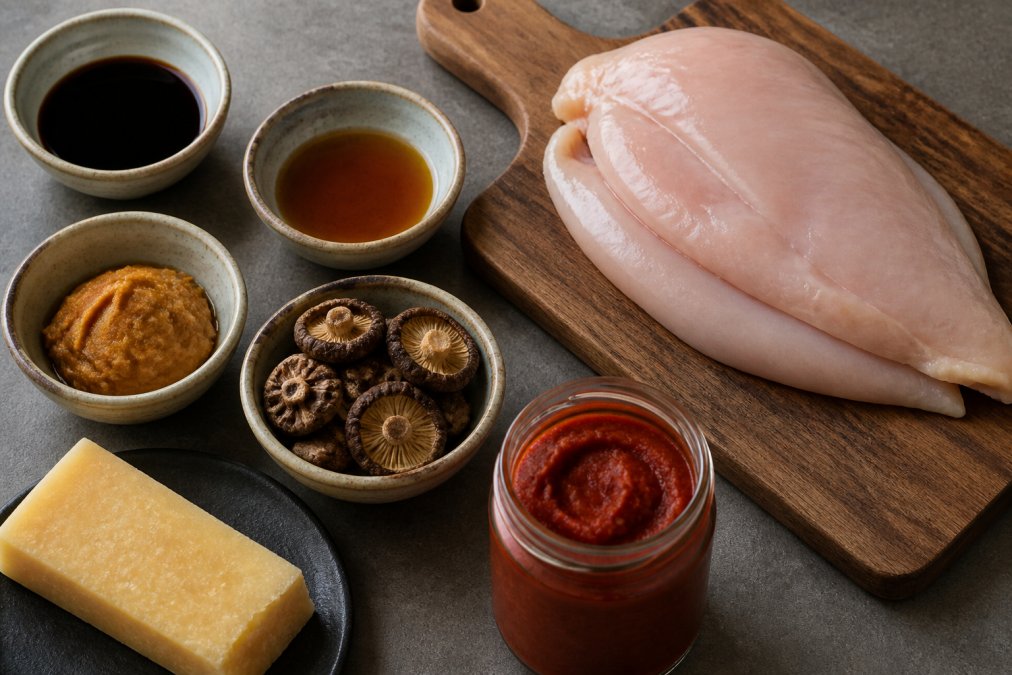
Soy Sauce, Fish Sauce and Miso: The Fastest Flavour Boosters
These three deliver umami in seconds because they are liquid or paste, coating chicken immediately. A tablespoon of soy sauce brushed onto a chicken breast before cooking adds savoury depth without changing texture.
Fish sauce is the most concentrated option. It smells assertive straight from the bottle, but the aroma cooks off and leaves pure savoury richness. Use around a teaspoon per two chicken breasts.
Miso paste works as both a marinade base and a glaze. White miso is milder and sweeter; red miso is saltier and deeper. Whisk either with a little oil and honey for an instant glaze.
Mushrooms, Parmesan and Tomato Paste: Slow-Build Depth
These take longer to release their flavour, but the payoff is a rounder, more complex result. Dried shiitake mushrooms are the standout: rehydrate them and use the soaking liquid as a stock for braising chicken.
Parmesan rinds dropped into a braise add savoury notes plain stock cannot match.
How to Make Chicken Taste Better With Marinades and Brines
Marinades and brines are the two most reliable ways to make chicken taste better, and they work on different principles. A brine uses salt water to season meat to the centre; a marinade flavours the surface and, with acid, tenderises the outer layer.
- 2 tablespoons oil
- 1 tablespoon acid (vinegar, lemon juice or yoghurt)
- 1 tablespoon umami booster (soy, miso or fish sauce)
- 1 teaspoon seasoning blend
Marinades vs. Finishing Sauces: When to Use Each
Marinades work before cooking, finishing sauces work after. This distinction matters more than most guides admit.
Best Umami Sauces for Poultry: A Buyer's Guide
The best umami sauce for poultry balances savoury depth with enough acidity or sweetness to keep chicken interesting. A sauce that is only salty or only smoky quickly becomes one-dimensional, so the real skill is reading a label and knowing what you are buying.
Fermented Bases vs. Flavour Enhancers
Most supermarket sauces deliver umami one of two ways. The first is fermented ingredients, soy sauce, miso, anchovy, fermented bean paste, mushroom extract, which carry naturally occurring glutamate and other savoury compounds built up during fermentation, so they taste layered rather than flat. The second is added glutamates, often listed as yeast extract, hydrolysed vegetable protein or monosodium glutamate. These work fast but hit a single note.
What to Look For in a Quality Umami Sauce
Four things separate a sauce worth keeping in your cupboard from one that sits unused:
- A real savoury base: fermented soy, miso, anchovy or mushroom, not just salt and yeast extract
- Balance: some acidity or sweetness to lift the savoury note
- Versatility: works as a marinade, glaze and finishing sauce
- Clean ingredients: no unnecessary preservatives or artificial colours
Marinade, Glaze or Finishing Sauce: How the Same Bottle Behaves Differently
This distinction changes which sauce you should reach for.
A marinade must be thin enough to penetrate and stable enough to sit on raw meat for hours. Soy- and vinegar-based sauces work well because their acidity lightly tenderises the surface; a thick, sugar-heavy barbecue sauce makes a poor marinade because the sugar burns before the meat cooks through.
| Product | Price | Best Use on Chicken | Flavour Character |
|---|---|---|---|
| Smoky Chipotle BBQ Sauce | £7.95 | Glaze during grilling | Smoky, full-bodied |
| Bourbon & Honey BBQ Sauce | £6.95 | Finishing sauce | Sweet, smoky |
| Secret Chicken Seasoning | £5.56 | Dry rub or marinade | Zesty, herby |
| Chipotle Vinegar | £6.95 | Marinade base | Smoky, tangy |
Cooking Techniques That Build Umami in Chicken
Heat creates umami. The Maillard reaction, browning when proteins and sugars meet high heat, generates new savoury compounds raw chicken simply does not have, which is why a golden roast chicken tastes deeper than a poached one. But technique matters as much as heat, and different cuts respond to different methods.
Browning, Deglazing and Reduction
These three form a chain: browning creates the flavour, deglazing lifts it off the pan, reduction concentrates it.
Dry-Brining and Ageing: The Umami Step Most Guides Skip
Umami in chicken is not only about what you add, it is about what happens inside the meat before it hits the heat.
Matching the Method to the Cut
Not every cut rewards the same technique. Lean breast dries out under long, slow heat, so it benefits from a hot, fast sear and a short rest. Thighs and legs have more connective tissue and fat, so they reward braising, a long, moist cook that breaks collagen into gelatin, adding body and a rich, coating mouthfeel that reads as umami.
Umami Pairing Guide by Chicken Cut
Different cuts handle umami differently. Matching the booster to the cut beats applying the same approach to everything.
| Chicken Cut | Best Umami Approach | Why It Works |
|---|---|---|
| Breast | Quick marinade or finishing sauce | Lean surface absorbs fast; dries out with long cooking |
| Thighs | Long marinade or braise | Higher fat handles bold, slow-built flavour |
| Wings | Dry rub plus glaze | Rub seasons skin; glaze adds sticky finish |
| Whole bird | Brine plus herb butter under skin | Seasons through; skin crisps while meat stays juicy |
Vegetarian and Vegan Umami Boosters for Chicken Alternatives
Plant-based chicken alternatives need umami help more than real chicken does. They lack meat's natural glutamate, so they taste flat unless you build savoury flavour deliberately.
Frequently Asked Questions
Can I use umami seasoning on chicken?
Yes. Dry rubs and seasoning blends are one of the easiest ways to add umami to chicken. Look for blends that include smoked paprika, garlic, onion, nutritional yeast, or dried mushrooms. Apply the rub directly to the skin or mix it with a little oil to form a paste. For a quick boost, use a dedicated chicken seasoning and let it sit for 15 minutes before cooking. This builds a savoury base without extra effort.
How to add umami flavor without MSG?
You do not need MSG to add umami to chicken. Ingredients like soy sauce, fish sauce, miso, anchovies, Parmesan, tomato paste, and dried shiitake mushrooms are naturally rich in glutamate. A splash of soy sauce in a marinade or a spoon of miso whisked into a glaze adds instant depth. Slow-cooked chicken stock also concentrates umami. These pantry staples deliver savoury notes without any additives.
Does soy sauce add umami to chicken?
Soy sauce is one of the most effective umami boosters for chicken. It contains naturally fermented glutamates that intensify savoury flavour. Use it in marinades, brines, or finishing sauces. For a 500g chicken breast, 1 to 2 tablespoons of soy sauce adds noticeable depth. For a different profile, try a chipotle vinegar or a smoky BBQ sauce as a finishing glaze. Both bring umami-rich complexity.
What are the best pantry staples for adding umami to poultry?
Stock your pantry with soy sauce, fish sauce, miso paste, tomato paste, anchovy fillets, dried shiitake mushrooms, Parmesan, and balsamic vinegar. These ingredients cover a range of flavour profiles. For a quick weeknight meal, a dry rub like a chicken seasoning or a glaze made from a good BBQ sauce works just as well. A jar of chipotle vinegar can also add smoky depth to marinades and dressings.
Chicken is only as good as what you put on it, and the difference between a bland weeknight dinner and one worth repeating comes down to a handful of savoury ingredients and a hot pan. Spicy Rye's makes that easier with seasoning blends and sauces built for exactly this job, from the Secret Chicken Seasoning for dry rubs to the Smoky Chipotle BBQ Sauce for glazing. Explore the full range and find the flavour that fits your kitchen. Shop now.