

Table of Contents
- What Makes a Hot Sauce Artisanal?
- How to Choose Your First Artisanal Hot Sauce
- 5 Beginner-Friendly Artisanal Hot Sauces to Try
- How to Use Hot Sauce in Cooking (Without Overdoing It)
- Premium Hot Sauce Gift Sets for New Spice Lovers
- Storing and Preserving Your Artisanal Hot Sauce
- Conclusion
- Frequently Asked Questions
Last Updated: September 10, 2026
What Makes a Hot Sauce Artisanal?
Artisanal hot sauce is a small-batch condiment made with whole, recognisable ingredients rather than industrial additives, produced in batches small enough for the maker to control flavour at every stage. The term signals craft and provenance, not just heat.
That distinction matters. Supermarket shelves are full of shelf-stable sauces built around cheap vinegar, thickeners and stabilisers, engineered to last for years, not because the recipe is good.
At Spicy Rye's, we built our range around premium ingredients, and flavour profiles spanning fiery heat to smoky sweetness. A handcrafted sauce should taste like someone made a decision about every ingredient, not like a factory optimised for cost per litre.
Small-Batch Production and Ingredient Quality
Small-batch production separates a gourmet sauce from a mass-produced one. Working in small volumes, a maker can adjust acidity, pepper mash ratios and fermentation time by taste rather than by formula.
Look for these markers on the label:
- Named pepper varieties rather than "chilli extract"
- Real fruit, vinegar or honey instead of glucose syrup
- No potassium sorbate, sodium benzoate or artificial colouring
- A batch number or production date, which shows the maker tracks each run
The trade-off is shelf life. Preservative-free sauces generally keep for a shorter window once opened, so buy in sizes you'll actually finish.
How to Choose Your First Artisanal Hot Sauce
Choosing your first artisanal hot sauce comes down to three things: heat level, base style and how you plan to use it. Get those right and you'll avoid buying something so fierce it sits untouched in the cupboard.
Reading the Scoville Scale Without Fear
The Scoville scale measures capsaicin concentration in Scoville Heat Units (SHU). A bell pepper sits at zero, a jalapeño in the low thousands, and a habanero in the hundreds of thousands (peer-reviewed research). Ghost pepper and naga varieties push far higher.
You don't need to memorise numbers. You need a rough map:
| Pepper | Approximate Heat | Beginner Verdict |
|---|---|---|
| Bell pepper | 0 SHU | No heat |
| Jalapeño | Low thousands | Safe starting point |
| Habanero | High hundreds of thousands | Bold, use sparingly |
| Naga / ghost pepper | Over a million | Advanced only |
For a first bottle, aim for the jalapeño-to-habanero band. You get real flavour and a genuine kick without overwhelming your palate.
Vinegar-Based vs Fermented: What to Expect
Vinegar-based sauces are bright, sharp and thin. The acidity carries pepper flavour quickly and cuts through rich food, which is why they work on fried dishes and grilled meats.
Fermented sauces take a different route. Peppers are salted and left to culture, developing umami, depth and a rounder heat. They're often thicker and more complex, closer to a condiment you'd spoon than a sauce you'd shake.
Neither is better: vinegar-based suits clean, punchy flavour, fermented suits slow-building savoury depth. If unsure, buy one of each and compare them on the same dish.
5 Beginner-Friendly Artisanal Hot Sauces to Try
The best first bottles balance flavour and heat so neither overwhelms the other. Here are five styles worth starting with.
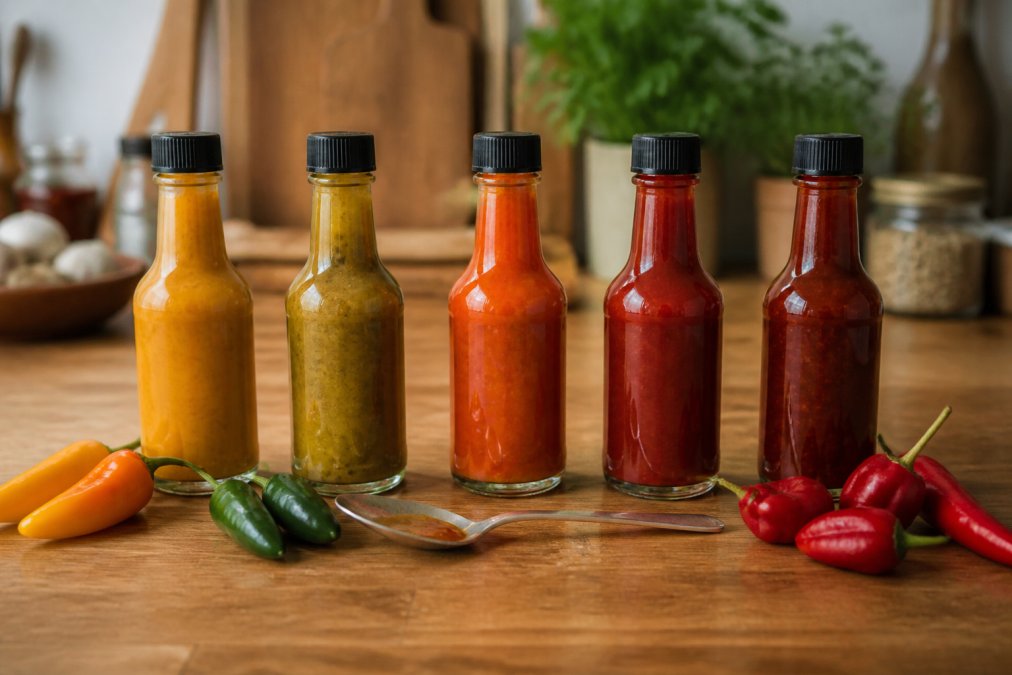
1. Mango Pepper Sauce (£7.95) Tropical sweetness meets a peppery finish. The gateway bottle for anyone nervous about heat, since ripe mango softens the punch. Try it on grilled prawns, fish tacos or whisked into a salad dressing.

2. Lemon Pepper Sauce (£7.95) Zesty, tangy and built for seafood. Lemon's acidity plus cracked black pepper and habanero heat suits grilled fish and chicken wings, and makes an excellent salad dressing base with olive oil and honey.
3. Hot Honey Pepper Sauce (£6.95) Golden honey with fiery peppers, the most versatile bottle here. Drizzle it on fried chicken, pizza, cheese boards or a citrus cocktail. If you only buy one, buy this.
4. Jerk & Pineapple Sauce (£7.95) Caribbean-inspired warmth with sweet pineapple brightness. Use it as a marinade for chicken, pork or kebabs, where it caramelises on the grill.
5. Tomato Ketchup (£7.95) A spicy upgrade on the classic, made from vine-ripened tomatoes. The safest entry point: if you like ketchup, you'll like this. Perfect on fries, burgers and breakfast eggs.
How to Use Hot Sauce in Cooking (Without Overdoing It)
Learning how to use hot sauce in cooking is about timing, quantity and matching the right bottle to the right plate. Most beginners get the first two right and the third wrong, they buy one bottle, use it on everything, then wonder why it tastes flat.
A few rules that hold up in practice:
- Finish, don't drown. A few drops at the table lets each person control their own heat. As a working guide, start with a quarter of a teaspoon per portion and adjust upward, you can always add, never subtract.
- Build in layers. Add a little during cooking for depth, then a little more at the end for brightness. The heat compounds as a sauce reduces, so the mid-cook addition should be roughly half what you'd use at the table.
- Balance with fat and acid. Capsaicin is fat-soluble, so dairy, oil and coconut milk genuinely soften the burn rather than masking it (PubMed). Citrus and vinegar lift the flavour; sugar and salt amplify it. If a dish tastes harsh, lime usually fixes it faster than more sauce.
- Taste before you serve. A sauce that seems mild cold can turn aggressive once reduced, and there's no way to remove heat from a finished dish.
A Flavour-Pairing Framework for Beginners
Rather than memorising dishes, learn the four sauce families and what each is built to do. Once you can place a bottle in a family, pairing takes about two seconds.
| Sauce family | Flavour signature | Best with | Avoid with |
|---|---|---|---|
| Vinegar-forward (e.g. lemon pepper, classic cayenne) | Bright, sharp, thin | Fried food, grilled white fish, wings, chips | Creamy pasta, delicate shellfish |
| Fermented / umami (e.g. chilli mash, sriracha-style) | Savoury, deep, rounder heat | Eggs, rice bowls, noodles, burgers, roasted veg | Light salads, fruit desserts |
| Fruit-forward sweet-heat (e.g. mango, pineapple, jerk) | Tropical, jammy, gentle burn | Prawns, pork, kebabs, halloumi, tacos | Steak, strong blue cheese |
| Honey-based (e.g. hot honey) | Sticky, floral, slow warmth | Pizza, fried chicken, cornbread, cheese boards, cocktails | Anything already sweet |
To test a new bottle: put a drop on a plain cracker, then a drop on a cracker with butter or cream cheese. The fat version tastes rounder and less aggressive, telling you whether the sauce belongs on rich or clean food.

Three Beginner Mistakes Worth Avoiding
- Using one bottle for everything. A vinegar-forward sauce that sings on chips tastes thin and sour on creamy risotto. Two or three bottles covering different families carry you through most weeknight cooking.
- Adding sauce at the start of a long braise. The volatile aromatics cook off and you're left with heat but no flavour. Add early for depth, then finish with a fresh drizzle.
- Skipping the acid. If a dish tastes muddy after you've added sauce, it usually needs lime, lemon or a splash of vinegar, not more chilli.
Premium Hot Sauce Gift Sets for New Spice Lovers
Premium hot sauce gift sets solve the hardest problem for beginners: choosing. Instead of committing to one bottle, a curated set lets someone work through several flavour profiles and find their favourite.
For a first-time spice lover, look for a set that spans mild to wild rather than one that simply piles on heat. The Sweet Heat Collection Gift Set (£26.95) is built exactly that way, pairing Cognac & Honey Pepper Sauce, and Hot Honey Pepper Sauce with a gift box and recipes. It's the safest introduction because every bottle leans sweet before it leans hot.

If the recipient already enjoys a challenge, The Heat Seekers Gift Set (£49.95) goes the other direction, with Original Hot Pepper Sauce, plus games, recipes and gloves. That's a gift for someone who wants the experience, not just the sauce.
Storing and Preserving Your Artisanal Hot Sauce
Preservative-free sauces need more care than supermarket bottles: without potassium sorbate or sodium benzoate, nothing stops mould, yeast or lactic acid bacteria once the seal is broken. What slows them down is acidity, sugar, salt and temperature, which is why two sauces bought the same day can have very different shelf lives.
What Actually Determines Shelf Life
- Acidity (pH). Vinegar-based sauces typically sit below pH 4, the threshold where harmful bacteria struggle to grow. More vinegar means a longer-keeping bottle.
- Sugar content. Sweet, fruit-forward and honey-based sauces are the opposite problem: sugar feeds spoilage yeasts. A mango or honey sauce will generally turn faster than a straight chilli-and-vinegar sauce, even at the same heat level.
- Salt. Fermented sauces carry salt from the brine, which acts as a mild preservative and helps them hold up well in the fridge.
- Oil content. Any sauce with a visible oil layer, chilli oil, garlic-in-oil styles, needs stricter handling, because oil can harbour anaerobic bacteria that don't announce themselves with visible mould.
Practical Storage Rules
- Refrigerate after opening, even for vinegar-based sauces. Room-temperature storage is fine before opening, but the clock starts the moment you break the seal.
- As a working guide, expect a vinegar-forward sauce to keep for several months in the fridge, a fermented sauce for a similar window, and a sweet or honey-based sauce for a shorter one. Treat the label's guidance as the ceiling, not the target.
- Use a clean spoon or shake directly, never double-dip a knife that's been on food back into the bottle.
- Store away from direct sunlight and away from the hob, both of which degrade colour and flavour faster than the fridge will.
- Check for changes in colour, smell, texture or fizzing. A little separation is normal; fizzing, off-smells or fuzzy growth are not.
A Beginner-Friendly Rotation Habit
Because preservative-free sauces have shorter windows, buy sizes you'll actually finish. A 150ml bottle used three times a week empties in roughly a month; a 250ml bottle bought 'for the collection' often won't. Building a range? Buy the smallest size of each style first, note which you reach for, then commit to a larger bottle.
Conclusion
The hardest part of buying your first artisanal hot sauce isn't finding heat, it's finding a bottle you'll reach for on a Tuesday night. Start in the jalapeño-to-habanero band, pick a flavour profile matching food you already cook, and let your palate develop.
That's exactly what Spicy Rye's is built for. Our range spans fiery heat to smoky sweetness, made with premium ingredients, so every bottle earns its place in your kitchen. Whether you start with the Mango Pepper Sauce, the Hot Honey Pepper Sauce, or a Sweet Heat Collection Gift Set, you're getting unbeatable flavour rather than a novelty.
Get started with Spicy Rye's and find the bottle that makes your weeknight dinners worth looking forward to.
Frequently Asked Questions
What defines an artisanal hot sauce?
An artisanal hot sauce is made in small batches using handcrafted methods, often with organic ingredients and no artificial preservatives. Unlike mass-produced condiments, artisanal sauces focus on complex flavour profiles, using pepper mash, fermentation, and carefully sourced chillies. The result is a shelf-stable product with depth, acidity, and umami that you can taste in every drop. Look for clear ingredient lists and batch production details on the label.
How do I choose a hot sauce if I have a low spice tolerance?
Start with sauces in the mild to medium range, typically under 5,000 Scoville Heat Units. Look for flavour-forward options where fruit, honey, or citrus leads and heat follows. Tomato ketchup with a spicy twist or a mango pepper sauce are excellent gateway choices. Use small amounts, about a quarter teaspoon, and build up. Your heat tolerance develops over time, so begin gently and let your palate adjust.
Are artisanal hot sauces healthier than mass-produced brands?
Artisanal hot sauces often contain fewer additives, no artificial preservatives, and higher-quality ingredients. Mass-produced brands may include stabilisers, added sugars, or preservatives to extend shelf life. That said, healthiness depends on the specific product. Check labels for recognisable ingredients, minimal sugar, and no preservatives if that matters to you. Artisanal sauces can be preservative-free and rely on natural acidity for shelf stability.
What are the best ways to pair hot sauce with everyday meals?
Pairing depends on the sauce's flavour profile. Fruit-forward sauces like mango or pineapple work well with seafood, tacos, and salads. Smoky or vinegar-based sauces suit grilled meats, burgers, and breakfast eggs. Hot honey sauces drizzle beautifully over pizza, fried chicken, or cheese boards. Start with a small amount on the side, taste, then adjust. A flavour-pairing chart can help you match sauce consistency and heat level to the dish.
How should I store artisanal hot sauce once opened?
Refrigerate after opening to maintain flavour and freshness. Most artisanal hot sauces last three to six months in the fridge, though high-acidity vinegar-based sauces may keep longer. Check the label for specific guidance. Always use a clean spoon or shake the bottle directly onto food to avoid contaminating the sauce. If you notice off smells, discolouration, or mould, discard it. Proper storage keeps your sauce shelf-stable and ready to use.