

Table of Contents
- What Does Preservative-Free Food Actually Mean?
- The Real Benefits of Clean Label Food for Your Health
- Reading Food Labels for Additives: A Simple Checklist
- Why Do Manufacturers Use Preservatives in the First Place?
- The 'Natural Preservative' Paradox: Not All Clean Labels Are Equal
- How to Store Preservative-Free Hot Sauce and Other Pantry Staples
- Making the Switch Without Breaking the Budget
- Conclusion: Small Changes, Better Flavour
- Frequently Asked Questions
Last Updated: September 6, 2026
What Does Preservative-Free Food Actually Mean?
Preservative-free food is any product made without synthetic additives designed to extend shelf life, prevent spoilage, or alter colour and texture. This means no artificial chemicals such as sodium benzoate, potassium sorbate, or BHA/BHT. Instead, the product relies on natural preservation methods, traditional techniques, and careful handling to maintain freshness.
The distinction matters more than most shoppers realise. A product labelled "preservative-free" should contain only whole foods and natural preservation agents like vinegar, salt, sugar, or citrus, ingredients that have preserved food for centuries.
The Real Benefits of Clean Label Food for Your Health
Clean label food offers benefits that extend far beyond avoiding artificial chemicals. Many people report that switching to preservative-free options improves their digestive health and reduces bloating, because your body processes whole ingredients differently than synthetic compounds.
Why Your Body Reacts Differently to Synthetic Preservatives
Synthetic preservatives serve a functional purpose in manufacturing, but your body treats them as foreign substances. Some individuals experience allergic reactions, headaches, or skin irritations after consuming artificial chemicals. Others notice improvements in energy levels and mental clarity when they eliminate these additives. The emerging research around food additives and metabolic disruption suggests that minimising synthetic intake supports overall wellbeing. According to guidance from the Food Standards Agency on food additives, additives must be assessed for safety before approval, yet individual sensitivity varies widely.
The nutritional density of preservative-free food often surpasses processed alternatives because the ingredients haven't been degraded by extensive processing.
The Impact on Specific Demographics
The benefits of preservative-free food are not uniform across the population. For certain groups, the difference is more pronounced and worth understanding before you switch.
Parents of young children. Children's developing metabolic and immune systems are more vulnerable to additive load. The British Dietetic Association notes that while all approved additives are safe for the general population, some parents report behavioural changes after certain artificial colours and preservatives. Reading labels becomes more critical when shopping for small bodies.
Athletes and active individuals. For those training regularly, inflammation management is a constant concern. Synthetic preservatives like BHA/BHT have been shown in some studies to induce oxidative stress, counteracting the anti-inflammatory benefits of a training diet.
People with histamine intolerance. Certain preservatives, particularly sulphites and benzoates, can trigger histamine release in sensitive individuals, causing symptoms from nasal congestion and headaches to skin flushing and digestive discomfort. Eliminating these additives often brings rapid relief.
The Additive Load Argument
The 'additive load' concept holds that no single preservative may cause problems in isolation, but the cumulative effect of multiple additives across a day's meals can overwhelm your body's detoxification pathways. This is why some people feel better on a preservative-free diet without ever identifying a specific trigger.
The Nutritional Density Advantage, Quantified
The processing required to add synthetic preservatives often strips food of heat-sensitive vitamins like vitamin C and B-complex vitamins. A preservative-free product made from fresh ingredients simply contains more of what your body needs.
Reading Food Labels for Additives: A Simple Checklist
Reading food labels for additives becomes second nature once you know what to look for. Start by scanning the ingredient list, not the front of the packaging.
Hidden Names for Artificial Preservatives
Manufacturers often disguise artificial preservatives behind unfamiliar names. Here's what to watch for:
- E-numbers from E200 to E299 (preservatives), including E211 (sodium benzoate) and E202 (potassium sorbate)
- BHA (E320) and BHT (E321), common in cereals and fats
- Sulphites, listed as sulphur dioxide or sodium sulphite
- Nitrates and nitrites, frequently found in cured meats
- Calcium propionate, common in commercial bread
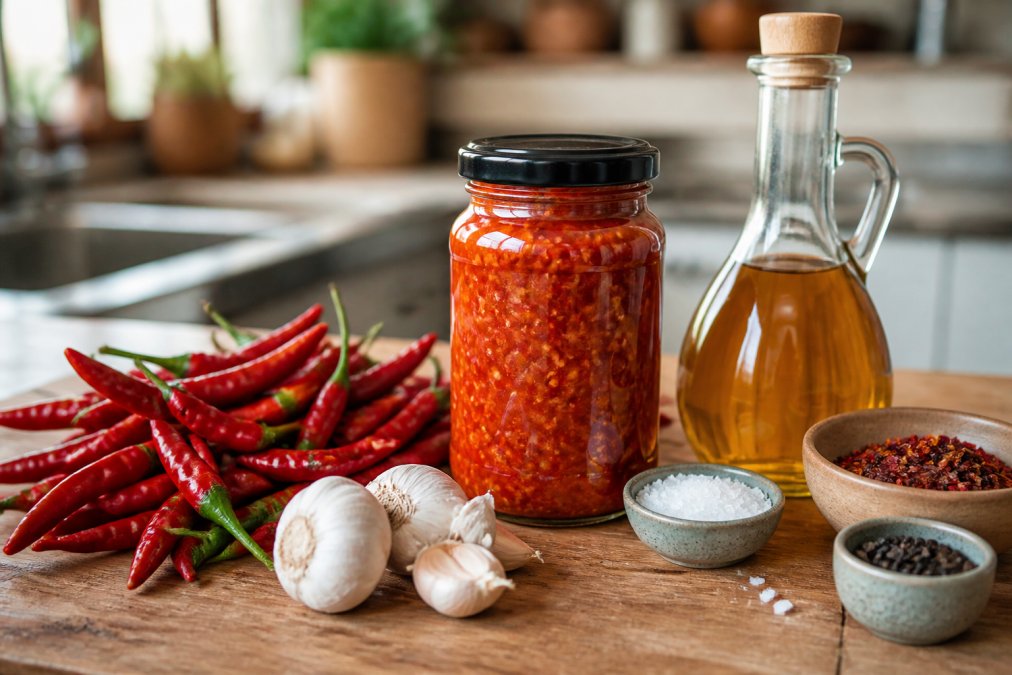
A practical rule: if you can't pronounce an ingredient or it sounds like a chemistry experiment, it's likely synthetic. A preservative-free hot sauce contains chillies, vinegar, garlic, and salt; a conventional alternative lists a dozen additives you'd never find in a home kitchen.
Why Do Manufacturers Use Preservatives in the First Place?
Preservatives exist to solve a genuine problem: food spoilage. Microorganisms such as bacteria, mould, and yeast naturally degrade food, and some, like the bacteria behind botulism, pose serious health risks.
Large-scale food production depends on preservatives to maintain consistency across long supply chains. A product manufactured in one location must survive transport, warehousing, and weeks or months on a supermarket shelf. Synthetic preservatives provide a margin of safety that makes this system work. According to the Food and Agriculture Organization's work on food preservation, preservation methods have enabled global food distribution for decades.
The Specific Mechanisms Most Guides Skip
Understanding how preservatives work helps you make better choices. Each class targets a different spoilage pathway:
- Antimicrobials (like sodium benzoate, E211, and potassium sorbate, E202) disrupt the cell membranes or metabolic processes of bacteria, yeast, and mould. They're why commercial sauces survive weeks after opening without visible mould growth.
- Antioxidants (like BHA, E320, and BHT, E321) prevent fats and oils from oxidising, the process that creates rancid flavours and harmful free radicals. This is why they appear in cereals, crisps, and any product containing vegetable oils.
- Curing agents (nitrates and nitrites, E249-E252) serve a dual purpose in cured meats: they inhibit Clostridium botulinum (the bacteria behind botulism) and fix the pink colour consumers associate with freshness.
- Sulphites (E220-E228) prevent browning in dried fruits, wines, and some condiments by blocking enzymatic reactions that cause discolouration.
Each mechanism is effective, but each carries trade-offs. Sulphites trigger asthma symptoms in roughly 1 in 100 people, according to the Food Standards Agency (food.gov.uk). Nitrites form nitrosamines, potentially carcinogenic compounds, when cooked at high temperatures.
The Regulatory Reality in the UK
In the United Kingdom, preservatives are regulated under the Food Additives legislation, enforced by the Food Standards Agency (FSA). Every additive must pass a safety assessment before receiving an E-number approval, and the FSA sets Acceptable Daily Intakes (ADIs), the amount considered safe to consume daily over a lifetime.
However, the ADI system has limitations. ADIs are calculated per individual additive, not for combinations, when you eat a processed meal containing five different preservatives, each within its ADI, the cumulative effect is not assessed. This 'cocktail effect' has been raised by consumer groups like Which?, yet regulations still assess additives one at a time.
The Shelf Life vs. Food Waste Trade-Off
Here's the trade-off environmental advocates rarely discuss: preservatives reduce food waste. A loaf of bread with calcium propionate stays mould-free for a week; a preservative-free artisan loaf may go stale or mouldy in three days. In a country where households throw away 6.6 million tonnes of food annually, according to WRAP, the waste-reduction argument is real.
This doesn't mean preservatives are unavoidable. Small-batch production shortens the distance between production and consumption. Vinegar-based hot sauces, for instance, naturally resist microbial growth because the acidic environment inhibits spoilage organisms.
The Economic Reality of the Supply Chain
Most consumers don't realise that preservatives exist partly to protect the retailer, not just the consumer. Supermarkets demand long shelf lives because unsold stock represents lost revenue, a product with a three-month shelf life must be discounted or destroyed if it doesn't sell, while one with a twelve-month shelf life can be warehoused and redistributed. This is why own-brand supermarket products almost always contain preservatives, while small-batch producers with shorter supply chains can afford to skip them.
The choice to go preservative-free is therefore not just a health decision, it's a decision to support a food system where production is closer to consumption and inventory risk is managed through careful production planning rather than chemical additives.
The 'Natural Preservative' Paradox: Not All Clean Labels Are Equal
Natural preservatives can be just as processed as synthetic ones. Salt, sugar, and vinegar preserve food through the same mechanisms as their synthetic counterparts.
Some "natural" preservatives extracted and concentrated in laboratories undergo significant processing. Rosemary extract, for example, requires industrial solvent extraction to become effective.
What matters is the overall approach to food production. A genuinely preservative-free product uses natural preservation methods as part of its recipe, not as an afterthought. Fermentation, pickling, and careful formulation create products that last without additives.
How to Store Preservative-Free Hot Sauce and Other Pantry Staples
Knowing how to store preservative-free hot sauce properly prevents waste and maintains quality. The absence of preservatives means your product won't last indefinitely, but with correct storage, you'll finish it long before quality declines.
Follow these storage guidelines:
- Refrigerate after opening. Most preservative-free condiments, including hot sauces and chilli jams, stay fresh for several months when chilled.
- Use clean, dry utensils every time. Introducing moisture or food particles accelerates spoilage.
- Check the "best before" date on unopened products and rotate your pantry stock.
- Store unopened jars in a cool, dark cupboard away from direct sunlight and heat sources.
- Trust your senses. If the colour, smell, or texture changes noticeably, discard the product.
The shelf life of preservative-free hot sauce typically ranges from several months to a year unopened, and two to three months once refrigerated. Vinegar-based sauces last longer than fruit-based products because the acid content inhibits microbial growth. Chilli jams with higher sugar content also preserve well, as sugar draws moisture from microorganisms and prevents their proliferation.
Making the Switch Without Breaking the Budget
Preservative-free food often carries a premium price, but the economic picture is more complex than the sticker suggests. When you account for waste, preservative-free products often deliver better value because you actually use them, a cheap sauce with synthetic additives sits in your fridge for a year, half-used, while a premium preservative-free sauce becomes a daily staple.
Whole foods and clean label products typically offer greater nutritional density, meaning you feel satisfied with less, and reduced exposure to artificial chemicals may mean fewer allergy symptoms and digestive complaints over time.
Meal Prepping with Preservative-Free Ingredients
Meal prepping with preservative-free ingredients requires adjusting your approach to shopping and storage. Buy smaller quantities more frequently, plan meals around what's in season, and batch-cook meals and freeze portions immediately.
Budget-conscious shoppers should focus on versatile staples. A few high-quality preservative-free condiments transform simple meals, reducing the need for expensive prepared foods, one excellent hot sauce elevates rice, eggs, grilled meat, and roasted vegetables.
Conclusion: Small Changes, Better Flavour
Choosing preservative-free food products isn't about perfection or eliminating every additive overnight. It's about making informed choices that prioritise your health and your palate.
Start with the condiments you use daily. Replace your standard hot sauce with a small-batch, preservative-free alternative and taste the difference authentic flavour makes. At Spicy Rye's, we craft our sauces, chilli vinegars, and seasoning blends with premium ingredients, from fiery heat to smoky sweetness, so you can dip, pour, and glaze your way to better meals.
Frequently Asked Questions
What is the difference between natural and artificial preservatives?
Natural preservatives come from sources found in nature, like salt, sugar, vinegar, citrus juice, or rosemary extract. Artificial preservatives are synthetic chemical compounds manufactured in a lab, such as sodium benzoate or potassium sorbate. The key difference is how they are made and how your body processes them. While natural options have been used for centuries, artificial ones are designed to extend shelf life in mass-produced foods. Choosing preservative-free food products means avoiding both synthetic chemicals and heavy processing, focusing instead on whole ingredients and traditional methods like fermentation.
Why do preservative-free foods have a shorter shelf life?
Preservatives exist to stop microorganisms, like bacteria and mould, from causing food spoilage. Without synthetic additives, your food is more vulnerable to degradation, so it naturally won't last as long. For example, an open jar of preservative-free hot sauce might keep for a few months in the fridge, whereas a heavily processed alternative could last a year. This shorter window is a trade-off for cleaner ingredients. Proper storage, like keeping items refrigerated and using clean utensils, helps maximise the shelf life of your preservative-free products.
Are all 'clean label' products actually healthy?
No. The 'clean label' trend is not strictly regulated, which creates the 'Natural Preservative' paradox. A product can be labelled 'clean' but still be high in sugar, salt, or saturated fat. For instance, a 'natural' granola bar might use dates for sweetness but still contain more sugar than a chocolate bar. When reading food labels for additives, check the entire ingredient list, not just the marketing claims on the front. The real benefit of clean label food is avoiding artificial chemicals, but you still need to assess the overall nutritional density of what you are buying.
How do preservatives affect the natural flavour of food?
Synthetic preservatives can dull authentic flavour. They are often used to mask the taste of lower-quality ingredients or to maintain a uniform texture over long periods. Because they stop all microbial activity, they also halt the natural maturation process that develops complexity in foods like hot sauce or fermented vegetables. Preservative-free products, especially small-batch production items, rely on the quality of their ingredients to taste good. You get the sharp, vibrant notes of fresh chillies and spices rather than a chemical aftertaste or a flat, one-dimensional profile.