

Table of Contents
- Why Gourmet Cooking Starts With Technique, Not Cost
- The Best Pantry Staples for Gourmet Cooking on a Budget
- How to Add Flavour to Bland Chicken Without Breaking the Bank
- Using Chilli Vinegar in Recipes for Instant Depth
- Slow Cooking, Batch Cooking and the Art of the Leftover
- The Psychology of Plating: Making Cheap Food Look Expensive
- Equipment Hacks That Deliver Gourmet Results for Less
- Conclusion
- Frequently Asked Questions
Last Updated: September 23, 2026
Why Gourmet Cooking Starts With Technique, Not Cost
Learning how to make everyday meals gourmet on a budget comes down to one truth: technique beats price tags every time. We've watched home cooks transform cheap chicken thighs and humble potatoes into plates that taste like restaurant food, simply by changing how they cook.
Gourmet cooking is the practice of layering flavour, texture and presentation using skill rather than expensive ingredients.
So why does technique matter more than spending? Because a £4 chicken can taste like a £20 one if you treat it right. Here's what most guides get wrong: they hand you a shopping list of pricey items instead of teaching you the skills that make cheap food shine.
Below, we'll show you exactly how to build those skills, from pantry strategy to plating.
The Best Pantry Staples for Gourmet Cooking on a Budget
The best pantry staples for gourmet cooking are the ones you'll use weekly, not the ones that look impressive on a shelf. A well-chosen storecupboard does more for your cooking than any single expensive ingredient, and the maths proves it.
Storecupboard Essentials That Earn Their Shelf Space
Stock these first. Each one is cheap, keeps well, and forms the base of dozens of meals:
- Olive oil, for roasting and finishing
- Tinned tomatoes and tomato paste
- Dried pasta and rice
- Onions, garlic and dried herbs
- Vinegars, including chilli vinegar
- Tinned beans and chickpeas
- Stock cubes or paste
- Anchovies or fish sauce, for umami depth
- A hard cheese rind, kept for soups and braises
Aromatics like garlic and onion build flavour in almost everything.
Smart Shopping Strategies and Cost-Per-Serving Thinking
Cost-per-serving thinking changes how you shop. A £6 jar that flavours ten meals costs 60p per plate; a £2 item you use once costs £2 per plate. The cheaper-looking purchase is often the more expensive one.
| Staple | Typical price | Servings it delivers | Cost per serving |
|---|---|---|---|
| 500g dried pasta | ~£0.75 | 5 | ~15p |
| 400g tin chopped tomatoes | ~£0.45 | 2 | ~23p |
| 1kg onions | ~£0.85 | 10 | ~9p |
| 400g tin chickpeas | ~£0.65 | 2 | ~33p |
| 250g block hard cheese | ~£2.50 | 8 | ~31p |
Try these habits:
- Buy whole chickens and joint them yourself, a whole bird typically costs less per kilo than pre-cut portions and yields four to six servings plus a carcass for stock
- Shop seasonal produce, which tastes better and costs less
- Cook larger batches and portion them out
- Check the reduced aisle and freeze what you find
- Buy own-brand tinned goods; the taste difference in tomatoes, beans and chickpeas is minimal once cooked
The Flavour-Building Logic Behind Each Staple
Knowing why a staple earns its place lets you improvise instead of following recipes. Three principles do most of the work:
- Umami comes from anchovies, fish sauce, tomato paste, hard cheese and mushrooms. A small amount deepens a dish without tasting of any single ingredient.
- Acidity comes from vinegars, lemon and wine. It cuts through fat and makes salt taste more like seasoning and less like salt.
- Fat carries aroma. A finishing drizzle of olive oil or a knob of butter at the end of cooking does more for perceived richness than doubling the amount used at the start.
How to Add Flavour to Bland Chicken Without Breaking the Bank
Adding flavour to bland chicken is about three cheap moves: brine it, sear it hard, then deglaze the pan. None of these cost extra money. They just cost attention.
Brining, Searing and Deglazing: Three Cheap Wins
Brining keeps lean meat juicy. A simple salt-and-water soak for 30 minutes does more than any marinade.
Using Chilli Vinegar in Recipes for Instant Depth
Using chilli vinegar in recipes is the fastest way to add acid balance and heat at the same time. A splash at the end of cooking lifts a dish that tastes flat.
Think of it as your finishing move:
- Drizzle over roasted vegetables for a sharp kick
- Add to soups and stews just before serving
- Mix into dressings for salads and grains
- Spoon over eggs, beans or rice bowls
Slow Cooking, Batch Cooking and the Art of the Leftover
Slow cooking and batch cooking turn cheap cuts into tender, flavour-packed meals. Tough meat, dried beans and root vegetables all reward long, gentle heat.
Here's how to make it work:
- Brown your meat or veg first for deeper flavour
- Add aromatics and liquid, then cover
- Cook low and slow until everything is tender
- Cool, portion and store for the week
The Psychology of Plating: Making Cheap Food Look Expensive
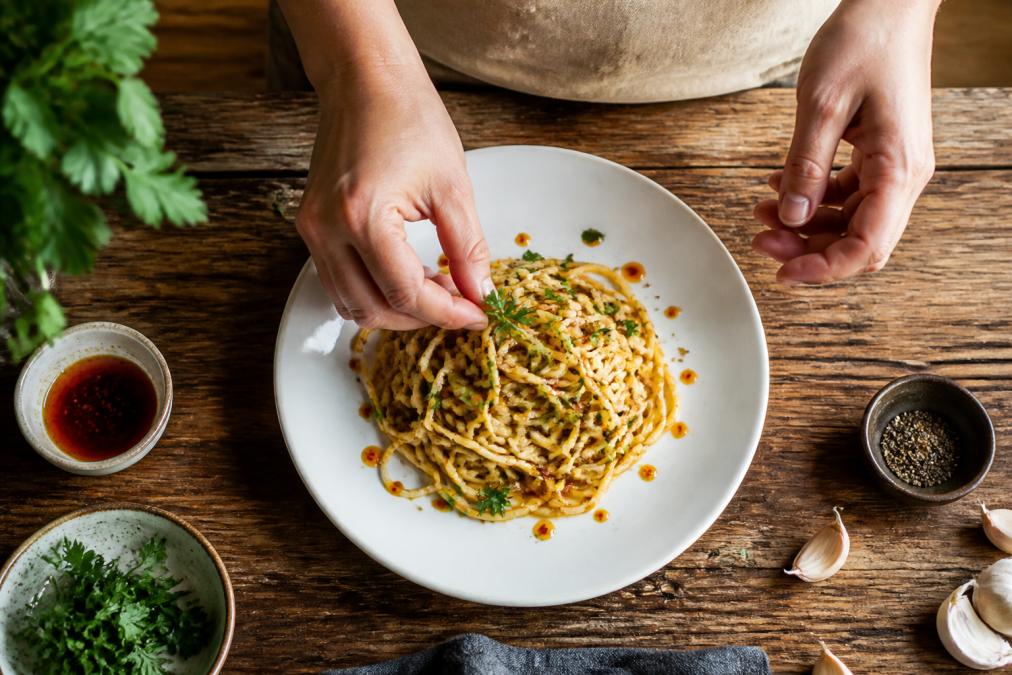
Plating works because we taste with our eyes first. A study from Oxford University's crossmodal research on food presentation found that how a dish looks shapes how much diners enjoy it. The good news: you don't need fancy plates, and you don't need to be artistic. You need four principles.
The Four Visual Principles That Signal 'Gourmet'
1. Height. Flat food reads as canteen food. Stack or mound the main element, twirl pasta into a nest, pile grains into a small dome, lean a protein against a bed of vegetables. Height creates shadow, and shadow creates the sense of a dish that was assembled rather than scooped.
Texture Contrast: The Principle Most Home Cooks Miss
Gourmet food almost always contains two or more textures in the same bite. Soft against crunchy, creamy against crisp, tender against toasted. This is why a plain soup feels flat but the same soup with a scatter of toasted seeds, a swirl of cream and a torn crouton feels finished.
Cheap ways to add texture:
- Toast stale bread into croutons or breadcrumbs
- Scatter seeds or nuts over soft dishes
- Add raw sliced onion or fennel to cooked food
- Finish with a crisp fried herb, such as parsley or sage
A Practical Plating Routine
Once you know the principles, the routine is short:
- Warm the plate if the dish is hot, cold plates kill the aroma before the first bite
- Place the main element off-centre, not dead middle
- Add the sauce in a swoosh, a pool or a drizzle, not poured over everything
- Scatter the garnish last, using odd numbers of items
- Wipe the rim of the plate with a clean cloth before serving
That last step takes three seconds and is the difference between 'home cooking' and 'restaurant cooking' more reliably than any ingredient.
Equipment Hacks That Deliver Gourmet Results for Less
You don't need a kitchen full of gadgets to cook like a pro. A few cheap tools and smart workarounds get you most of the way.
- A heavy frying pan, for proper searing
- A sharp knife, which makes prep faster and safer
- A baking tray, for roasting at high heat
- A thermometer, so meat is never dry
- A fine grater, for zest and garlic
| Goal | Cheap Fix | Why It Works |
|---|---|---|
| Crispy skin | Hot dry pan, weighted | Presses out moisture |
| Rich sauce | Deglaze with vinegar | Lifts browned flavour |
| Deep savoury taste | Seasoning blend | Adds umami fast |
| Restaurant finish | Fresh herb garnish | Adds colour and aroma |
Conclusion
The real challenge isn't money, it's knowing which techniques and staples give you the most flavour for the least spend. Spicy Rye's offers premium seasonings and chilli vinegars crafted to lift everyday cooking. Our Garlic & Herb Seasoning, Veggie Rockstar Seasoning and chilli vinegars each add instant depth to cheap ingredients. Get started with Spicy Rye's and turn your weeknight dinners into something worth talking about.

Frequently Asked Questions
How can I make cheap meals taste expensive?
Focus on technique and finishing touches rather than expensive ingredients. Searing meat properly, deglazing the pan with a splash of vinegar, and adding acid at the end all build depth. A quality seasoning blend like Spicy Rye's Garlic & Herb Seasoning (£5.56) costs pennies per serving and transforms chicken, veg or pasta. Toasting spices, using fresh herbs, and plating with intention also lift everyday food into gourmet territory without raising your weekly shop.
What are the best flavour enhancers for budget cooking?
The highest-impact, lowest-cost enhancers are acid (lemon juice, chilli vinegar), umami (nutritional yeast, soy sauce, anchovy), aromatics (garlic, onion, ginger) and fat (butter, good olive oil). A jar of chilli vinegar does double duty as both acid and heat, and seasoning blends that combine herbs, citrus zest and nutritional yeast give you multiple flavour layers in one shake. These cost far less per serving than buying individual spices.
How do I add depth of flavour to simple chicken dishes?
Start with a quick brine or a 30-minute marinade, then pat the chicken dry and sear it hard in a hot pan. Once cooked, deglaze the pan with stock, wine or vinegar to capture the browned bits. Finish with a compound butter or a sprinkle of Lemon Pepper Seasoning (£5.65) for brightness. These steps take minutes but create layers of savoury, caramelised flavour that plain roasting misses.
Are artisan sauces worth the investment for budget meals?
Yes, when you calculate cost per serving. A £5.56 jar of seasoning or chilli vinegar used across 15 to 20 meals works out at roughly 28 to 37p per portion, cheaper than most single-use supermarket sauces. Artisan products made with real ingredients, no preservatives and concentrated flavour mean you need less per dish.