

Table of Contents
- What Flavour Fatigue Really Is (And Why Your Favourite Meal Stops Working)
- The Hottest Sauces in the UK: A Comparison for Flavour Rotation
- Elevating a Meal vs Adding Flavour: What's the Actual Difference?
- Best Practices for Meal Variety That Keep Your Palate Engaged
- Budget-Friendly Flavour Rotation: A Simple Weekly Planner
- Flavour Fatigue in Recovery and Clinical Settings
- Common Mistakes That Make Food Monotony Worse
- Conclusion
- Frequently Asked Questions
Last Updated: September 24, 2026
What Flavour Fatigue Really Is (And Why Your Favourite Meal Stops Working)
Flavour fatigue is the progressive loss of enjoyment from a food or drink you once loved, caused by repeated exposure to the same taste profile, and learning to prevent flavour fatigue starts with understanding it. At Spicy Rye's, we hear the same story constantly: a customer finds a sauce they adore, uses it on everything for three weeks, then quietly stops reaching for it. Nothing changed about the sauce.
Sensory-Specific Satiety: The Science in Plain English
Sensory-specific satiety is the decline in pleasure from a specific food as you eat more of it, while other foods remain appealing. It's why you can be full after a roast dinner and still find room for dessert. The reward pathways in your brain respond to variety, not volume.
Why It Hits Endurance Athletes and Home Cooks Alike
Endurance athletes hit flavour fatigue hard. Long rides and runs demand constant endurance fueling, and the same gel or bar becomes unbearable after a few hours. Reduced palatability leads to lower caloric intake, which hurts performance and recovery.
The Hottest Sauces in the UK: A Comparison for Flavour Rotation
The smartest way to beat palate fatigue is a rotation built on contrast. A good rotation set covers different heat levels, different bases, and different textures, so no two consecutive meals hit the same notes.
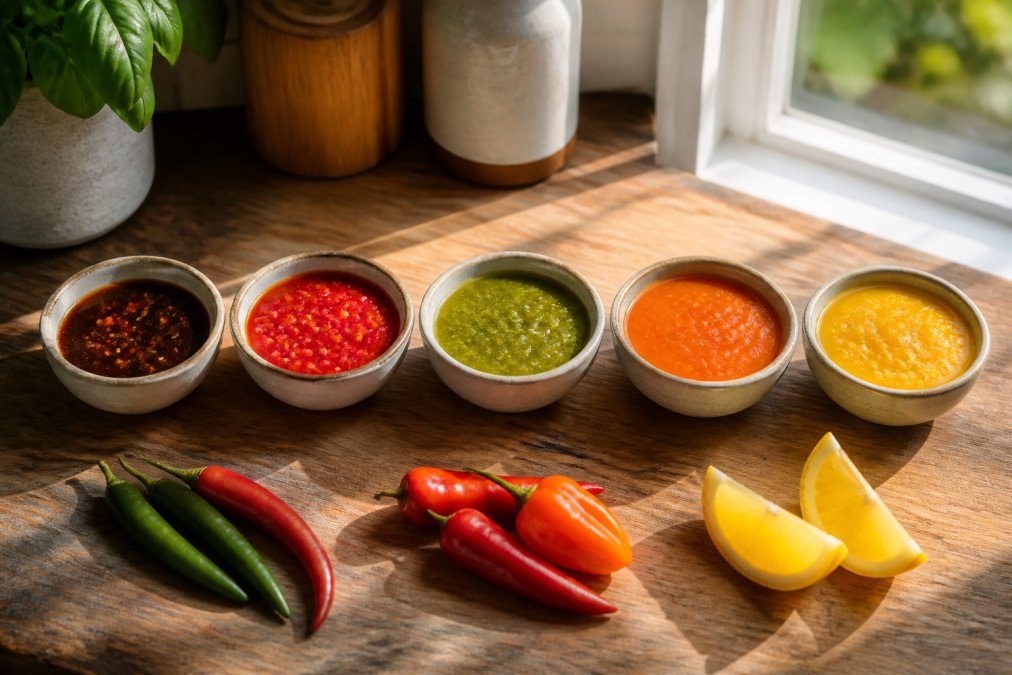
| Sauce | Price | Flavour Profile | Best For |
|---|---|---|---|
| Lemon Pepper Sauce | £7.95 | Zesty citrus, cracked pepper, habanero heat | Seafood, salads, chicken marinade |
| Mango Pepper Sauce | £7.95 | Tropical sweetness, punchy pepper finish | Seafood, tropical dressings, dips |
| Honey & Lemon Pepper Sauce | £6.95 | Sweet, tangy, bold pepper | Grilled chicken, salad dressing, fish |
| Hot Honey Pepper Sauce | £6.95 | Sticky honey, fiery pepper | Ribs, pizza, cheese boards |
| Jalapeño Vinegar | £6.95 | Green heat, tangy vinegar bite | Salads, marinades, salsas |
How to Read a Flavour Profile Before You Buy
Ignore the heat rating on the label for a moment. What matters is the flavour profile: sweet, smoky, tangy, or sharp. A rotation works when each bottle pulls in a different direction.

- Citrus-led bottles brighten bland proteins
- Fruity bottles add sweetness that balances heat
- Honey-based bottles glaze and caramelise
- Vinegar-based bottles cut through richness
Elevating a Meal vs Adding Flavour: What's the Actual Difference?
Adding flavour means making something taste stronger. Elevating a meal means changing how the whole dish reads, so the same ingredients feel new. A splash of hot sauce adds heat. A drizzle that balances acid, sweetness, and texture contrast elevates the plate.
- Adding flavour: extra hot sauce on the same pasta bake. Familiar, but the palate adapts within days.
- Elevating a meal: a citrus sauce on grilled fish, a honey drizzle on roast chicken, a vinegar splash on a grain bowl. Each meal lands differently.
Best Practices for Meal Variety That Keep Your Palate Engaged
Best practices for meal variety come down to three levers: flavour, texture, and temperature. Change at least two across any 48-hour window and food burnout rarely takes hold.
- Rotate cuisines weekly, not daily. A week of Mediterranean, then a week of East Asian, gives your palate a clean reset.
- Pair one bold sauce with one subtle seasoning. A fiery drizzle plus a mild herb rub creates complex flavours without overwhelming the dish.
- Use texture contrast. Crunch alongside soft, char alongside fresh. Texture registers in the brain as novelty even when the flavour repeats.
- Plan around nutrient density. Variety in colour usually means variety in micronutrients, which supports metabolic efficiency and keeps meals satisfying.
- Rehydrate with flavour. Rehydration strategies matter for athletes, and a tangy vinegar in water or a citrus sauce on post-training food makes hydration easier to stick to.
Budget-Friendly Flavour Rotation: A Simple Weekly Planner
A full rotation set doesn't need to be expensive. Three or four bottles that pull in different directions will do more than ten that all taste similar.
Here's a simple weekly plan you can copy:
- Monday: Citrus-led sauce on grilled fish or chicken
- Tuesday: Vinegar-based splash on a grain bowl or salad
- Wednesday: Honey-based glaze on roasted vegetables or pork
- Thursday: Fruity sauce on tacos, wraps, or rice
- Friday: Sharp vinegar on pizza or flatbread
- Saturday: Rotate in a new cuisine entirely
- Sunday: Cook a batch meal with a mild base, then sauce per portion
Flavour Fatigue in Recovery and Clinical Settings
Almost every article on flavour fatigue is written for endurance athletes. That leaves a much larger group unserved: people recovering from illness, surgery or a period of poor appetite, and older adults managing long-term reduced intake. For them, flavour fatigue is not a performance problem, it is a nutrition problem, and it can slow recovery.
Why appetite regulation breaks down
Appetite is not a single switch. It is a balance between hunger signals (ghrelin, released when the stomach is empty), satiety signals (leptin, GLP-1, peptide YY, released as food arrives in the gut) and the hedonic drive, the wanting that makes food appealing even when you are not hungry.
- Illness and inflammation suppress appetite directly, and can blunt taste and smell, a common complaint after respiratory infections and a well-documented effect of some medications.
- Fatigue and cognitive depletion make choosing and preparing food feel like effort, so people default to whatever is easiest, which is usually the same thing every day.
- Low mood and low energy reduce the reward response to food, so even a favourite meal registers as flat.
- Older adults frequently experience reduced taste and smell sensitivity, alongside earlier fullness, which narrows the window in which food is appealing at all.
What actually helps
The clinical principle is straightforward: make every mouthful count, and make it different from the last one.
- Small portions, more often. A full plate is off-putting when appetite is low. A small portion that gets finished protects intake better than a large one that gets pushed away.
- Flavour before volume. Sharp, tangy and aromatic notes, vinegar, citrus, herbs, spices, cut through the blandness of plain food and are easier to tolerate than rich, heavy flavours when appetite is fragile.
- Texture contrast. Soft base, crunchy topping. A spoonful of toasted seeds, a scatter of crisp vegetables or a crumb topping adds a somatosensory signal that registers as novelty even when the base repeats.
- Temperature variety. A cold dish alongside a warm one changes the sensory profile of the meal without changing the ingredients.
- Sauce per portion, not per pot. One batch of plain protein or grains becomes several different meals depending on what is added at the point of serving. This is the single most practical habit for anyone cooking for someone with a poor appetite.
- Fortify quietly. Where a clinician or dietitian has advised it, energy and protein can be increased without increasing portion size, through full-fat dairy, added oils, nut butters or prescribed oral nutritional supplements. Flavour rotation makes those easier to tolerate, not harder.
A note on professional support
Flavour fatigue in a clinical context is a symptom worth mentioning, not a problem to solve alone. Persistent loss of taste or smell, unexplained weight loss, difficulty swallowing, or a sustained drop in intake should be raised with a GP, and in hospital or care settings with the dietitian on the team. In the UK, malnutrition risk in older adults is commonly screened using tools such as MUST (Malnutrition Universal Screening Tool), and a low score is a prompt for dietetic input rather than a reason to try harder with the same meals.
Common Mistakes That Make Food Monotony Worse
The biggest mistake is buying heat instead of contrast. Five bottles that all deliver the same kind of burn create food monotony faster than one versatile sauce used three ways.
Other traps:
- Saucing the whole pot. Every portion tastes identical, and the palate adapts by day two.
- Chasing novelty over rotation. A new bottle every week feels exciting but doesn't build a system.
- Ignoring texture. Flavour alone can't carry variety; crunch and contrast do half the work.
- Storing bottles badly. Once opened, check the label for storage guidance and keep bottles cool and sealed to protect flavour.
Conclusion
Flavour fatigue is a physiological response, not a sign you're a fussy eater, and it's entirely preventable with a rotation built on contrast. Spicy Rye's makes that rotation easy: the Lemon Pepper Sauce and Mango Pepper Sauce bring citrus and tropical brightness to seafood and salads, the Honey & Lemon Pepper Sauce and Hot Honey Pepper Sauce deliver sweet-meets-heat glazes for chicken, ribs, and pizza, and the Jalapeño Vinegar adds a sharp, tangy kick to dressings and marinades.

Frequently Asked Questions
How do I prevent flavour fatigue without completely changing my diet?
You do not need a new menu, just a rotation of condiments and textures. Keep your core meals the same but swap the finishing sauce every few days. A citrus-forward sauce on Monday, a smoky honey glaze on Wednesday, a sharp chilli vinegar on Friday. This gives your palate new sensory input without extra cooking effort. Research on sensory-specific satiety shows that variety in flavour profiles, not variety in ingredients, is what keeps meals appealing over time.
Can premium chilli sauces really help prevent flavour fatigue?
Yes, if they bring genuine complexity rather than just heat. A sauce with layered notes (citrus, honey, pepper, vinegar) stimulates more gustatory receptors and olfactory pathways than a single-note hot sauce. That broader sensory input delays the hedonic decline that makes a meal feel boring. Spicy Rye's range, for example, spans citrus, tropical, honey, and vinegar-based profiles, so you can rotate without repeating the same flavour family twice in a week.
What is the difference between elevating a meal and just adding flavour?
Adding flavour means making something taste stronger. Elevating a meal means improving its overall balance and complexity. A squeeze of lemon on fish adds flavour. A drizzle of Honey & Lemon Pepper Sauce that caramelises under the grill, balances the fish's richness, and adds texture contrast elevates the dish. The distinction matters because elevation keeps you interested in eating well, while plain heat or salt eventually stops working.
How long do opened chilli sauces and vinegars last in the cupboard?
Check the label on each bottle for specific guidance. The practical tip: buy two or three smaller bottles rather than one large one, so you actually finish them while they are at their best and you rotate flavours more often.