

Table of Contents
- Why Chicken Becomes Bland and How to Prevent It
- Brining and Salting: The Foundation of Flavourful Chicken
- Best Marinades for Chicken Breast That Deliver Real Flavour
- Quick Chicken Seasoning Blends You Can Use Tonight
- How to Glaze Chicken for Maximum Impact
- Rescue Already-Cooked Bland Chicken with Sauces and Reductions
- Conclusion
Last Updated: August 20, 2026
Why Chicken Becomes Bland and How to Prevent It
Chicken is a blank canvas, its greatest strength and most common downfall. The real problem isn't the chicken itself, but underthinking seasoning strategy from purchase onward.
Lean meat absorbs and holds flavour differently than fattier proteins. Chicken breast loses moisture during cooking, so any seasoning must penetrate deeply before heat strips it away. Salt dissolves muscle proteins, allowing the meat to retain more moisture and flavour compounds. Without this foundation, layered seasoning and sauces can't compensate for dry meat.
Bland chicken is a moisture and penetration problem, not a flavour problem. Once you accept that, everything else follows naturally.
Brining and Salting: The Foundation of Flavourful Chicken
Brining is the single most effective way to add flavour to bland chicken because it forces moisture into the meat while allowing seasoning to penetrate deeply. A basic brine combines salt, water, and aromatics.
Aim for about 5-6% salt by weight of water, roughly a tablespoon per 500ml. Add bay leaves, thyme, peppercorns, garlic, or citrus peel. Let chicken sit for at least 4 hours, ideally overnight. The salt solution denatures muscle proteins, allowing them to hold water more effectively. When cooked, brined chicken stays moister because more water is locked into the tissue, carrying flavour with it.
If brining feels like too much planning, dry salting is your shortcut. Pat chicken completely dry, coat generously with kosher salt, and let it sit uncovered in the fridge for at least 40 minutes. The salt draws out surface moisture initially, then osmosis reverses the process, pulling the salty liquid back into the meat. You get similar results to brining without the water.
Best Marinades for Chicken Breast That Deliver Real Flavour
A marinade works best when it combines three elements: fat, acid, and flavour. Understanding why each element matters helps you troubleshoot when a marinade underperforms.
Fat (olive oil, sesame oil, or yogurt) carries fat-soluble flavour compounds, capsaicin from chilli, limonene from citrus, aromatic oils from garlic and ginger, far more effectively than water. Fat also slows moisture loss during cooking by creating a surface barrier.
Acid (lemon juice, vinegar, yogurt, or wine) denatures surface muscle proteins, allowing the meat to absorb more liquid and flavour through osmosis. However, acid works slowly. Beyond 8-12 hours, it can over-denature the surface, turning the exterior mushy. Timing matters more with acidic marinades than oil-based ones.
Flavour compounds (spices, herbs, aromatics) behave differently depending on whether they're fat-soluble or water-soluble. Garlic and ginger work in any marinade. Dried oregano and thyme are fat-soluble, penetrating better in oil-based marinades. Soy sauce and fish sauce are water-soluble, working better in vinegar or yogurt-based marinades.
Marinade timing depends on cut and thickness. Chicken breasts need at least 2-4 hours for meaningful penetration. Thighs benefit from 4-8 hours. Whole birds can sit overnight. Anything under 2 hours is mostly surface coating.
Framework for any protein:
- Start with fat: 60-75ml per 500ml total marinade.
- Add acid: 60-75ml. This is the aggressive element; respect the ratio.
- Layer flavour: Garlic, ginger, spices, herbs.
- Season with salt: Not heavily if you've already dry-salted. Salt can draw out moisture if left too long.
Citrus and herb marinade: Combine 60ml olive oil, 60ml lemon juice, 4 minced garlic cloves, 2 teaspoons dried oregano, and salt. Refrigerate for at least 4 hours. Don't exceed 8 hours or the surface will soften.
Asian-inspired version: 60ml sesame oil, 60ml rice vinegar, 3 tablespoons soy sauce, 1 tablespoon grated ginger, 2 teaspoons honey, and 1 teaspoon chilli flakes. Rice vinegar is milder than lemon juice, so this can safely sit 8-12 hours. Sesame oil carries chilli's heat compounds more effectively than neutral oil.
Yogurt-based marinade (slower, deeper penetration): 120ml Greek yogurt, 2 tablespoons lemon juice, 2 tablespoons grated ginger, 3 minced garlic cloves, 1 teaspoon garam masala, and salt. Yogurt's lactic acid is gentler than vinegar, so this can sit 12-24 hours without risk of mushiness. Ideal for tougher cuts or advance planning.
Diagnosing failures: If the marinade didn't work, the problem is usually one of three things. First, the chicken wasn't dry when it went in, excess surface moisture dilutes the marinade and prevents penetration. Pat it completely dry first. Second, the marinade wasn't concentrated enough. Third, you didn't salt the chicken beforehand, so muscle proteins never loosened enough to absorb the marinade. Always dry-salt for at least 40 minutes before marinating.
Quick Chicken Seasoning Blends You Can Use Tonight
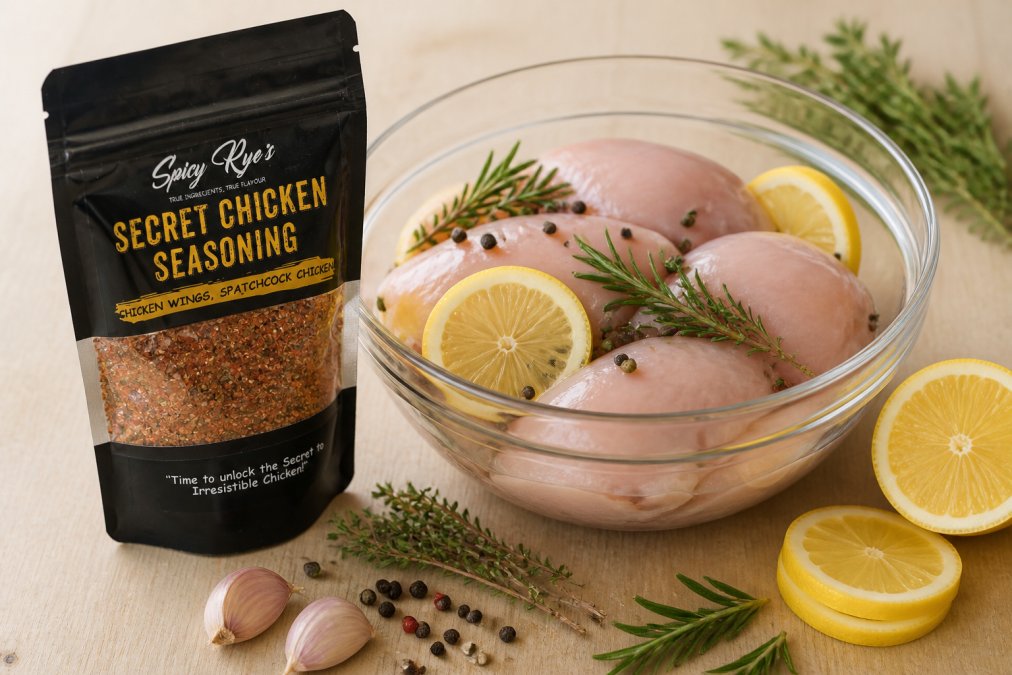
A dry rub is the fastest way to add flavour when you don't have time for marinades. Success depends on understanding how spice compounds behave during cooking and how different cooking methods affect flavour extraction.
The science of dry rubs: Spices are concentrated packages of volatile oils and alkaloid compounds. Heat activates them in two ways. First, the Maillard reaction, browning that occurs when proteins and sugars heat above 140°C, transforms spice compounds into new flavour molecules. Second, heat drives volatile oils into the meat's surface, where they dissolve into fat and moisture. Rubs work better on chicken that's been dry-salted first; the salt draws out surface moisture, and the rub's oils dissolve into that moisture and penetrate deeper.
Timing and application: Apply a rub 20-30 minutes before cooking if you're in a hurry, but overnight is ideal. The longer it sits, the more the spices' oils dissolve into surface moisture and begin penetrating.
How cooking method changes flavour extraction:
-
Pan-searing: High, direct heat (above 160°C) activates spices quickly and creates a concentrated crust. Apply the rub 30 minutes ahead, then sear in a hot pan. Rubs work best here with sugar (paprika, garlic powder) because the sugar caramelises.
-
Roasting in the oven: Lower, ambient heat (typically 180-200°C) activates spices more slowly. Overnight application is better because spices have time to dissolve before the gentler heat activates them.
-
Air-frying: High-speed circulating heat (typically 190-200°C) activates spices very quickly and creates a concentrated crust. Apply the rub 15-20 minutes ahead; longer isn't necessary because intense air circulation does the work fast.

- 1 tablespoon smoked paprika
- 1 tablespoon garlic powder
- 1 tablespoon onion powder
- 1 teaspoon black pepper
- 1 teaspoon salt
- 1 teaspoon dried thyme or oregano
- ½ teaspoon cayenne (optional)
Mix and store in an airtight container. This blend works on any cooking method. Paprika provides colour and subtle smoky sweetness. Garlic and onion powders are fat-soluble and penetrate well. Thyme and oregano complement poultry naturally. Black pepper adds sharpness. Salt is essential.
Adapting the base blend:
-
Mediterranean: Add 1 teaspoon dried rosemary, ½ teaspoon fennel seed, and a pinch of lemon zest powder. Finish with fresh lemon after cooking.
-
Warm spice (Indian-inspired): Replace paprika with 1 tablespoon garam masala, add ½ teaspoon ground cumin and ¼ teaspoon ground coriander.
-
Smoky and spicy: Increase smoked paprika to 1½ tablespoons, add ½ teaspoon smoked salt, and ¾ teaspoon cayenne. Use on chicken you plan to pan-sear or air-fry for maximum crust.
Application technique: Pat chicken completely dry before applying the rub. Any surface moisture dilutes the spices and prevents them from sticking. Coat all over, including the underside and crevices. Use about 1 teaspoon of rub per 150g of chicken.
The dry-salt-then-rub approach: For maximum flavour, dry-salt your chicken 40 minutes to overnight before applying the rub. The salt draws out surface moisture, which reabsorbs into the meat, carrying the salt with it. When you apply the rub on top, the spices dissolve into the salty surface moisture and penetrate more effectively.
How to Glaze Chicken for Maximum Impact
A glaze is essentially a reduction, a concentrated sauce that clings to the chicken and caramelises in the heat. Glazes work best on chicken that's already been seasoned and brined, building on a foundation rather than replacing it.
The basic formula: take any liquid (broth, soy sauce, vinegar, juice), add sweetness (honey, brown sugar, or jam), add acid if needed (more vinegar or citrus), and reduce over medium heat until it coats the back of a spoon.
Simple honey glaze:
- 120ml chicken broth
- 2 tablespoons honey
- 1 tablespoon soy sauce
- 1 tablespoon rice vinegar or lemon juice
- 1 teaspoon grated ginger
- 1 garlic clove, minced
Combine and simmer for 5-7 minutes until reduced by about a third. Brush onto chicken during the last 5-10 minutes of cooking. Heat will caramelise the sugars and create a glossy coating.
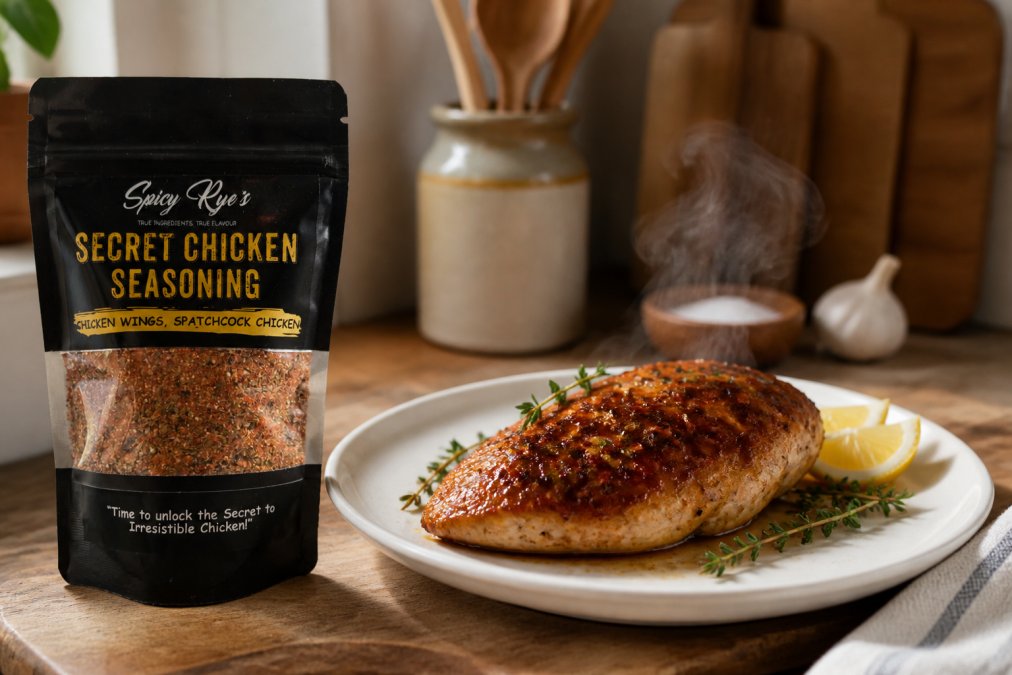
Spicy Rye's Hot Honey Pepper Sauce (£6.95) works brilliantly as a glaze base. The honey and peppers combine sweetness with heat. Use it straight as a finishing sauce, or thin with broth and reduce to intensify flavour.

For more complexity, try a balsamic reduction: combine 120ml balsamic vinegar, 2 tablespoons maple syrup, and 1 teaspoon Dijon mustard. Reduce over medium heat for about 8 minutes until thick and glossy. The balsamic adds deep, slightly sweet acidity. The mustard adds savoury complexity.
Timing matters enormously. Apply glaze too early and it burns. Apply it in the last 5-10 minutes of cooking and you get caramelisation without charring. If roasting, brush the glaze on during the final few minutes. If pan-searing, add it to the hot pan at the end and let it bubble and coat the meat.
Rescue Already-Cooked Bland Chicken with Sauces and Reductions
Sometimes you've already made the mistake. The chicken is cooked, dry, and bland. This is where sauces and pan reductions save you.
Use bold, concentrated flavours that mask blandness and add moisture back. A sauce isn't just a topping; it's a vehicle for flavour that makes every bite better.
Pan sauces are the fastest rescue. After cooking and removing chicken, deglaze the hot pan with something acidic: broth, wine, vinegar, or citrus juice. Scrape up all the browned bits stuck to the bottom, that's where all the flavour lives. Let this bubble and reduce by half, then finish with a knob of butter or a splash of cream.
Quick lemon pan sauce: After removing chicken, add 120ml chicken broth and 2 tablespoons lemon juice to the hot pan. Scrape the bottom. Reduce for 2-3 minutes. Add a tablespoon of butter and a pinch of salt. Pour over the chicken. The acid brightens everything. The butter adds richness.
Spicy Rye's Lemon Pepper Sauce (£7.95) works as a finishing sauce without additional cooking. The citrus cuts through richness, and the pepper adds complexity. Drizzle it over cooked chicken and the dish tastes intentional.

For deeper flavour, make a reduction-based sauce. In a small saucepan, combine 120ml red wine or balsamic vinegar, 120ml broth, 1 tablespoon honey, and a few fresh herbs. Simmer until reduced by about half, usually 5-8 minutes. This concentrates all the flavours. Pour it over the chicken and the meat absorbs the moisture and flavour.
The key principle is that sauce doesn't just sit on top of chicken; it seeps into it, especially if the chicken is still warm. A generous amount of bold sauce can genuinely rescue an otherwise bland plate.
Bland chicken doesn't have to be inevitable. It's the result of skipping the brining or salting step that should happen before anything else. Once you've locked in moisture with salt, everything that follows, marinades, rubs, glazes, sauces, actually works because it has something to cling to.
At Spicy Rye's, we've built our entire range around the idea that how you add flavour to bland chicken matters as much as what you add. Our seasonings, sauces, and glazes are designed to work with properly prepared chicken, not to mask poor technique. Start with salt. Layer from there. The difference will be immediate.
Frequently Asked Questions
Why does my chicken taste bland even though I season it?
Bland chicken usually results from underseasoning, poor moisture retention, or seasoning applied too late. Chicken breast is lean meat with minimal fat to carry flavour. The solution: season earlier (ideally overnight with salt to allow penetration), use brining or marinades to build flavour depth, and apply acid (lemon, vinegar) to enhance perceived taste. Timing matters as much as quantity.
What's the best way to add flavour to bland chicken quickly?
Use a quick seasoning rub or glaze. Apply a dry rub like Secret Chicken Seasoning (£5.56) directly to cooked or raw chicken 15 minutes before cooking, or brush a flavourful sauce like Hot Honey Pepper Sauce (£6.95) over the final minutes of cooking. For already-cooked chicken, pan sauces made with deglazing liquid and fresh herbs work in minutes.
Can I use marinades on chicken breast without it becoming rubbery?
Yes, if you marinate for 4-8 hours maximum. Longer marinades with acid (citrus, vinegar) can over-tenderise and break down texture. Use a balanced marinade with oil, acid, and aromatics. The oil protects moisture, acid tenderises, and aromatics build flavour profile. Avoid overnight soaks unless using a gentle, salt-based brine instead.
Are premium seasoning blends actually worth the cost compared to supermarket options?
Premium blends like Jamaican Jerk Seasoning (£5.65) use whole spices and higher concentrations of aromatics, delivering richer umami and complex flavour layers. Supermarket blends often contain fillers and salt. One teaspoon of quality seasoning flavours chicken more effectively than two teaspoons of generic rub, making premium blends cost-competitive and better for health-conscious cooking.
This article was written using GrandRanker