

Table of Contents
- Why Fusion Condiments Transform Your Kitchen
- How to Add Flavour to Bland Chicken with International Sauces
- Creative Ways to Use Spicy Jams Beyond the Obvious
- Fusion Cooking Techniques for Beginners
- Building Your Fusion Condiment Pantry
- What Sets Artisan Fusion Condiments Apart
- Food Festivals and Modern Home Cooking Trends
- Practical Pairing Guide for Fusion Condiments
- Frequently Asked Questions
Last Updated: September 23, 2026
Why Fusion Condiments Transform Your Kitchen
Fusion condiments home cooking adds versatility by bridging culinary traditions in ways that transform ordinary ingredients into restaurant-quality meals. At Spicy Rye's, home cooks can move beyond single-note seasonings into layered, complex flavour profiles that make weeknight dinners feel intentional.
The shift from basic pantry staples to international-inspired condiments represents a fundamental change in how people approach everyday cooking. Rather than reaching for the same salt and pepper, you're now choosing between Caribbean jerk spice, Moroccan harissa warmth, or Thai sriracha heat. Each choice adds a different dimension to the same base ingredient.
What makes this transformation real is specificity. A bland chicken breast becomes something worth eating when you glaze it with Jerk & Pineapple Sauce, which combines Caribbean warmth with tropical brightness. The same chicken works completely differently when coated in Peri Peri Seasoning, which brings Portuguese-African heat and lemon zest. Same protein, entirely different meals.

How to Add Flavour to Bland Chicken with International Sauces
The fastest way to add flavour to bland chicken is to marinate it in a bold sauce before cooking. Marinades work because they penetrate the meat and create flavour depth that surface seasoning alone cannot achieve.
Start with a 2-4 hour marinade using Jerk & Pineapple Sauce for grilled chicken, or Cognac & Honey Pepper Sauce for roasted cuts. The longer contact time means more flavour absorption. For weeknight cooking, even 30 minutes makes a noticeable difference.
The technique matters as much as the sauce. Pat your chicken dry before marinating so the sauce adheres properly. Reserve about a quarter of the marinade separately if you plan to use it as a glaze during cooking, never reuse the raw marinade that touched uncooked meat.
When grilling, the sauce caramelises and creates a sticky, flavourful crust. This is where fusion condiments shine. The Jerk & Pineapple Sauce caramelises beautifully on high heat, adding both depth and a slight char that elevates the entire dish.
| Sauce | Best Chicken Type | Cooking Method | Marinade Time |
|---|---|---|---|
| Jerk & Pineapple | Thighs or breasts | Grilling | 2-4 hours |
| Hot Honey Pepper | Thighs (fattier) | Roasting | 1-2 hours |
| Cognac & Honey Pepper | Premium cuts | Oven-roasting | 4+ hours |
| Moroccan Harissa | Breasts or thighs | Roasting | 2-3 hours |
Creative Ways to Use Spicy Jams Beyond the Obvious
Most people think of spicy jams as condiments for cheese boards or toast. In reality, spicy jams can function as glazes, marinades, and finishing touches across many applications.

Hot Honey Pepper Sauce works as a glaze for roasted vegetables. Toss carrots, beetroot, or parsnips in a light coating of the sauce before roasting. The honey sweetness balances the pepper heat, and the glaze caramelises in the oven, creating depth that plain roasting cannot achieve.
Use Mango Pepper Sauce as a base for salad dressing. Whisk it with olive oil and a squeeze of lemon juice to create a fruity, spicy dressing that transforms ordinary greens into something worth eating. The tropical sweetness works particularly well with leafy spinach or rocket.
Spicy jams also function as cocktail enhancers. A teaspoon of Hot Honey Pepper Sauce stirred into a citrus-based cocktail adds heat and complexity without overpowering the drink. This is especially effective in whiskey-based cocktails or mocktails with ginger beer.
For pizza nights, drizzle Hot Honey Pepper Sauce over finished pizzas before serving. The sweetness complements rich cheese, while the heat cuts through fat. This single addition transforms a basic pizza into something memorable.
Fusion Cooking Techniques for Beginners
Fusion cooking doesn't require advanced skills. It requires understanding how different flavour profiles interact and choosing ingredients that complement rather than clash.
Start by learning the three-element framework: a bold base (your sauce or seasoning), a protein or vegetable, and a supporting ingredient that bridges them. Jerk & Pineapple Sauce (base) + chicken thighs (protein) + rice (bridge) creates a complete fusion dish without complexity.
The second technique is layering. Don't apply one sauce and stop. Build flavour by combining a dry rub with a glaze, or by finishing a dish with a splash of vinegar. Peri Peri Seasoning as a dry rub on chicken, then glazed with Hot Honey Pepper Sauce during the final minutes of cooking, creates more depth than either applied alone.

Temperature control matters for fusion cooking. High heat creates caramelisation, which develops the complex flavours that make fusion condiments shine. Low and slow cooking works for some applications, but the bold, international-inspired flavours in quality condiments benefit from heat that creates char and crust.
Taste as you cook. Fusion condiments are potent, and a little goes further than you might expect. Start with less, then add more if needed. This prevents overseasoning and teaches you how each condiment behaves in different cooking applications.
Building Your Fusion Condiment Pantry
A functional fusion pantry doesn't require 50 jars. Start with five core items that cover different flavour profiles: heat, sweetness, umami depth, brightness, and smoke.
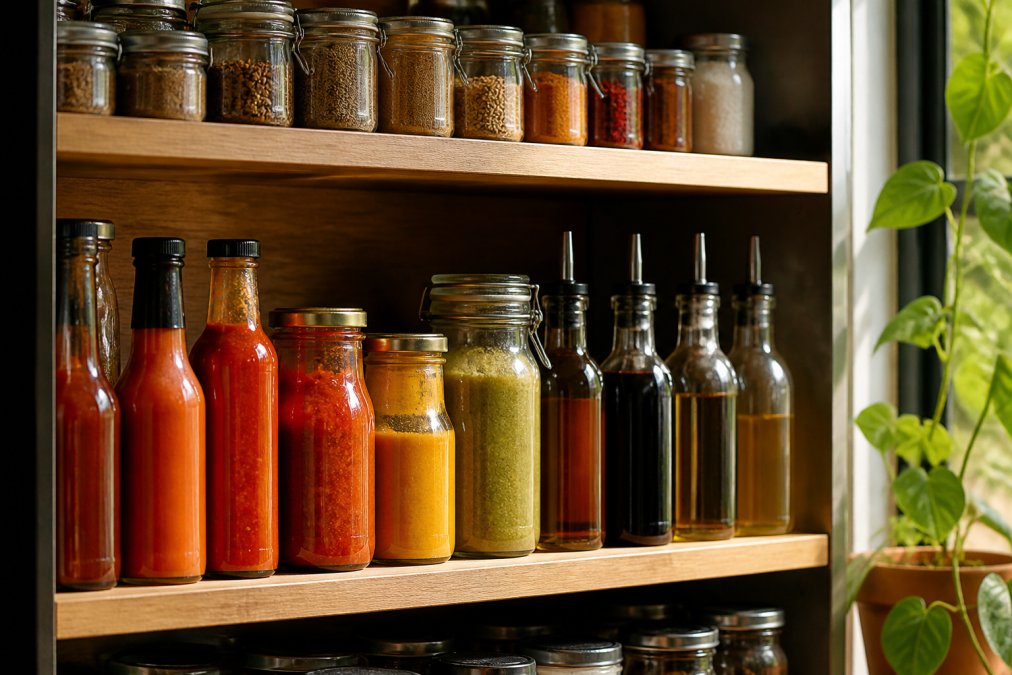
Sauces for Marinades and Glazes
Marinades and glazes require sauces with enough body to coat protein and enough flavour to penetrate. Jerk & Pineapple Sauce works as both a marinade and a glaze, making it a foundational pantry item.
Cognac & Honey Pepper Sauce serves a different purpose. It's gourmet rather than everyday, but it elevates special-occasion cooking without requiring expensive proteins. A simple pork chop becomes restaurant-quality when marinated in this sauce.
For everyday cooking, Hot Honey Pepper Sauce bridges sweet and savoury. Use it on roasted vegetables, as a finishing drizzle on grilled meats, or as a glaze component. The honey element makes it more forgiving than pure heat-focused sauces.
Seasonings for Everyday Dishes
Dry seasonings are the workhorses of a fusion pantry because they store longer than liquid sauces and work on everything from proteins to vegetables to popcorn.
Moroccan Harissa Seasoning brings earthy warmth and North African spice complexity. Mix it with olive oil to create a quick paste for marinades, or dust it over roasted vegetables. The blend of paprika, cumin, coriander, and chilli creates depth that single-spice seasonings cannot match.
Peri Peri Seasoning delivers Portuguese-African heat with lemon brightness. It works on chicken, prawns, vegetables, and even chips. The lemon zest powder distinguishes it from pure chilli blends, adding acidity that lifts dishes.
Thai Sriracha Seasoning translates the popular hot sauce into a dry rub. Use it on wings, chips, or roasted nuts. The garlic and vinegar powder components give it complexity beyond pure heat.
Vinegars for Depth and Brightness
Vinegars add brightness and complexity that sauces alone cannot provide. Scotch Bonnet Vinegar brings fruity heat to Caribbean-inspired dishes, marinades, and stews. A splash transforms a basic stew into something with real character.
Habanero Vinegar delivers tropical flair with intense heat. Use it sparingly in salad dressings, as a finishing splash on roasted vegetables, or as a marinade component. The fruity notes of habanero peppers make this vinegar more interesting than straight chilli vinegars.
What Sets Artisan Fusion Condiments Apart
Artisan condiments can differ from mass-produced alternatives in ingredient quality and flavour complexity. Premium sauces and seasonings often use real spices, real fruit, and real depth rather than flavour concentrates and shortcuts.
The difference can become obvious when you taste.
Food Festivals and Modern Home Cooking Trends
Food festivals have become discovery engines for home cooks seeking bold, international-inspired ingredients. The rise of fusion cuisine at festivals reflects a broader shift in how people approach everyday cooking.
Practical Pairing Guide for Fusion Condiments
Successful pairing combines flavour profiles with cooking methods and ingredients. The goal is complementarity, not clash.
| Ingredient | Best Condiment | Why It Works |
|---|---|---|
| Chicken thighs | Peri Peri Seasoning | Heat balances fat; lemon adds brightness |
| Pork chops | Cognac & Honey Pepper Sauce | Sweetness prevents dryness; depth elevates simple cuts |
| Grilled shrimp | Mango Pepper Sauce | Tropical sweetness complements delicate seafood |
| Roasted vegetables | Hot Honey Pepper Sauce | Honey caramelises; heat adds interest |
| Stewed meats | Moroccan Harissa Seasoning | Earthy spices develop in slow cooking |
Frequently Asked Questions
How can I use fusion condiments to improve bland chicken?
Fusion condiments work as marinades, glazes, and finishing drizzles. Mix Jerk & Pineapple Sauce with oil for a Caribbean marinade, or brush Hot Honey Pepper Sauce on grilled chicken in the final minutes for a sticky glaze. Peri Peri Seasoning rubbed onto chicken before roasting creates bold, spiced depth. Even a simple drizzle of Mango Pepper Sauce over cooked chicken adds tropical brightness. The key is applying these condiments at different cooking stages, early for marinades, late for glazes, to build layers of flavour.
What makes fusion condiments different from supermarket hot sauce?
Artisan fusion condiments like those from Spicy Rye's combine authentic global spice blends with premium ingredients, creating complex flavour profiles. Moroccan Harissa Seasoning brings earthy warmth and smoky paprika; Thai Sriracha Seasoning delivers tangy vinegar notes alongside chilli punch. These fusion options are designed to complement and elevate dishes, not simply add heat, making them versatile across everyday meals rather than novelty items.
Are these condiments suitable if I don't enjoy extreme spice levels?
Yes. Spicy Rye's range spans from fiery to balanced. Mango Pepper Sauce and Jerk & Pineapple Sauce deliver bold tropical flavours with moderate heat, making them ideal for those seeking flavour without overwhelming spice. Hot Honey Pepper Sauce combines sweetness with gentle warmth. Even the seasoning blends can be used sparingly, a pinch of Moroccan Harissa Seasoning adds complexity without heat dominance. Start with smaller amounts and adjust to your preference; these condiments are designed to enhance, not overpower.
How long do these condiments last once opened?
Always check individual product labels for specific guidance on shelf life and storage.