

Table of Contents
- Why Condiments Are the Secret to Meal Prep Success
- The 7 Versatile Condiments Every Weekly Meal Prep Needs
- How to Store Meal Prep Sauces for Maximum Shelf-Life
- Meal Prep Flavour Combinations That Never Get Boring
- Building a Jerk-Style Marinade with Jamaican Jerk Seasoning
- Troubleshooting Your Sauces: Emulsification and Consistency Fixes
- Final Verdict: Start with One Sauce and Build from There
- Frequently Asked Questions
Last Updated: September 7, 2026
Most meal prep guides focus on proteins and grains, yet the biggest reason home cooks abandon their routine is flavour fatigue. The solution is a roster of versatile condiments for weekly meal prep that transform one base ingredient into several distinct meals. At Spicy Rye's, we build sauces for this purpose, and a well-stocked condiment shelf is the difference between a chore and a ritual you look forward to.
Why Condiments Are the Secret to Meal Prep Success
The core principle of efficient meal prep is component cooking: prepare plain bases in bulk, then let sauces provide the variety. A single batch of roasted vegetables becomes a smoky side one night, a sweet-and-spicy topping the next, and a base for a grain bowl by Friday.
Rather than searching for new recipes each week, rotate your condiments to create fresh flavour profiles. This reduces decision fatigue and food waste. The goal is to stock bottles that serve as a marinade, a drizzle, a dip, and a glaze.
The 7 Versatile Condiments Every Weekly Meal Prep Needs
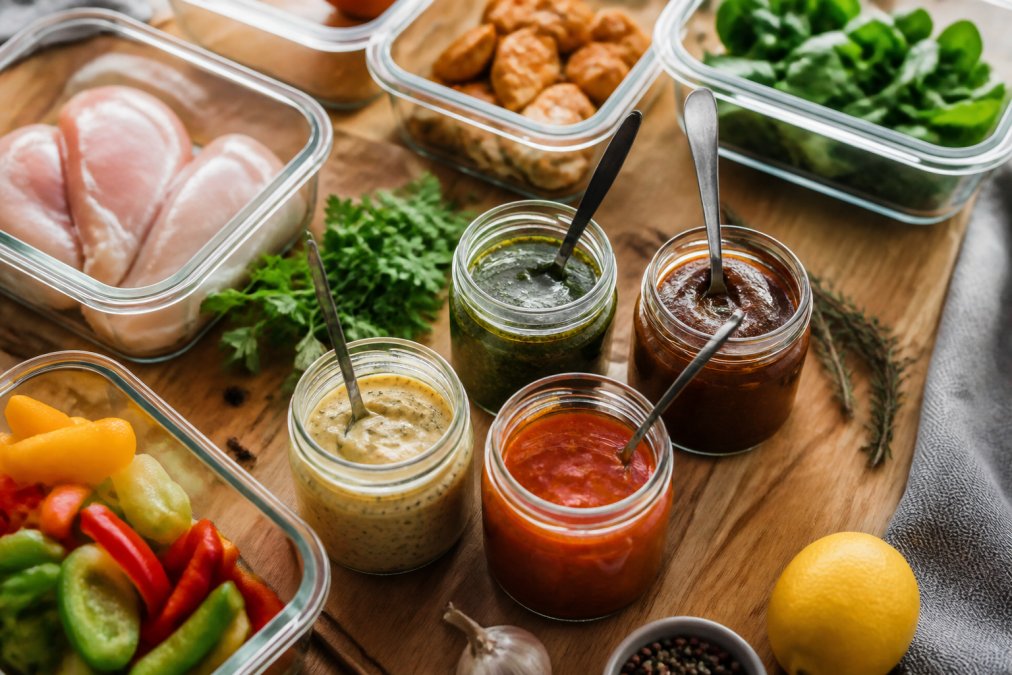
A curated collection of sauces and seasonings is the backbone of a flexible weekly menu. You do not need twenty bottles; you need a few high-quality options covering the spectrum from sweet heat to deep smoke. Here are the seven categories that deliver the most versatility for the storage space they occupy.
1. Hot Honey Pepper Sauce: The Sweet-Heat Drizzle
The Hot Honey Pepper Sauce from Spicy Rye's combines golden honey with fiery peppers for a sticky, spicy finish. It excels as a final drizzle over fried chicken, pizza, or a sharp cheddar cheese board. In meal prep, it rescues plain roasted root vegetables or acts as a glaze for grilled chicken thighs.
2. Bourbon & Honey BBQ Sauce: The Caramelising Glaze
Real bourbon and honey give this sauce a depth standard supermarket BBQ lacks. It caramelises under the grill, creating a rich crust on ribs, chicken, or pork chops. For weekly prep, it is the perfect partner for batch-cooked pulled pork or as a finishing glaze for burgers.
3. Smoky Chipotle BBQ Sauce: The Deep-Flavour Workhorse
When you need a full-bodied, classic BBQ flavour, this is the sauce to reach for. It brings deep smokiness that elevates brisket, ribs, and burgers, and works as a dip for sweet potato fries or a flavour boost in chilli and stews. Its versatility makes it the bottle you will replace most often.
4. Cognac & Honey Pepper Sauce: The Refined Finisher
This sauce pairs the smooth richness of cognac with honey and peppery heat, making it a gourmet addition to steaks, lamb chops, and roasted vegetables. It works brilliantly as an elegant marinade. For a quick weeknight upgrade, brush it over roasted carrots or parsnips in the final minutes of roasting.
5-7. Beyond the Bottle: Vinegars, Jams, and Seasoning Blends
The remaining three pillars of a versatile pantry are chilli vinegars, chilli jams, and dry seasoning blends. A splash of chilli vinegar adds acidity to finished dishes. Chilli jams serve as a sweet-heat glaze for meats or a surprising addition to sandwiches and cheese plates. Dry seasoning blends, such as a jerk-style mix, provide a quick flavour base for marinades and dry rubs.
How to Store Meal Prep Sauces for Maximum Shelf-Life
Proper storage separates a week of great meals from a fridge full of spoiled leftovers. The shelf-life of your sauces depends on the container and the storage method. Always use clean, dry utensils when portioning sauce to avoid introducing bacteria.
Refrigeration Rules and Container Choices
Once opened, most artisan sauces should be refrigerated to maintain their quality. Glass jars with tight-fitting lids are the best storage container choice because they do not absorb flavours or odours like plastic can. Always check the label for specific guidance, but a general rule is to use opened sauces within a few months for the best flavour. The UK Food Standards Agency guidance on food storage recommends keeping your fridge below 5°C to ensure food safety.
For a more precise approach, use this quick-reference chart based on common sauce types:
| Sauce Type | Fridge Life (Opened) | Freezer Life | Best Practice |
|---|---|---|---|
| Hot Honey Pepper Sauce | 3-4 months | 6 months | The honey acts as a natural preservative. Store away from direct light to prevent colour fading. |
| Bourbon & Honey BBQ Sauce | 3-4 months | 6 months | The sugar and alcohol content help preserve it. Freeze in portioned ice cube trays for easy glazing. |
| Smoky Chipotle BBQ Sauce | 3-4 months | 6 months | High acidity from tomatoes and vinegar makes it shelf-stable for longer. |
| Cognac & Honey Pepper Sauce | 3-4 months | 6 months | The higher alcohol content from cognac acts as a preservative, but flavour is best within the first few months. |
| Chilli Vinegar | 6-12 months | Do not freeze | The high acidity means it rarely spoils. Keep it in a cool, dark cupboard if you prefer, but refrigeration maintains the chilli's colour. |
| Chilli Jam | 2-3 months | 6 months | The high sugar content preserves it, but the fruit can ferment over time. Always use a clean, dry spoon. |
| Dry Seasoning Blends | 6-12 months (pantry) | N/A | Keep in an airtight container away from steam and heat. They lose potency over time, not safety. |
Freezer-Friendly Marinades for Batch Cooking
Many sauces double as excellent marinades and freeze well. Portion your marinade into a freezer bag with raw chicken or pork, label it with the date, and freeze for up to three months. When ready to cook, defrost in the fridge overnight and grill as usual.

A common pattern for freezer-friendly marinades is a higher oil-to-acid ratio (roughly 3:1) because oil protects the protein's texture during freezing. Acid-heavy marinades can break down meat's proteins, leading to a mushy texture after thawing. Combine your chosen sauce with a splash of olive oil before bagging it with the meat.
Meal Prep Flavour Combinations That Never Get Boring
The real power of a condiment-led prep strategy is the ability to mix and match flavour profiles throughout the week. Cook a large batch of plain chicken breast and divide it into separate containers, each dressed with a different sauce. This creates three distinct meals from one cooking session.
The Flavour Pairing Matrix
Think of your sauces as building blocks. Instead of thinking about 'what goes with what', use this matrix to build a week of meals from one base protein and two or three sides. The goal is contrast in texture and temperature, not just flavour.
| Base Protein (Cooked) | Side 1 (Starch) | Side 2 (Vegetable) | Sauce Profile | Why It Works |
|---|---|---|---|---|
| Grilled Chicken | Sweet Potato Mash | Steamed Greens | Bourbon & Honey BBQ | The sweetness of the sauce and mash is cut by the bitter greens, creating a balanced, comforting plate. |
| Grilled Chicken | Rice & Black Beans | Roasted Peppers | Smoky Chipotle BBQ | The smoky heat of the sauce mimics a Mexican adobo, tying the earthy beans and sweet peppers together. |
| Grilled Chicken | Couscous | Roasted Carrots | Hot Honey Pepper | The sticky, spicy-sweet sauce contrasts with the fluffy couscous and the natural sweetness of the carrots. |
| Grilled Chicken | Quinoa | Grilled Asparagus | Cognac & Honey Pepper | The refined, slightly sweet heat elevates the meal without overpowering the delicate asparagus. |
| Pan-Fried Pork | Coleslaw | Sweet Potato Fries | Bourbon & Honey BBQ | The rich, caramelised sauce is the classic partner for the acidic, crunchy slaw. |
| Pan-Fried Pork | Rice Noodles | Stir-Fried Pak Choi | Chilli Vinegar | A splash of vinegar adds brightness and cuts through the richness of the pork, mimicking a sweet and sour profile. |
| Baked Tofu | Brown Rice | Broccoli | Smoky Chipotle BBQ | The deep smoke adds a 'meaty' umami to the tofu, making the meal feel more substantial. |
The 'Three-Container' Method for a Full Week
A practical approach to prevent boredom is to prep three different bases and three different sauces, then mix and match. On Sunday you might cook:
- Container 1: 500g of plain grilled chicken breast, sliced.
- Container 2: 500g of roasted mixed vegetables (peppers, courgette, red onion).
- Container 3: 250g of cooked quinoa.
Then, portion these into your daily containers. On Monday, have chicken with a drizzle of Hot Honey Pepper Sauce and a side of vegetables. On Tuesday, mix the chicken and quinoa with a spoonful of Smoky Chipotle BBQ Sauce for a 'burrito bowl'. On Wednesday, toss the vegetables with the Bourbon & Honey BBQ Sauce and serve alongside the remaining chicken.

Sauce-to-Protein Ratio Guidelines
Getting the ratio right ensures your meals are flavourful without being overwhelmed. A good starting point is roughly two tablespoons of sauce per 150 grams of cooked protein. Use less if the sauce is intensely flavoured or spicy, and more if mixing it into a grain bowl.
For a more precise approach, consider the sauce's role:
- As a Drizzle or Finisher: Use 1-2 teaspoons per serving. The goal is a hint of flavour, not a coating.
- As a Glaze: Use 1-2 tablespoons per serving, applied during the last few minutes of cooking to caramelise.
- As a Marinade: Use 3-4 tablespoons per 150g of raw protein. Some of this will be discarded, so the final flavour is more subtle.
- As a Dressing or Mix-in: Use 2-3 tablespoons per serving, especially if you are mixing it into grains or salads where it needs to coat a larger volume.
A note on calorie density: While sauces add flavour, they also add calories. A two-tablespoon serving of a honey-based sauce can contain 80-100 calories (fdc.nal.usda.gov). If you are tracking your intake, measure the sauce rather than eyeballing it. This is a common pitfall that can derail a week of healthy meal prep.
Building a Jerk-Style Marinade with Jamaican Jerk Seasoning
Jamaican jerk seasoning is one of the most versatile blends for weekly meal prep, offering a punchy combination of heat, allspice, and aromatics. To build a quick marinade, combine a generous tablespoon of the seasoning with citrus juice, olive oil, and a little honey to balance the heat. This creates a wet paste that clings well to chicken, pork, or firm fish.
Marinate your protein for at least two hours, or overnight for deeper flavour. The citrus juice helps tenderise the meat while the seasoning penetrates the surface. This is a simple way to bring bold, Caribbean-inspired flavour to your weekly rotation.
Troubleshooting Your Sauces: Emulsification and Consistency Fixes
A common issue when making homemade vinaigrettes is separation, where oil and acidic components split apart. Emulsification forces these two liquids into a stable mixture. To fix a broken sauce, whisk it vigorously with a teaspoon of Dijon mustard, or blitz it in a blender.
If a sauce is too thin, simmer it gently to reduce and thicken the consistency. If it is too thick, whisk in a splash of water or citrus juice to loosen it. Understanding these simple fixes prevents frustration and ensures your sauces maintain the right texture, whether you are drizzling them over a salad or glazing meat on the grill. The Science of emulsification in cooking explains how ingredients like mustard and egg yolk stabilise mixtures.
Final Verdict: Start with One Sauce and Build from There
Building a versatile condiment collection does not require an immediate overhaul of your pantry. Start with one or two high-quality bottles that excite you, and use them across your next few meal prep sessions. From there, expand into vinegars and seasoning blends as your confidence grows.
The key is to let the condiments do the heavy lifting. By investing in premium, natural ingredients that offer real versatility, you turn repetitive meal prep into a creative and enjoyable process. The right sauce makes every meal feel intentional.
The challenge with meal prep has never been the cooking; it is keeping the food interesting enough to finish the week. Spicy Rye's offers a curated range of sauces, chilli vinegars, and seasoning blends designed to solve that exact problem. Crafted with premium, natural ingredients and ranging from fiery heat to smoky sweetness, our collection adds genuine versatility to your home cooking. Get started with Spicy Rye's and turn your next batch of plain chicken into five meals you will actually look forward to eating.
Frequently Asked Questions
What are the best long-lasting condiments for meal prep?
Look for condiments with high acidity, sugar, or salt content. Sauces like our Smoky Chipotle BBQ Sauce and Hot Honey Pepper Sauce stay fresh for months unopened and remain stable in the fridge for weeks after opening. Always check the label for storage instructions. A good rule is to store them in airtight glass containers away from direct sunlight, and always use a clean, dry spoon to avoid introducing bacteria that shortens shelf-life.
How do you store homemade sauces for the week?
Store homemade sauces in airtight glass containers or jars in the refrigerator for up to five days. For longer storage, pour the sauce into freezer-safe containers or silicone ice cube trays. Freezing in portions lets you defrost just what you need for a single meal. Label each container with the sauce name and date. Sauces with dairy or fresh herbs have a shorter shelf-life, so use those within two to three days.
How can I use Jamaican jerk seasoning in weekly meal prep?
Jamaican jerk seasoning works as a dry rub or a wet marinade base. Mix two tablespoons of the seasoning with our Bourbon & Honey BBQ Sauce and a splash of citrus juice to create a balanced jerk glaze. Marinate chicken thighs or tofu overnight, then grill or bake in batches for the week. The heat and allspice notes pair well with rice, beans, and grilled pineapple for a complete meal prep bowl.
What is the 3-3-3 rule for meal prep?
The 3-3-3 rule is a simple framework to keep your weekly prep varied. Prepare 3 proteins, 3 carbohydrates, and 3 sauces or condiments. Cook the proteins and carbs in bulk, then rotate the sauces daily. This method prevents flavour fatigue without extra cooking time. For example, grill chicken, roast sweet potatoes, and steam rice, then alternate between a smoky BBQ sauce, a hot honey drizzle, and a jerk-style marinade throughout the week.