

Table of Contents
- 1. Bloom Spices in Oil Before You Cook
- 2. How to Toast Spices for Maximum Flavour
- 3. How to Add Flavour to Bland Chicken
- 4. Build Simple Spice Blends for Everyday Meals
- 5. Season Soups, Sauces and Stews in Layers
- 6. Use Dry Rubs and Marinades for Roasting and Grilling
- 7. Fix an Over-Seasoned Dish and Store Spices Properly
- Frequently Asked Questions
Last Updated: September 25, 2026
1. Bloom Spices in Oil Before You Cook
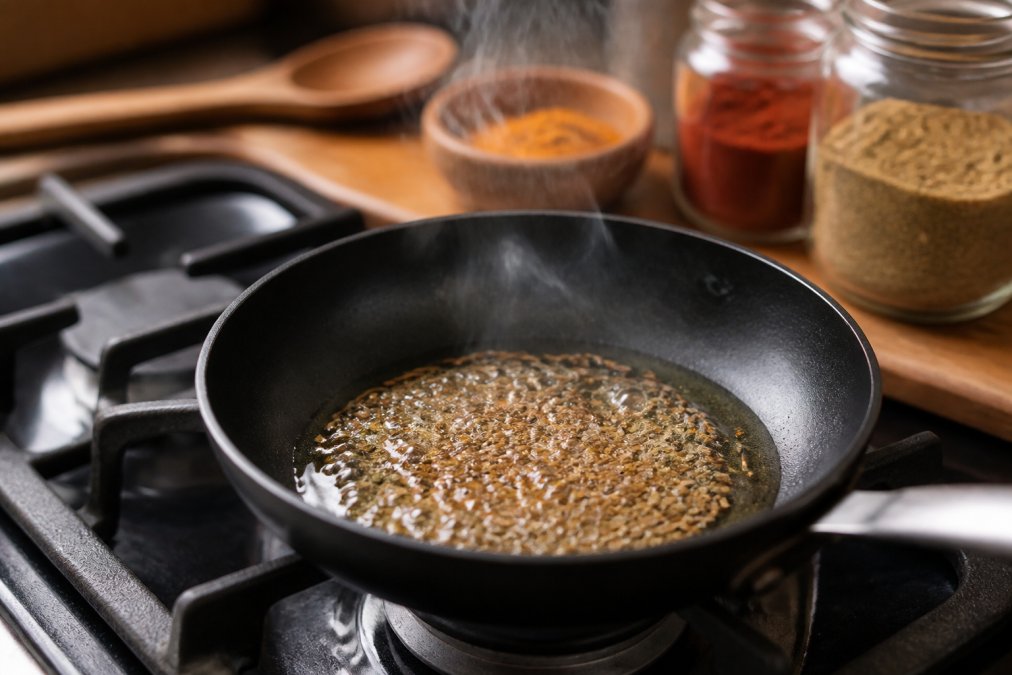
Blooming spices is the technique of heating ground or whole spices in oil before adding other ingredients, and it is one of the 7 ways to transform home cooking with spices. The oil draws out fat-soluble flavour compounds that water alone cannot release.
Here is how to do it properly:
- Warm 1-2 tbsp of oil in a pan over medium heat
- Add whole spices first (cumin seeds, mustard seeds, cinnamon bark)
- Wait for the sizzle, then add ground spices for 20-30 seconds
- Pour in your wet ingredients before the spices scorch
The difference between blooming and dumping spices straight into a pot is the difference between a dish that tastes layered and one that tastes flat.
2. How to Toast Spices for Maximum Flavour
Toasting spices for maximum flavour means heating them dry in a pan until fragrant, which takes 1-2 minutes and deepens their aroma before you grind or add them. This is the step most home cooks skip.
Whole spices respond best to dry toasting. Cumin seeds, coriander seeds, and dried chillies all benefit. Keep the pan moving and pull the spices the moment you smell them, because the window between toasted and burnt is narrow.
A common mistake is toasting over high heat. Medium heat gives you control and lets the oils release gradually. Once toasted, grind immediately for the brightest flavour.
3. How to Add Flavour to Bland Chicken
The answer to how to add flavour to bland chicken is to season in stages rather than at the end. Chicken is a blank canvas, and most people only paint one layer.
Start with a dry rub before cooking so the seasoning has time to penetrate. A blend like Secret Chicken Seasoning (£5.56) combines smoked paprika, lemon zest, garlic, and herbs, which gives you sweet, savoury, and citrus notes in one shake. Rub it on and let it sit for at least 20 minutes.

Then finish with acidity. A squeeze of lemon or a spoonful of chilli vinegar after cooking lifts everything you layered underneath.
4. Build Simple Spice Blends for Everyday Meals
Simple spice blends for everyday meals follow a basic formula: a base note, a heat element, an aromatic, and a touch of sweetness or acidity. Once you know the formula, you can build blends without a recipe.
| Blend Style | Base Note | Heat | Aromatic | Finish |
|---|---|---|---|---|
| Smoky BBQ | Smoked paprika | Cayenne | Garlic, onion | Brown sugar |
| North African | Cumin, coriander | Chilli flakes | Caraway, cinnamon | Lemon zest |
| Peri Peri | Paprika | Cayenne | Garlic, oregano | Lemon, vinegar |
| Jerk | Allspice | Scotch bonnet | Thyme, ginger | Brown sugar |
If building from scratch feels like too much work on a weeknight, a ready-made blend does the job. Jamaican Jerk Seasoning (£5.65) covers the smoky, sweet, and fiery bases in one pouch, and it works on chicken, pork, tofu, or veg.

5. Season Soups, Sauces and Stews in Layers
Layered seasoning means adding spices at multiple points during cooking, not all at once at the start. Each stage builds a different depth of flavour.
Add whole spices to the oil first. Add ground spices when you add onions or aromatics. Add a final pinch of something bright, like lemon pepper, in the last few minutes. This is why a stew that simmers for two hours tastes richer than one rushed in thirty minutes.
6. Use Dry Rubs and Marinades for Roasting and Grilling
Dry rubs and marinades do different jobs, and knowing which to use changes your results. A dry rub creates a crust and concentrates flavour. A marinade tenderises and adds moisture.
For roasting, apply a dry rub at least 30 minutes ahead, or overnight for deeper penetration. For grilling, a wet marinade helps prevent drying over direct heat. A Peri Peri Seasoning (£5.65) works both ways: mix it with oil, lemon juice, and vinegar for a marinade, or dust it dry over chicken and prawns before they hit the grill.
The trick with dry rubs is to pat the meat dry first. Moisture steams the surface instead of letting it brown.
7. Fix an Over-Seasoned Dish and Store Spices Properly
An over-seasoned dish can usually be rescued, and storing spices correctly prevents the problem of dull, lifeless seasoning in the first place.
To fix an over-seasoned dish:
- Too salty: Add unsalted liquid, a peeled potato, or a splash of cream
- Too spicy: Add fat (cream, yoghurt, butter) or a sweet element like honey
- Too bitter: A pinch of sugar and a squeeze of lemon balances it out
- Too strong overall: Bulk it out with more of the base ingredient
For storage, keep spices in airtight jars away from heat, light, and moisture. Whole spices hold their flavour far longer than ground, so buy small quantities and grind as you need them. A well-stocked pantry with fresh blends makes everything else on this list easier.
Veggie Rockstar Seasoning (£5.56) is a good example of a blend that stays useful across many meals. It brings smoked paprika, garlic, herbs, and nutritional yeast together, so it works on roast veg, chips, popcorn, or avocado toast without needing anything else added.

These 7 ways to transform home cooking with spices come down to technique, not expensive equipment. Blooming, toasting, layering, and finishing with acid are the habits that separate a flat meal from a memorable one. At Spicy Rye's, we make that easier with a range of premium seasoning blends crafted from high-quality ingredients, from fiery heat to smoky sweetness. Every pouch is built to add versatility to your everyday cooking, whether you are rubbing a chicken, glazing vegetables, or fixing a dish that needs rescuing. Get started with Spicy Rye's and taste the difference real seasoning makes.
Frequently Asked Questions
How do I start cooking with spices as a beginner?
Start with three or four single spices you actually enjoy, such as smoked paprika, cumin, garlic granules and black pepper, and add them in small amounts while tasting as you go. Learn one technique at a time, beginning with toasting or blooming, then move on to simple blends. Buying small pouches rather than large tubs keeps everything fresher, and a basic blend like Garlic & Herb Seasoning gives you an easy all-round starting point for chicken, vegetables and pasta.
What are the best spices to keep in a kitchen cupboard?
A practical core set covers most everyday cooking: smoked paprika, ground cumin, ground coriander, garlic granules, onion powder, dried oregano, dried thyme, chilli flakes, black pepper and sea salt. Add one or two blends that match how you cook, such as Jamaican Jerk Seasoning for grilling or Lemon Pepper Seasoning for fish and roast vegetables. Store everything in airtight jars away from the hob, because heat, light and moisture shorten shelf life and dull the aromatic oils that carry flavour.
How can I add flavour to bland chicken?
Season earlier and in more than one stage. Pat the chicken dry, rub it with oil, then apply a generous dry rub such as Secret Chicken Seasoning and leave it for at least 30 minutes, or overnight in the fridge for deeper penetration. Add salt at the start, not just at the table, and finish with something sharp like lemon juice or a chilli vinegar to lift the whole dish. Mixing a rub with yoghurt or buttermilk also tenderises the meat while the spices soak in.
Should I toast spices before adding them to a dish?
Yes, for whole seeds and many ground blends it makes a noticeable difference. Toasting over medium heat for 30 to 60 seconds, until fragrant but not smoking, warms the aromatic oils so they release more scent and taste into the finished dish. Do it in a dry pan and keep the spices moving, because ground spices can scorch in seconds. Blooming in oil achieves a similar effect and carries those flavours into the fat, which then coats every ingredient.
How do I balance spices in a recipe that tastes too strong?
Taste first and identify what is overpowering. If the heat is too sharp, add fat such as cream, yoghurt or butter, or a little sweetness from sugar or honey. If it tastes flat rather than hot, add acidity from lemon juice or vinegar, then a pinch more salt. For a dish that is genuinely over-seasoned, increase the total volume by adding unsalted stock, plain rice, potatoes or extra vegetables so the spices spread through more food rather than being removed.