

Table of Contents
- Why Preservative Free Hot Sauce Matters for Your Pantry
- Natural Preservatives for Hot Sauce: What Actually Keeps It Safe
- How to Store Hot Sauce: Pantry vs. Refrigerator
- Shelf Life of Artisanal Hot Sauce: What to Expect
- Reading Labels: How to Spot Real Preservative Free Sauces
- Fermentation vs. Vinegar-Based Preservation: Which Lasts Longer
- Building Your Pantry: From Mild to Fiery
- Frequently Asked Questions
Last Updated: September 3, 2026
Why Preservative Free Hot Sauce Matters for Your Pantry
Most commercial hot sauces rely on synthetic preservatives like sodium benzoate or potassium sorbate to extend shelf life indefinitely. A preservative free hot sauce takes a different approach, using natural preservation methods that have worked for centuries. At Spicy Rye's, we've built our range around the principle that you shouldn't have to choose between flavour and ingredient integrity.
The real question isn't whether preservative-free sauces can last. It's whether you understand the preservation methods behind them. Vinegar, salt, fermentation, and heat all function as preservatives when deployed properly. This guide walks you through exactly how to identify, select, and maintain preservative free hot sauce so it performs as intended.
Natural Preservatives for Hot Sauce: What Actually Keeps It Safe
Natural preservation methods work by creating an environment where harmful bacteria cannot survive.
Vinegar and Acidity as Natural Preservatives
Vinegar is the most reliable natural preservative for hot sauce, used this way for thousands of years. The acidity level, measured as pH, stops bacterial growth. Most vinegar-based hot sauces sit at a pH below 3.8, which prevents the growth of botulism and other pathogens (as widely accepted in food safety guidelines).
When vinegar is the primary preservative, the sauce becomes shelf-stable even without refrigeration. This is why vinegar-based hot sauces dominate commercial production. The acidity brightens the flavour profile and adds complexity that many heat-seekers appreciate.
Apple cider vinegar appears frequently in artisanal hot sauces because it carries subtle sweetness and depth. Distilled vinegar works equally well from a preservation standpoint but offers a cleaner, sharper profile. The choice between them is purely about the flavour outcome you want.
Salt, Heat, and Fermentation Methods
Salt acts as a preservative by drawing moisture out of the sauce, which inhibits microbial growth. Modern artisanal producers tend to use less salt than their predecessors, focusing instead on other preservation methods to avoid high sodium content.
Heat, from actual chilli peppers and their capsaicin content, also plays a preservation role, though it's often overstated. Capsaicin has some antimicrobial properties, but it works best in combination with vinegar or fermentation.
Lacto-fermentation represents the most complex natural preservation approach. When chillies, salt, and other ingredients ferment over time, beneficial bacteria produce lactic acid, which lowers the pH and creates a naturally preserved product. Fermented hot sauces develop deeper, more complex flavours than their vinegar-based counterparts because the fermentation process creates entirely new flavour compounds.
Many artisanal fermented sauces are unpasteurised, meaning they contain living cultures. The flavour continues to evolve in the bottle. You'll typically find these in the refrigerated section, and they require chilling after opening.
Some producers combine fermentation with vinegar for added security. This hybrid approach gives you the complexity of fermentation plus the proven shelf stability of acidity.
How to Store Hot Sauce: Pantry vs. Refrigerator
Storage decisions depend entirely on the preservation method used. The label should tell you what to do, but understanding the logic behind those instructions helps you make the right call.
Unopened Bottles: Ambient Temperature Storage
Unopened, shelf-stable hot sauces can sit in your pantry at ambient temperature indefinitely, or at least for the shelf life stated on the label. Vinegar-based sauces with pH below 3.8 are genuinely stable at room temperature.
Store unopened bottles away from direct sunlight and heat sources. Sunlight degrades flavour compounds over time, and heat accelerates oxidation. A cool, dark cupboard is ideal. Avoid storing hot sauce above the cooker or near radiators, where temperature fluctuations occur regularly.
After Opening: Refrigeration and Shelf Life
Once opened, even a shelf-stable hot sauce benefits from refrigeration. The cold slows oxidation and microbial growth, extending the usable life significantly.
For vinegar-based sauces, you'll typically get 4-6 months of quality shelf life in the refrigerator after opening (based on general food safety recommendations for opened condiments). Fermented, unpasteurised sauces last longer because the living cultures continue to preserve the product, often 6-12 months.
Always use a clean spoon when removing sauce from the jar. Contamination from a dirty utensil is the most common way opened hot sauce deteriorates prematurely.
Shelf Life of Artisanal Hot Sauce: What to Expect
Vinegar-based artisanal hot sauces typically have a shelf life of 18-24 months unopened (as commonly indicated by manufacturers for shelf-stable products). Once opened and refrigerated, expect 4-6 months of optimal quality. Fermented sauces without added vinegar often have shorter stated shelf lives, 12-18 months unopened, because they're more dependent on living cultures for preservation.
Some small producers use a combination approach: fermentation plus vinegar. These hybrid sauces often have longer shelf lives (24+ months unopened) and better stability once opened.
The "best by" date on a label is not an expiration date. It's the manufacturer's estimate of when the product reaches peak flavour and quality. A sauce past its best-by date isn't necessarily unsafe, it's just past the point where the producer guarantees optimal flavour.
Temperature stability matters enormously for shelf life. A sauce stored in a cool cupboard will last significantly longer than one stored near a heat source. Every 10 degrees Celsius of temperature increase roughly halves the remaining shelf life due to accelerated oxidation.
Reading Labels: How to Spot Real Preservative Free Sauces
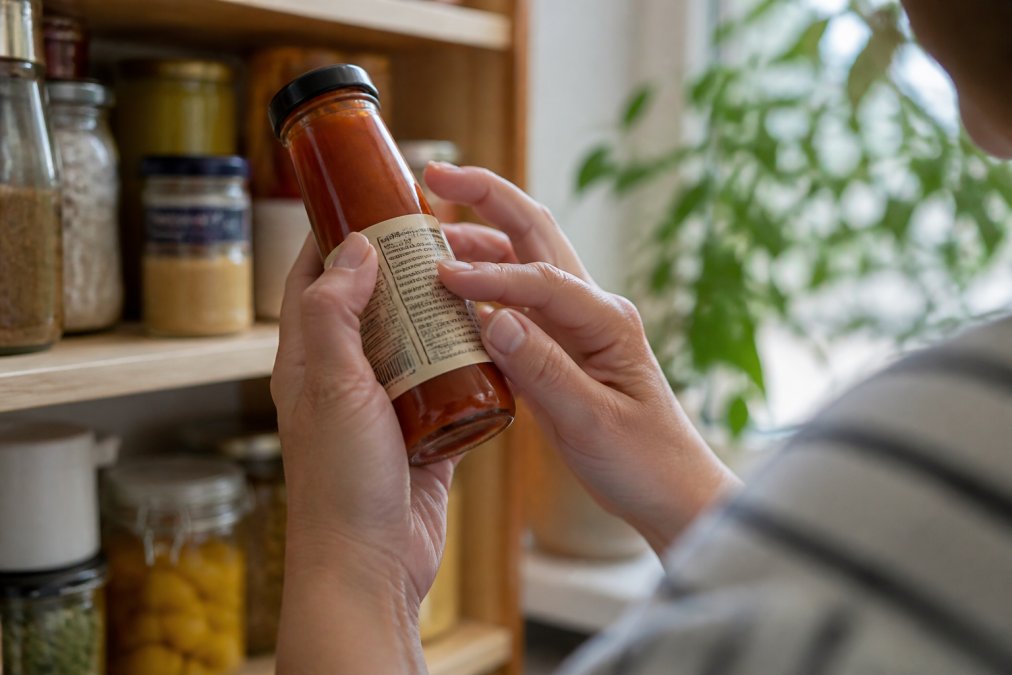
The ingredient list is your primary tool for verifying that a sauce is genuinely preservative-free.
Common Additives to Avoid
Sodium benzoate and potassium sorbate are synthetic preservatives that appear frequently in mass-market hot sauces. If you see either of these on the label, the sauce is not preservative-free, regardless of what the marketing says.
Xanthan gum and guar gum are thickeners, not preservatives, derived from natural sources. They're generally considered safe, though unnecessary if you prefer a thinner sauce consistency.
Artificial flavourings and colour additives sometimes appear in sauces marketed as natural. A sauce can be preservative-free but still contain artificial compounds. If your goal is genuinely natural ingredients, these matter.
Citric acid appears on many labels and is often confused with a preservative. It's actually just an acidulant that adds tartness and helps lower pH, but it's not the primary preservative.
Certifications and Clean Label Standards
Look for certifications that matter to you. Organic certification means the chillies and other ingredients were grown without synthetic pesticides or fertilisers. It doesn't guarantee anything about preservation methods, but it indicates a producer committed to ingredient quality.
Some producers voluntarily adopt clean label standards, committing to avoid artificial additives entirely. This is a voluntary pledge, not a regulated certification, but it signals intention.
The ingredient list length is a useful heuristic. Genuine preservative-free sauces typically have 5-10 ingredients. If you're seeing 20+ ingredients, the producer may be adding flavourings, thickeners, or other compounds unnecessarily.
When in doubt, contact the producer directly. Legitimate artisanal makers respond to ingredient questions.
Fermentation vs. Vinegar-Based Preservation: Which Lasts Longer
Vinegar-based sauces are more predictable. The acidity level is controlled from day one, and the preservation is immediate and reliable. A well-made vinegar-based sauce will last 18-24 months unopened with virtually no degradation.
Fermented sauces are more complex but less stable. The fermentation process creates depth and nuance that vinegar-based sauces cannot match. However, fermented sauces depend on living cultures, making them more sensitive to temperature fluctuations. They typically have shorter stated shelf lives and require refrigeration even unopened in some cases.
From a pure shelf life perspective, vinegar-based sauces win. From a flavour perspective, fermented sauces offer something unique, a living product that evolves over time.
The hybrid approach, fermentation plus vinegar, gives you both benefits. These sauces have the complexity of fermentation plus the stability of acidity, though they tend to be more expensive.
Building Your Pantry: From Mild to Fiery
Creating a balanced hot sauce collection means thinking about heat levels, flavour profiles, and versatility across different dishes.
Start with a mild option, something in the 1,000-2,500 Scoville unit range. This lets the ingredients shine and works on eggs, grilled cheese, tacos, and pizza without overwhelming the underlying dish.
Add a medium-heat sauce next, around 5,000-15,000 Scoville units. This is where most artisanal producers focus their energy because it's the sweet spot between heat and flavour.
Include at least one high-heat option for situations where you want genuine fire. Above 50,000 Scoville units, heat becomes the primary experience. These sauces work on specific dishes like chilli or wings rather than as everyday condiments.
Consider flavour profiles alongside heat. A fermented sauce with aged cayenne will taste entirely different from a vinegar-based sauce with fresh habaneros, even if they're in the same heat range.
Store your collection in a cool, dark place. A dedicated shelf in a kitchen cupboard works perfectly. Keep unopened bottles together, and once you open a bottle, move it to the refrigerator.
Building a pantry of preservative-free hot sauces means understanding preservation science well enough to make confident choices. The methods that keep these sauces safe, vinegar acidity, fermentation, salt, and heat, are the same ones that have protected food for centuries. When you choose a preservative free hot sauce, you're choosing transparency about what's in your food and how it's preserved. Spicy Rye's collection is built on this principle: premium ingredients, natural preservation, and genuine flavour in every bottle. Explore our range and discover how real hot sauce should taste.
Frequently Asked Questions
Q: What ingredients act as natural preservatives in preservative free hot sauce?
A: Vinegar, salt, chilli peppers, and fermentation are the primary natural preservatives. Vinegar lowers pH to prevent bacterial growth, whilst salt draws out moisture. Fermentation creates lactic acid, which naturally stabilises the sauce. High heat levels (measured in Scoville units) also inhibit spoilage. These methods work together to create shelf-stable products without synthetic additives like sodium benzoate or potassium sorbate.
Q: How long does preservative free hot sauce last once opened?
A: Unopened preservative free hot sauce typically lasts for an extended period in a cool, dark pantry. Once opened, refrigerate and use within a reasonable timeframe for best quality, though many remain safe longer if kept sealed and cool. Fermented and vinegar-based sauces tend to last longer than fresh-based versions. Always check for signs of spoilage: mould, off-odours, or cloudiness. Store with the cap tightly sealed to prevent oxidation.
Q: Is it safe to store hot sauce in the pantry without refrigeration?
A: Yes, unopened preservative free hot sauce can safely remain in the pantry at ambient temperature if it's been properly preserved through vinegar, fermentation, or high salt content. The acidity level (pH below 3.8) prevents botulism and bacterial growth. Once opened, move to the fridge to maintain freshness and prevent oxidation. Check the label for storage instructions, as some artisanal sauces may specify refrigeration from purchase.
Q: What's the difference between fermented and vinegar-based preservative free hot sauce?
A: Fermented sauces use lacto-fermentation to develop natural lactic acid, creating complex flavours and probiotics over weeks or months. Vinegar-based sauces rely on apple cider vinegar or other acids for rapid preservation and immediate shelf stability. Fermented versions often taste tangier and more nuanced, whilst vinegar-based options deliver sharper acidity upfront. Both are shelf-stable without additives, but fermentation typically offers unique flavour development.
This article was written using GrandRanker