

Table of Contents
- What Makes Natural Ingredients in Spicy Condiments Different
- Core Ingredients That Define Spicy Heat
- How to Read Hot Sauce Labels for Quality
- Understanding Preservative-Free Hot Sauce
- The Benefits of Fermented Hot Sauce
- Crafting Your Own Natural Spicy Condiments
- Why Premium Natural Condiments Outperform Supermarket Alternatives
- Conclusion
Last Updated: August 30, 2026
What Makes Natural Ingredients in Spicy Condiments Different
The difference between a supermarket hot sauce and a genuinely natural one comes down to what you can actually pronounce on the label. Most mass-produced sauces rely on thickeners, stabilizers, and preservatives that keep them shelf-stable for years but strip away authentic flavour.
Natural ingredients in spicy condiments prioritize real heat sources, genuine flavour depth, and preservation methods that don't require a chemistry degree to understand. You get capsaicin from actual chilli peppers, acidity from vinegar rather than citric acid derivatives, and flavour profiles that develop over time. At Spicy Rye's, we've built our entire range around this principle, every sauce starts with the question: what's the simplest, most flavourful way to deliver heat and taste?
Core Ingredients That Define Spicy Heat
Chilli Peppers and Capsaicin
The heat in any spicy condiment comes from capsaicin, the compound that makes chilli peppers burn. Different chilli varieties offer distinct heat profiles: habaneros bring fruity notes alongside serious heat, scotch bonnets deliver Caribbean warmth with subtle sweetness, jalapeños offer accessible spice with grassy undertones, and ghost peppers exist at the extreme end where heat overwhelms everything else.
When sourcing chilli peppers for natural ingredients in spicy condiments, freshness matters enormously. Fresh peppers deliver brighter, more complex flavours, while dried peppers work well for concentrated heat and shelf stability. Many artisanal makers use a combination: fresh peppers for immediate flavour, dried peppers for depth and preservation.
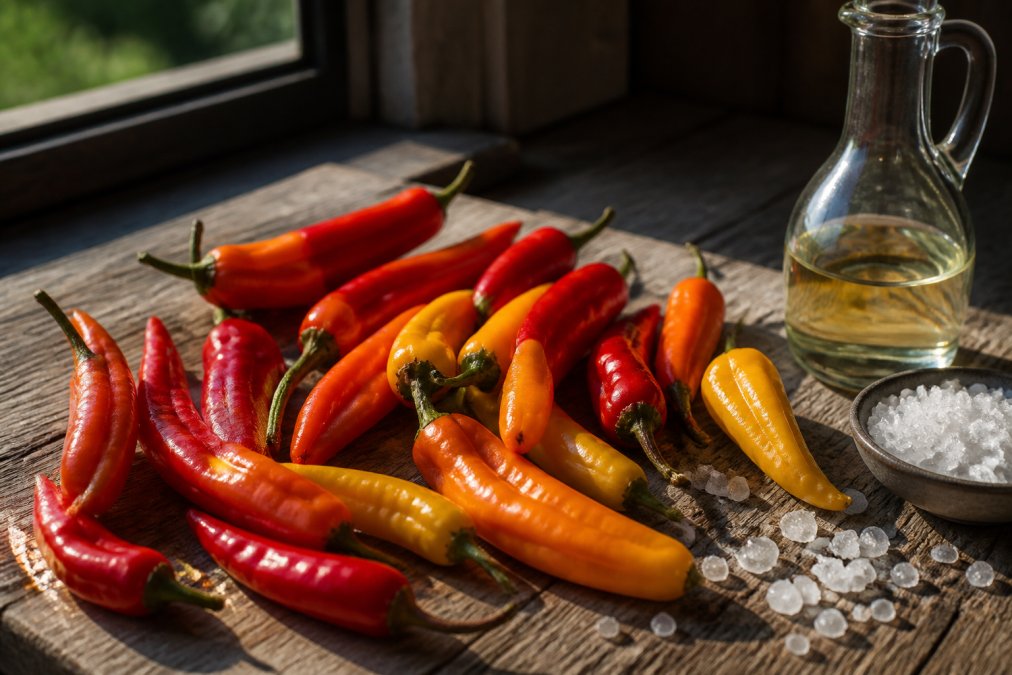
Capsaicin is heat-stable, meaning it survives cooking, fermentation, and storage. But capsaicin alone doesn't make a great condiment. It's the interplay between heat and the other ingredients, the acid, the salt, the aromatics, that creates something worth eating repeatedly.
Vinegar as a Natural Preservative
Vinegar isn't just flavour. It's the backbone of food safety in natural condiments. The acidity, typically around 5% in standard vinegar, creates an environment where harmful bacteria struggle to survive. This is why vinegar has preserved foods for centuries, long before refrigeration existed.
Different vinegars bring different character: white vinegar offers clean, sharp acidity, apple cider vinegar adds subtle sweetness and complexity, wine vinegar delivers sophistication, and rice vinegar brings mild, rounded notes. The vinegar choice shapes the entire profile, it's a core flavour component, not an afterthought. The beauty of vinegar-based preservation is that it requires nothing else. No gums, no chemical preservatives, no stabilizers.
Salt Content and Flavour Balance
Salt does two jobs in spicy condiments: it enhances flavour and it preserves. Natural ingredients in spicy condiments benefit from thoughtful salt use, just enough to bring out the pepper's natural sweetness and complexity. Most artisanal makers aim for around 2-3% salt by weight, enough to preserve and enhance, not enough to dominate.
The type of salt matters too. Sea salt brings mineral complexity, Himalayan salt adds subtle earthiness, and refined table salt works but offers no nuance. When you're paying attention to natural ingredients, this detail reflects that attention.
How to Read Hot Sauce Labels for Quality
Understanding what's actually in your hot sauce requires learning to read labels carefully. Most commercial sauces list ingredients in descending order by weight, which immediately tells you what the product actually is.
If chilli peppers appear anywhere after the third ingredient, you're buying a diluted product. Genuine hot sauces lead with peppers. Look for ingredient lists that read like a recipe: peppers, vinegar, garlic, salt, maybe some fruit or spices. If you see xanthan gum, guar gum, citric acid, potassium sorbate, or sodium benzoate early in the list, you're looking at a product engineered for shelf stability rather than flavour.
Natural flavours versus artificial flavours matters more than many people realize. Natural flavours are derived from actual food sources; artificial flavours are synthesized in a lab. For a hot sauce claiming to be natural, artificial flavours are a red flag. Check the nutrition label too. A genuinely spicy sauce should show some calories from the peppers and other ingredients.
Understanding Preservative-Free Hot Sauce
Why Additives Like Guar Gum and Xanthan Gum Matter
Guar gum and xanthan gum aren't inherently bad, they're natural thickeners derived from plant sources. But they're signs that a sauce was engineered rather than crafted. These gums create texture and prevent separation in products that would otherwise look watery or unstable.
Preservative-free sauces don't need these gums because they're built differently. They start with enough actual ingredients, peppers, aromatics, spices, that the texture is naturally thick. They use fermentation or high acidity to preserve without additives. When evaluating natural ingredients in spicy condiments, the absence of gums is often a good sign.
Food Safety Without Modern Preservatives
Fermentation creates its own preservative environment. Beneficial bacteria consume sugars and produce lactic acid, which lowers the pH and makes the sauce hostile to pathogens. High acidity works similarly, a pH below 3.8 (typical for vinegar-based sauces) prevents the growth of botulism and other serious pathogens. This is why traditional hot sauces have always been vinegar-based.
Salt concentration matters too. Enough salt creates an osmotic environment where bacteria can't thrive. Combined with acidity and fermentation, salt becomes part of a multi-layered preservation strategy that doesn't require synthetic additives. "Preservative-free" doesn't mean "unsafe." It means the maker used proven preservation methods that have worked for generations.
The Benefits of Fermented Hot Sauce
Fermented hot sauce represents the intersection of flavour development and natural preservation. When peppers, salt, and beneficial bacteria interact over days or weeks, the sauce becomes more complex, more balanced, and more naturally stable.
Fermentation breaks down cell walls in peppers, releasing more flavour compounds and creating depth that you simply can't achieve by mixing fresh ingredients. The bacteria doing the work, primarily Lactobacillus, produce lactic acid as a byproduct, lowering the pH naturally and creating preservation without any added chemicals. At the same time, fermentation produces beneficial probiotics that some consumers specifically seek out for digestive health.
Fermented sauces also age gracefully. Unlike fresh sauces that peak quickly, fermented condiments continue developing flavour for months or even years. The downside is patience, fermentation takes time and can't be rushed. This is why fermented hot sauces cost more and why supermarket brands avoid them.
Crafting Your Own Natural Spicy Condiments
Step 1: Sourcing High-Quality Ingredients
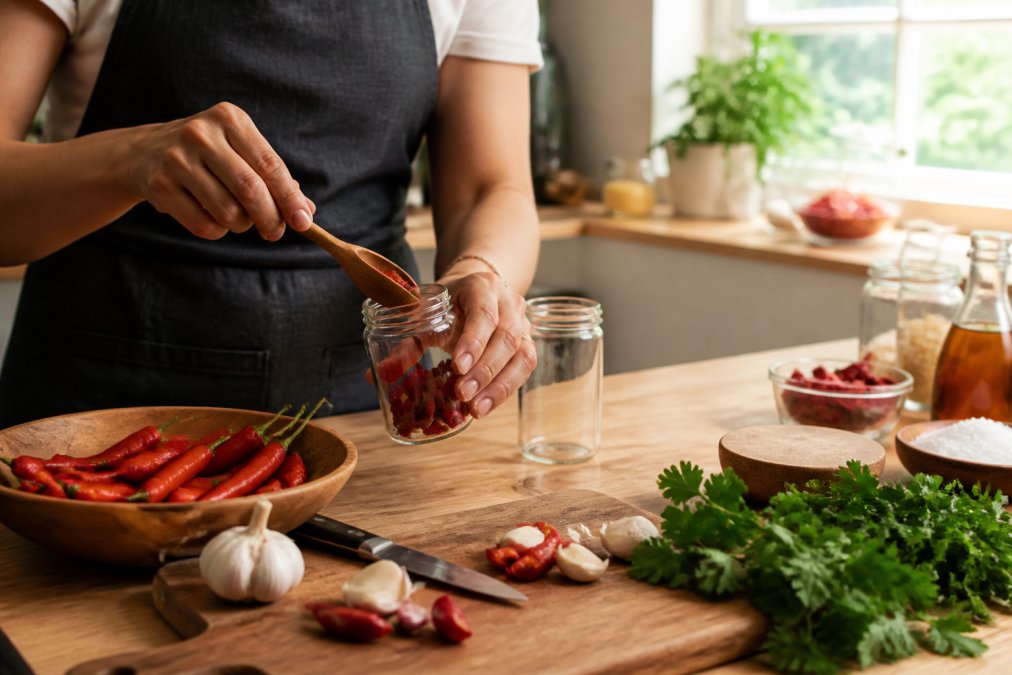
Before you make anything, you need to know where your ingredients come from. For chilli peppers, source from growers who actually grow them, not distributors who buy and resell. Fresh peppers should be firm, glossy, and fragrant. Dried peppers should smell complex and vibrant, not musty or flat.
Vinegar matters equally. Seek out vinegars made through traditional fermentation, not industrial versions that use acetobacter and heat to speed the process. Salt should be sea salt or mineral salt without anti-caking agents or iodine additives. Garlic, onion, and spices should be fresh and aromatic, dried spices lose potency after six months.
Step 2: Building Your Flavour Profile
Start with a ratio: roughly 80% peppers by weight, 15% vinegar, 5% salt. From here, you add complexity, garlic for depth, onion for sweetness and body, spices like cumin or coriander for warmth, fruit like mango or pineapple for brightness and balance.
The key is restraint. Each addition should serve a purpose. If you can't taste it, it shouldn't be there. Many home cooks make the mistake of adding too many ingredients, creating a muddy, confused flavour. Start simple, taste, and add one element at a time. Consider heat balance too, if you're using very hot peppers, you might need more aromatics and acid to balance the burn.
Step 3: Preservation and Storage
If you're fermenting, combine peppers, salt, and any aromatics in a clean jar. Cover with a cloth to allow air exchange while keeping dust out. Leave at room temperature for 1-4 weeks, tasting periodically. Once it reaches your desired flavour, add vinegar to stabilize it further, then store in the refrigerator or a cool cupboard.
If you're making fresh sauce without fermentation, cook it gently to combine flavours, then add vinegar to bring the pH down safely. Bottle while still warm in sterilized jars. Shelf life for naturally preserved sauces is typically 6-12 months unopened, and 2-4 months once opened if stored properly. Keep bottles in a cool, dark place away from direct sunlight.
Why Premium Natural Condiments Outperform Supermarket Alternatives
The comparison is stark when you line them up. A mass-produced hot sauce engineered for maximum shelf life and minimum cost versus an artisanal condiment made from real ingredients with real preservation methods.
Supermarket sauces prioritize consistency and longevity. They taste the same in every bottle because they're formulated that way. They last years unopened because of preservatives and stabilizers. But they taste thin, artificial, and interchangeable. Premium natural condiments taste like something. Each batch has subtle variations because they're made from real ingredients that vary seasonally. They develop flavour over time rather than remaining static.
The versatility difference is equally important. A supermarket hot sauce is a condiment you add to something. A premium natural sauce is an ingredient. You cook with it, use it as a marinade base, glaze with it, and build dishes around it because the flavour is sophisticated enough to carry a meal. This is why Spicy Rye's sauces like our Jerk & Pineapple Sauce work as marinades for grilled meats, not just table condiments.

The real difference between natural ingredients in spicy condiments and their mass-produced counterparts comes down to intention. Premium makers start with the question: what will make this taste extraordinary? Supermarket brands start with: what will make this cheap and stable?
When you choose natural condiments, you're choosing the first philosophy. Spicy Rye's was built on this exact principle. Every sauce, from our Hot Honey Pepper Sauce at £6.95 to our Mango Pepper Sauce at £7.95, starts with real peppers, real vinegar, and real commitment to flavour. No shortcuts. No mystery ingredients. Just what makes food taste better.
Food Standards Agency guidance on food preservation and safety
British Nutrition Foundation information on capsaicin and chilli peppers
Which? guide to reading food labels and identifying natural ingredients
Frequently Asked Questions
What are the main natural ingredients in spicy condiments?
The foundation of natural spicy condiments rests on chilli peppers (which contain capsaicin, the compound responsible for heat), vinegar (a natural preservative that adds acidity and flavour), salt, and aromatics like garlic and onion. Premium versions add citrus juice, tropical fruits, or fermented ingredients to create complex flavour profiles. Avoid products listing guar gum, xanthan gum, or artificial thickeners if you want genuinely natural heat without additives.
How do I identify artificial additives when reading preservative-free hot sauce labels?
Check the ingredients list for synthetic additives: guar gum and xanthan gum (thickeners), sodium benzoate or potassium sorbate (chemical preservatives), and artificial colours. Genuinely preservative-free hot sauces rely on vinegar, salt, and sometimes fermentation for shelf stability. If the label lists more than 8-10 ingredients, investigate each one. Natural alternatives like citrus juice or honey should be recognisable names, not chemical compounds.
What makes fermented hot sauce different from regular hot sauce?
Fermented hot sauce undergoes a process where beneficial bacteria break down ingredients over weeks or months, creating probiotics and enhancing flavour complexity. This fermentation acts as a natural preservative, reducing the need for added chemicals. The result is deeper umami, better digestibility, and a tangier profile. Fermented versions often have a cloudy appearance and may contain visible sediment, both signs of genuine fermentation rather than pasteurisation.
Can natural spicy condiments work for everyday cooking if I don't like extreme heat?
Absolutely. Natural condiments offer versatility across heat levels. Products like Mango Pepper Sauce or Jerk & Pineapple Sauce balance heat with sweetness and fruity notes, making them suitable for weeknight dinners, marinades, and glazes rather than pure fire. The key is choosing sauces where natural ingredients like mango, honey, or citrus play a starring role alongside the chilli peppers, creating flavour-forward options that elevate meals without overwhelming your palate.
This article was written using GrandRanker