
Quick Summary
Creative ways to use chilli vinegar in desserts include adding a few drops to chocolate ganache, fruit macerations and sorbets, where its acidity sharpens sugar and its heat adds a gentle warmth. Start with Jalapeño Vinegar for fruit, Chipotle Vinegar for chocolate, and Scotch Bonnet Vinegar for tropical flavours.
- Start with a few drops of chilli vinegar, taste, and build up slowly, since it cannot be removed once added.
- Use Jalapeño Vinegar for fruit, Chipotle for chocolate, Scotch Bonnet for mango and coconut, and Habanero sparingly.
- Stir half a teaspoon of Chipotle Vinegar into warm ganache before it sets.
- Add a few drops of vinegar just before baking, since raising agents react with it.
- Do not add chilli vinegar to hot custard straight from the bottle, as the acid can split the mixture.
Table of Contents
- What Chilli Vinegar Brings to a Sweet Dish
- Choosing Your Chilli Vinegar: Jalapeño, Chipotle, Scotch Bonnet or Habanero
- Chilli and Chocolate Desserts That Work
- Fruit with Chilli Vinegar: Drizzles, Macerations and Sorbets
- Cakes, Puddings and Blender Desserts with Chilli Vinegar
- How to Balance Vinegar in Baking Without Losing the Sweetness
- Plan Your First Sweet Batch and Keep It Fresh
- Frequently Asked Questions
What Chilli Vinegar Brings to a Sweet Dish
Most people think of chilli vinegar as a savoury condiment, but the creative ways to use chilli vinegar in desserts are worth exploring, starting with a few drops in a sweet dish. But a few drops in a dessert can add a bright, peppery lift that makes sugar taste sharper and more interesting. The heat stays in the background, the acidity cuts through richness, and the result feels more complete. Think of it as the same trick a pinch of salt plays in caramel.
Chilli vinegar works well in sweet dishes for three reasons:
- Acidity balances sugar. A small amount of vinegar makes fruit and chocolate taste brighter and less cloying.
- Heat adds warmth, not fire. Used in small doses, chilli warms the palate and lingers pleasantly after each bite.
- Flavour builds in layers. The vinegar carries fruity and smoky notes from the peppers, so the dessert tastes deeper.
Chilli vinegar is a finishing ingredient. Start with a few drops, taste, and build up slowly. You can always add more, but you cannot take it out once it is in.
Choosing Your Chilli Vinegar: Jalapeño, Chipotle, Scotch Bonnet or Habanero
In a dessert, the vinegar does much of the work. It brings acidity that sharpens sugar, aroma that carries the pepper's fruity or smoky notes, and heat that arrives a few seconds after the first bite. The four styles below behave differently on all three counts, so pick with the dish in mind rather than by heat level alone.
- Jalapeño Vinegar (£6.95): Fresh, green and gently zesty, with a clean acidity that lifts fruit without masking it. The heat is mild and short. Best for strawberries, raspberries, sorbets and light sponge cakes where you want brightness rather than warmth.
- Chipotle Vinegar (£6.95): Smoky and earthy, with a deeper, slower heat. The smoke echoes roasted cocoa, so it suits dark chocolate, ganache, brownies and caramel sauces. Use it where you want the vinegar to taste like an ingredient rather than a sharpener.
- Scotch Bonnet Vinegar (£6.95): Fruity with a tropical edge and a heat that builds rather than spikes. It works beautifully with mango, pineapple, coconut and passion fruit, and it holds its own in a maceration or a fruit coulis. You can buy Scotch Bonnet Vinegar directly from our shop.
- Habanero Vinegar (£6.95): The most intense of the four, with a floral aroma and a heat that lingers. Use it sparingly and only where the dessert can carry it, such as a dark chocolate tart or a lime sorbet. A single drop is often enough for a whole batch.
A simple way to choose is to ask what you want the vinegar to do. If you want lift, reach for Jalapeño. If you want depth, reach for Chipotle. If you want a fruity, tropical note, reach for Scotch Bonnet. If you want a bold, fiery finish, reach for Habanero, and start with fewer drops than you think you need.


If you are new to this, start with Jalapeño for fruit and Chipotle for chocolate. Want to learn more about the heat and flavour of Scotch Bonnet before you pick one? Read our Scotch Bonnet Chilli Pepper guide.
The four vinegars behave differently in a dessert, so match the style to what you want the dish to do.
| Vinegar | Best for | Key difference |
|---|---|---|
| Jalapeño Vinegar | Strawberries, raspberries, sorbets, light sponge | Fresh, mild, short heat |
| Chipotle Vinegar | Dark chocolate, ganache, brownies, caramel | Smoky, earthy, slower heat |
| Scotch Bonnet Vinegar | Mango, pineapple, coconut, passion fruit | Fruity, tropical, builds gradually |
| Habanero Vinegar | Dark chocolate tart, lime sorbet | Most intense, floral, lingers |
Chilli and Chocolate Desserts That Work
Chocolate and chilli have been paired for centuries, and chilli vinegar fits neatly into that tradition, making it one of the most rewarding creative ways to use chilli vinegar in desserts. Its acidity cuts the fat in dark chocolate, while the smoky notes of Chipotle echo the roasted flavour of cocoa.
Try these simple ideas:
- Stir half a teaspoon of Chipotle Vinegar into warm ganache before it sets.
- Add two or three drops of Jalapeño Vinegar to a chocolate mousse just before folding in the whipped cream.
- Brush a little Scotch Bonnet Vinegar over a dark chocolate brownie straight out of the oven.
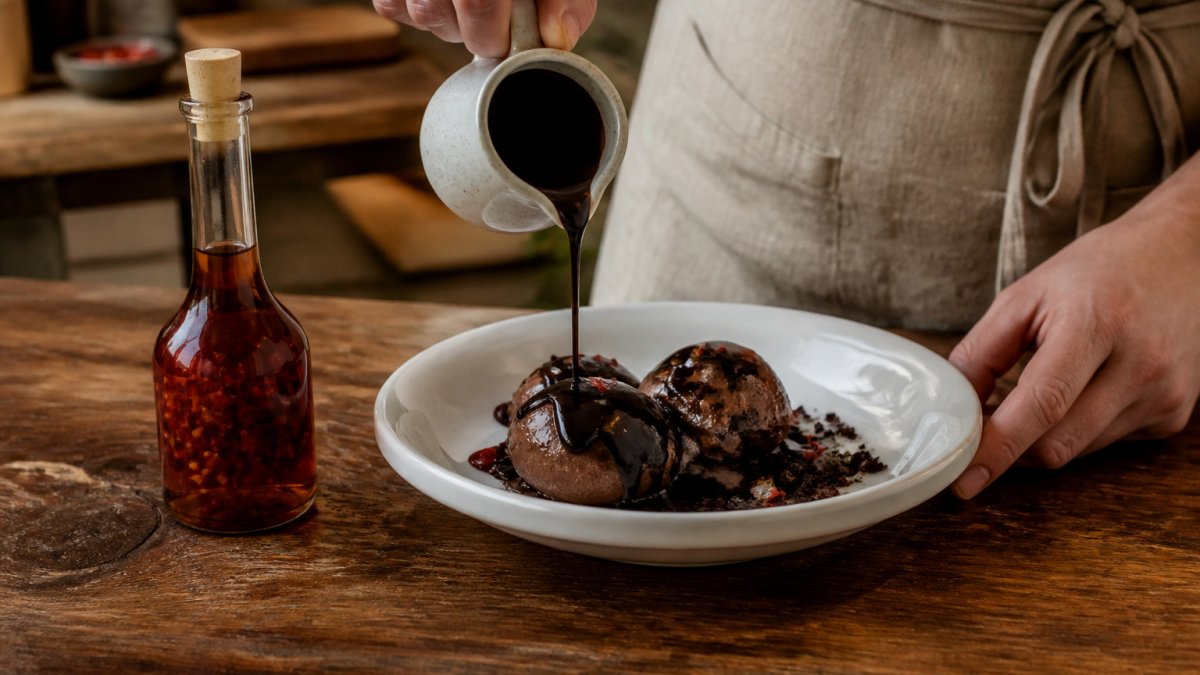
Hands drizzling a glossy dark chocolate ganache onto a plate of spoon-ready dessert, a small glass bottle of chilli vinegar standing nearby on a wooden kitchen counter.
Taste as you go. Chocolate hides heat well, so a few drops can feel like nothing until the warmth arrives a few seconds later.
Fruit with Chilli Vinegar: Drizzles, Macerations and Sorbets
Fruit is where chilli vinegar truly shines. A splash over ripe strawberries or mango draws out their natural sweetness while adding a tangy, peppery finish.
- Quick drizzle: Toss sliced strawberries with a teaspoon of sugar and a few drops of Jalapeño Vinegar. Let them sit for ten minutes.
- Maceration: Combine diced mango and pineapple with a splash of Scotch Bonnet Vinegar and a little lime juice. Chill for 30 minutes before serving.
- Sorbet lift: Add a single drop of Habanero Vinegar to a lemon or raspberry sorbet base before churning.
Cakes, Puddings and Blender Desserts with Chilli Vinegar
Baked goods and puddings are a fun place to experiment, because the vinegar reacts with the raising agents and adds a subtle tang.
- Lemon drizzle cake: Replace one tablespoon of the lemon juice in the syrup with Jalapeño Vinegar.
- Chocolate pudding: Blend a banana, cocoa powder, milk and a few drops of Chipotle Vinegar until smooth. Chill for an hour.
- Blender mousse: Blend avocado, cocoa, maple syrup and a drop of Scotch Bonnet Vinegar for a dairy-free dessert with a bright finish.
Keep the quantities small. Baked goods are less forgiving than no-bake desserts, so stick to a few drops per batch until you know how your recipe behaves.
How to Balance Vinegar in Baking Without Losing the Sweetness
The main risk with vinegar in baking is that the acidity can make a cake taste sour instead of bright, or react with raising agents and change the texture. Our guide to using vinegar well in cooking covers more techniques for balancing acidity. The fix is not to avoid vinegar but to dose it precisely and taste at the right moments. A little goes a long way, and the same amount can taste different before and after baking.
Start small. Begin with a few drops of chilli vinegar per batch, and adjust by a few drops at a time rather than a spoonful.
Taste at three checkpoints. First, taste the raw batter or base: the vinegar should be noticeable but not sharp. Second, taste immediately after cooking or chilling, when the heat often feels stronger. Third, taste the next day, because vinegar and chilli both mellow overnight. If the heat has faded by day two, add a few drops to the serving component rather than the whole batch.
Balance acid with sugar and fat. If the vinegar makes the dessert taste sour, add a tablespoon more sugar per 100 g of flour or per 200 ml of cream, or increase the fat with butter, cream or yoghurt, which softens acidity and carries flavour. Do not try to fix excess vinegar with more vinegar; fix it with sweetness and fat.
Watch the raising agents. Vinegar reacts with bicarbonate of soda and can make a batter rise too quickly or unevenly. Mix the vinegar in just before the tin goes in the oven, and do not let the batter stand. If you are using a recipe that already contains vinegar or buttermilk, reduce the chilli vinegar to a few drops and taste before adding more.
Troubleshoot the common problems. If the mixture curdles when you add vinegar to dairy or egg-based desserts, the acid is hitting the protein too fast: whisk a spoonful of the dairy into the vinegar first, then add that mixture back slowly. If the heat is muted, the fat content is probably high; add a few drops to a finishing drizzle instead of the base. If the dessert tastes flat rather than sour, you may need a pinch of salt rather than more vinegar.
Keep a simple record. Note the vinegar, the amount and the dessert on a scale of 1 to 5 for heat and brightness. After three or four batches you will have your own dosing guide, which is more useful than any general rule.
Plan Your First Sweet Batch and Keep It Fresh
Before you start, set up a simple plan so you can compare results.
- Pick one dessert and one chilli vinegar.
- Make a small batch, around four servings.
- Taste and note the heat level on a scale of 1 to 5.
- Adjust the next batch by a few drops, not a spoonful.
Store your chilli vinegars with the lid tightly closed, away from heat and light. For a full range to test with, browse our Chilli Vinegar collection and find the one that suits your next dessert.
Frequently Asked Questions
Can you use chilli vinegar in desserts?
Yes. Chilli vinegar works in desserts when used in small amounts, because its acidity and gentle heat cut through sugar and richness. Start with a few drops or a half teaspoon per serving in fruit, chocolate or caramel, taste, then adjust. Jalapeño and chipotle versions tend to suit sweet dishes well, while habanero and Scotch Bonnet need more caution. Treat it as a finishing accent rather than the main flavour so the dessert still tastes like itself.
What desserts pair well with chilli vinegar?
Dark chocolate, ripe stone fruit, berries, pineapple and mango all pair well with chilli vinegar. Chocolate mousse, brownies and flourless chocolate cake take a pinch of heat nicely. Fruit salads, poached pears and sorbets benefit from a light drizzle that adds brightness. Creamy desserts like panna cotta need a very small amount, since the dairy softens the heat but can also make a sharp vinegar stand out more than expected.
How much chilli vinegar should you add to a dessert?
Begin with about half a teaspoon for four servings, or a few drops per portion, and taste before adding more. For fruit, a teaspoon per 500 grams is a reasonable starting point. In chocolate, add it to the warm cream or base so it blends evenly. Adding in small steps lets you stop when the warmth is pleasant, and it prevents the sharp acidity from overpowering the sugar.
How do you balance the heat and acidity of chilli vinegar in a sweet recipe?
Balance comes from sugar, fat and dilution. If the dessert tastes too sharp, add a little more sugar, cream, butter or fruit purée. A pinch of salt also rounds out acidity. If the heat feels too strong, stir in more base ingredients rather than adding sugar alone. Tasting as you go, and keeping additions small, is the most reliable way to reach a balanced result.