

Table of Contents
- Why Bland Chicken Flavour Is So Common (And Fixable)
- Salt First: How Seasoning and Brining Lock In Flavour
- How to Marinate Chicken for Maximum Flavour
- Best Dry Rubs for Chicken That Deliver Real Depth
- Cooking Methods That Add Flavour to Bland Chicken
- Quick Chicken Sauce Recipes to Rescue Any Batch
- Finishing Touches: Glazes, Aromatics and Umami Boosters
- Conclusion
Last Updated: August 13, 2026
Why Bland Chicken Flavour Is So Common (And Fixable)
Chicken breast is extraordinarily lean with very little intramuscular fat, and fat carries flavour. This structural reality makes bland chicken common, but it also makes chicken one of the most receptive meats to seasoning and marinades. The single biggest mistake home cooks make is treating seasoning as an afterthought. The fix is straightforward: season early, build layers, and finish with intention.
Salt First: How Seasoning and Brining Lock In Flavour
Salt is the single most important ingredient in fixing bland chicken flavour. Applied early enough, it penetrates muscle fibres through osmosis, drawing moisture in and redistributing it throughout the meat. Salt your chicken at least 40 minutes before cooking, or overnight if possible. Salting immediately before cooking draws surface moisture out without giving it time to reabsorb, leaving the exterior wet and interior bland.
Wet Brining for Maximum Moisture Retention
Wet brining submerges chicken in a salt-and-water solution before cooking. A basic brine uses roughly 50g of salt per litre of cold water. Submerge the chicken for 30 minutes to 4 hours depending on the cut, or 8-24 hours for whole birds. The brine seasons the meat deeply while helping it retain moisture during cooking, which is critical for lean cuts. You can add aromatics such as bay leaves, crushed garlic, black pepper, and lemon slices. According to The Culinary Institute of America's guide to brining, salt concentration and soak time are the two variables that most affect flavour penetration.
Dry Brining: Simpler and Just as Effective
Dry brining skips the water entirely. Rub salt generously over the chicken and leave it uncovered in the fridge. The salt draws out surface moisture, which dissolves the salt and gets reabsorbed into the meat. The skin dries out beautifully and crisps far better during cooking. For weeknight cooks, dry brining is more practical: no large containers, no mess, no dilution of flavour.
How to Marinate Chicken for Maximum Flavour
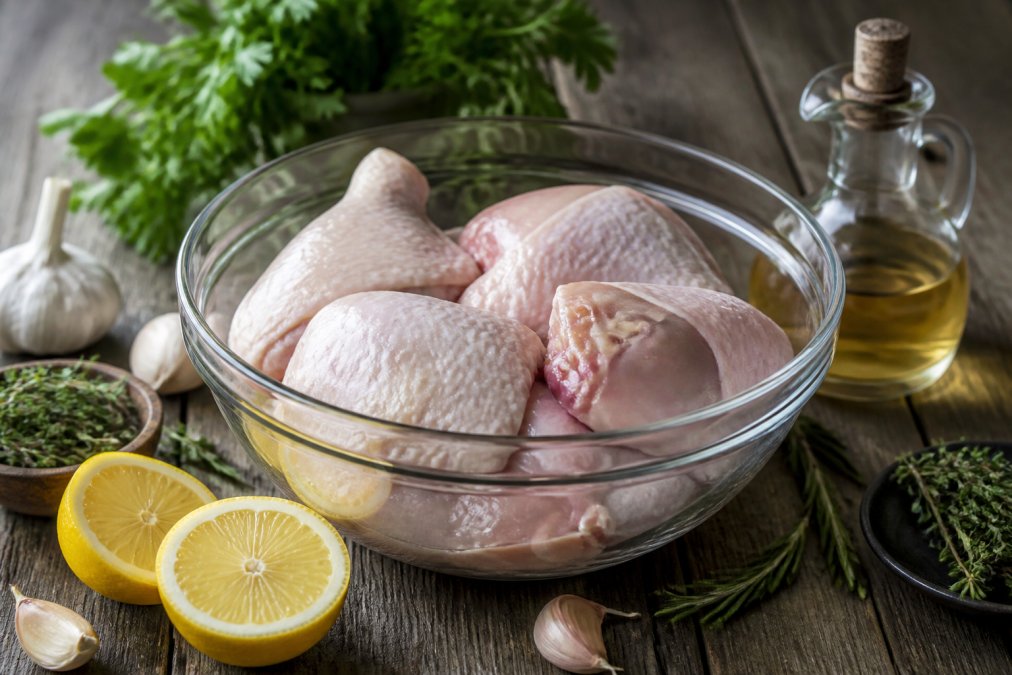
A marinade works best with three elements: an acid to tenderise, an oil to carry fat-soluble flavour compounds, and aromatics to deliver taste. A 30-minute marinade delivers meaningful surface flavour. Beyond 4-6 hours, the acid begins to denature surface proteins, making the texture mushy. The sweet spot for boneless chicken is 1-4 hours; bone-in pieces can go up to 12 hours.
Acidic Ingredients That Actually Penetrate the Meat
Acid is the workhorse of any marinade. Lemon juice, vinegar, and yogurt lower the pH at the surface, softening the outer protein structure and allowing other flavour compounds to follow. Acid's main job is to open the surface so that salt and aromatics can work. A marinade without salt rarely delivers the depth of flavour expected.
Practical acid options:
- Lemon juice: Bright, citrus-forward; pairs well with herbs and garlic
- White wine vinegar: Clean and sharp; good for Mediterranean profiles
- Apple cider vinegar: Slightly fruity; works well with smoky spice blends
- Yogurt: Mild and creamy; the base of South Asian marinades
- Chilli vinegar: Adds heat and acidity simultaneously; excellent for bold profiles
Flavour Profiles by Cuisine
Targeting a specific cuisine profile from the start gives every component of the marinade a clear purpose and produces a coherent result.
| Cuisine Profile | Acid Base | Key Spices | Finishing Element |
|---|---|---|---|
| Mediterranean | Lemon juice | Oregano, garlic, cumin | Olive oil, fresh parsley |
| South Asian | Yogurt | Cumin, coriander, cayenne | Fresh ginger, garam masala |
| Korean-inspired | Rice vinegar | Gochujang, garlic, sesame | Spring onion, sesame oil |
| Smoky BBQ | Apple cider vinegar | Paprika, brown sugar, cayenne | Chilli glaze, molasses |
| Middle Eastern | Lemon juice | Za'atar, sumac, cinnamon | Pomegranate molasses |
Best Dry Rubs for Chicken That Deliver Real Depth
The best dry rubs combine salt, heat, smokiness, and a sweet element. Salt should be the largest component, followed by your primary flavour spice, then heat, then sweetness.
A reliable all-purpose rub:
- 2 tsp fine sea salt
- 1 tsp smoked paprika
- 1 tsp garlic powder
- ½ tsp cumin
- ½ tsp cayenne
- ½ tsp brown sugar
- ¼ tsp black pepper
Apply generously and press the rub into the surface rather than dusting it on.
The Maillard Reaction: Why a Good Rub Browns Better
The Maillard reaction is the chemical process by which amino acids and reducing sugars in the meat surface react under heat to produce hundreds of new flavour compounds. A dry rub accelerates this process. The sugars in the rub provide additional reducing sugars, which means more Maillard activity at lower temperatures. Spices like paprika and cumin contribute their own volatile compounds.
For the Maillard reaction to occur properly, the surface of the chicken must be dry. Pat the chicken thoroughly with kitchen paper before applying the rub. Wet surfaces steam rather than brown, producing a grey, flat exterior.
Cooking Methods That Add Flavour to Bland Chicken
Technique shapes flavour as much as seasoning does. The same marinated chicken cooked in a hot pan versus a low oven will taste noticeably different. According to the Food Standards Agency's guidance on safe meat cooking temperatures, chicken must reach a core temperature of 75°C to be safe.
Pan-Searing and Deglazing for Instant Pan Juices
Pan-searing over high heat produces Maillard browning and creates the fond: caramelised bits that stick to the pan. These are concentrated flavour. Deglazing that fond with wine, stock, or vinegar lifts it into a sauce in under two minutes.
The deglazing process:
- Remove the cooked chicken from the pan and set aside to rest
- Add a splash of white wine, chicken stock, or cider vinegar to the hot pan
- Scrape the fond from the bottom with a wooden spoon as the liquid bubbles
- Reduce by half, then finish with a knob of butter or a spoonful of chilli jam
- Pour directly over the chicken before serving
Grilling and Baking: Equipment-Specific Hacks
Grilling over direct heat produces smokiness through charring of surface fats and marinade sugars. Preheat the grill grates until very hot before the chicken goes on. Brush the grates with oil, not the chicken, to prevent flare-ups.
For oven baking, finish under the grill for the last 3-4 minutes. Baking alone rarely produces sufficient surface browning because the oven environment is too humid. A brief blast under the grill triggers the Maillard reaction that baking alone cannot achieve. Spatchcocking a whole chicken before roasting exposes far more surface area to direct heat, producing more browning, more flavour, and significantly shorter cooking time.
Quick Chicken Sauce Recipes to Rescue Any Batch
Even perfectly seasoned chicken benefits from a sauce. For overcooked or bland chicken, a well-built sauce is a genuine flavour addition that transforms the dish.
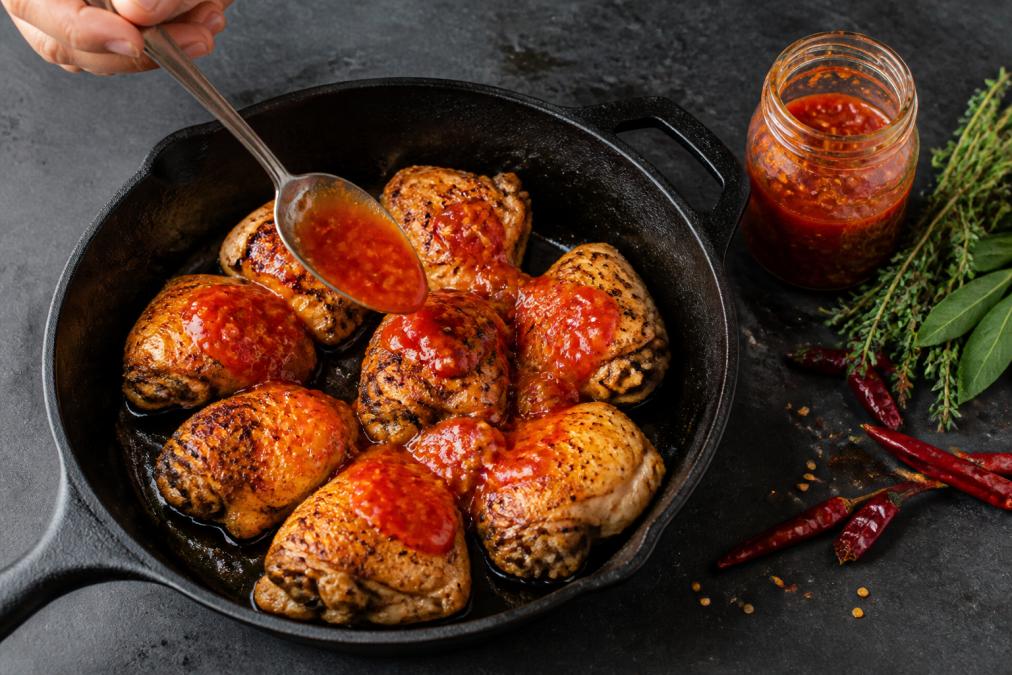
Chilli and honey glaze: Combine two tablespoons of hot sauce with one tablespoon of honey and a squeeze of lemon juice. Heat in a small pan for 60 seconds and brush over the chicken.
Garlic and herb pan sauce: Soften two crushed garlic cloves in butter, add 100ml chicken stock, reduce by half, and finish with a handful of fresh parsley. Ready in four minutes.
Smoky paprika yogurt sauce: Mix 150ml natural yogurt with one teaspoon of smoked paprika, a squeeze of lemon, and a pinch of salt. No cooking required.
Finishing Touches: Glazes, Aromatics and Umami Boosters
The final stage of cooking is where bland chicken flavour gets its last opportunity for transformation. Finishing elements add brightness, depth, and complexity.
Glazes applied in the last two minutes of cooking caramelise on the surface and add concentrated sweet-savoury flavour. Apply in thin layers rather than one thick coat to avoid burning.
Aromatics added at the end retain their volatile oils and deliver sharper, fresher flavour. Fresh garlic added in the last 60 seconds of pan cooking, fresh herbs scattered over the finished dish, and lemon zest just before serving all work well.
Umami boosters amplify every other flavour around them. For chicken, practical sources include soy sauce, Worcestershire sauce, tomato paste, Parmesan rind, and miso. According to the British Nutrition Foundation's overview of flavour perception, umami compounds interact with salt receptors in ways that make food taste more rounded and satisfying.
The combination of well-seasoned, properly brined chicken with a finishing glaze and fresh aromatics is genuinely restaurant-quality. These techniques require only sequencing and attention.
Bland chicken is one of the most solvable problems in home cooking. Great chicken flavour is built in layers: salt penetration early, a well-constructed marinade or dry rub, the right cooking technique for the cut, and a finishing element that ties everything together. Spicy Rye's premium chilli vinegars, hot sauces, and seasoning blends are designed to slot into any of these stages, using preservative-free, high-quality ingredients that deliver real depth. Shop now and give every batch of chicken the flavour it deserves.
Frequently Asked Questions
How do I fix overcooked or flavourless chicken?
Overcooked chicken loses moisture fast, but you can recover it. Shred the meat and simmer it briefly in a flavourful sauce or pan juices to reintroduce moisture. A bold glaze, a splash of vinegar-based hot sauce, or a spiced broth all work well. Adding aromatics like garlic and fresh herbs during reheating also restores depth. Thin slices absorb sauce quicker than large pieces, so shredding gives you the best result when the chicken is already dry.
What are the best herbs and spices for chicken?
Paprika, cumin, cayenne, garlic powder and dried thyme are the most versatile starting points for a solid spice blend. Smoked paprika adds smokiness without heat, while cumin brings earthy depth. For brightness, dried lemon zest or sumac works well. Fresh herbs like rosemary, tarragon and flat-leaf parsley are best added after cooking to preserve their aroma. Combining two or three spices with salt as your base builds a layered flavour profile rather than a one-note result.
How long should I marinate chicken for maximum flavour?
For a standard marinade with acidic ingredients like lemon juice or vinegar, two to four hours is the sweet spot for chicken breasts. Thighs can handle up to 12 hours without the texture breaking down. Avoid marinating beyond 24 hours as the acid begins to denature the proteins too aggressively, turning the surface mushy rather than tender. If you are short on time, even 30 minutes with a well-seasoned marinade delivers noticeably better flavour than cooking the chicken plain.
Can I add flavour to chicken without using meat-based ingredients?
Yes. Umami-rich plant-based ingredients work well on chicken. Miso paste, soy sauce, nutritional yeast and tomato paste all add savoury depth without any meat products. Chilli vinegars and fermented hot sauces bring acidity alongside complexity. A dry rub built from smoked paprika, cumin, garlic powder and a pinch of cayenne is entirely plant-derived and produces excellent browning through the Maillard reaction when the chicken hits a hot pan.
This article was written using GrandRanker