

Table of Contents
- What You'll Need: Equipment and Ingredients for Smoky Hot Sauce Recipes
- Best Chillies for Smoky Hot Sauce
- Step-by-Step: How to Make Smoky Hot Sauce at Home
- How to Safely Preserve Homemade Hot Sauce
- How to Store Homemade Hot Sauce
- Troubleshooting and Substitutions for Beginner Smoky Hot Sauce
- Conclusion
- Frequently Asked Questions
Last Updated: September 25, 2026
What You'll Need: Equipment and Ingredients for Smoky Hot Sauce Recipes
Smoky hot sauce recipes for beginners need only a short equipment list and a handful of core ingredients, no professional smoker or commercial kitchen required. This guide from Spicy Rye's walks you through every step, from choosing chillies to bottling.

Kitchen Equipment
- A heavy frying pan or cast-iron skillet for charring
- A blender or immersion blender
- A fine-mesh sieve or muslin cloth
- A clean saucepan
- Glass bottles or mason jars with lids
- Food-safe gloves (chillies irritate skin)
- A funnel for bottling
Core Ingredients
- Fresh or dried chillies (see the section below)
- Vinegar, ideally cider vinegar
- Garlic, onion, or both
- Salt
- A sweetener: brown sugar or maple syrup
- A smoky element: smoked paprika, chipotle powder, or a smoked sauce
Best Chillies for Smoky Hot Sauce
The best chillies for smoky hot sauce are chipotle (smoked, dried jalapeños) for depth, guajillo or ancho for sweetness, and fresh jalapeños or serranos for charring. Chipotle brings the smoke; the others bring balance.
Dried Chillies to Rehydrate
Dried chillies give you smoky flavour without a smoker. Cover them in hot water for 20 to 30 minutes until soft, and keep the soaking liquid, it adds body.
- Chipotle: smoky and medium-hot, the classic choice
- Ancho: mild, sweet, raisin-like
- Guajillo: bright, tangy, mild
- Cayenne: hot and sharp, use sparingly
Fresh Chillies for Charring
Fresh chillies charred in a dry pan give a roasted, smoky note. Jalapeños and serranos suit beginners because their heat is manageable, but Scoville units vary, so taste as you go.
- Jalapeño: mild to medium
- Serrano: medium, brighter heat
- Fresno: medium, fruity
Step-by-Step: How to Make Smoky Hot Sauce at Home
Making smoky hot sauce at home takes about 45 minutes plus cooling. Three stages: prepare and smoke the peppers, blend and simmer, then bottle and label.
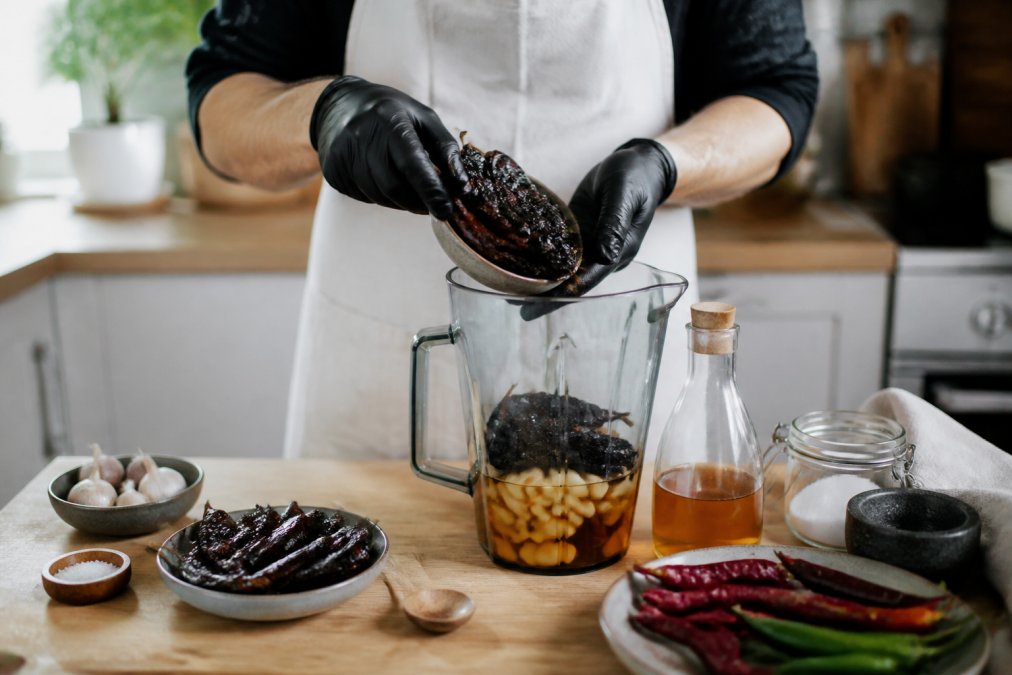
Total Time: 45 minutes Difficulty: Beginner
Step 1: Prepare and Smoke Your Peppers
- Put on gloves and remove stems from your chillies.
- Heat a dry pan over medium-high heat.
- Add chillies and press down with a spatula until charred, about 3 to 4 minutes per side.
- If using dried chillies, rehydrate them in hot water first.
- For extra smoke, add a teaspoon of smoked paprika or a splash of chipotle vinegar.
Expected Result: Soft, blistered peppers with a deep smoky smell.

Step 2: Blend, Simmer and Adjust the Flavour
- Add peppers, vinegar, garlic, salt, and sweetener to the blender.
- Blend until smooth. Add soaking liquid or water to loosen it.
- Pour into a saucepan and simmer for 10 minutes.
- Taste and adjust: more vinegar for tang, more sugar for balance, more chilli for heat.
Expected Result: A glossy sauce that coats the back of a spoon.
Step 3: Bottle and Label Your Sauce
- Sterilise your bottles in boiling water and let them dry.
- Pour the sauce through a funnel while still warm.
- Seal tightly and label with the date.
- Cool fully before storing.
Expected Result: Sealed bottles ready for the fridge.
How to Safely Preserve Homemade Hot Sauce
Safe preservation comes down to acidity and cleanliness. Vinegar lowers the pH so harmful bacteria, including Clostridium botulinum, the organism behind botulism, cannot grow, while sterilised equipment stops contamination before it starts. Most beginners get the vinegar roughly right and the measurement completely wrong.
Why pH 4.6 Is the Number That Matters
A pH of 4.6 is the threshold below which C. botulinum cannot produce its toxin. Anything at or above 4.6 is a low-acid environment and must be treated as perishable, no matter how much chilli or salt it contains. Chilli heat, garlic, salt and sugar are not preservatives on their own, only acid is.
How to Test pH at Home
You have three realistic options, in ascending order of accuracy:
- pH strips (narrow-range, 2.8-4.6): cheap, fast, good enough for a first batch. Dip, wait the stated time, compare against the chart, and read in daylight.
- Digital pH meter: more precise, but needs calibration with buffer solutions before each session. A drifted meter is worse than a strip because it gives false confidence.
- Litmus paper: too coarse, it tells you a sauce is acidic, not whether it is below 4.6.
If Your Sauce Reads Above 4.6
You have three fixes, in order of preference:
- Add more vinegar (cider or white wine) in small increments, re-blend, re-test. The standard fix, and it rarely changes flavour as much as beginners fear.
- Add lemon or lime juice, acidic enough to pull a sauce down, though they bring their own flavour.
- Accept that it is a fridge sauce. If you cannot get below 4.6 without ruining the taste, label it clearly and treat it as short-life. Do not cupboard-store it.
Sterilising Jars and Bottles
- Wash in hot, soapy water first, sterilising does not clean.
- Sterilise by boiling fully submerged for 10 minutes, or baking at 160°C for 15 minutes.
- Fill while the sauce is hot and the bottle still warm, a cold, wet jar plus hot sauce equals cracked glass.
- Seal immediately and invert for a minute to sterilise the lid's inside.
- Cool fully at room temperature before refrigerating.
What to Leave Out
- Oil. Garlic-in-oil and chilli-in-oil are classic botulism vectors because oil seals out oxygen and creates anaerobic conditions. Keep oil out of stored sauce.
- Fresh herbs in the bottle. They introduce moisture and microbes, add them at serving time.
- Raw garlic in long-stored sauce unless the pH is verified below 4.6.
For general home food-safety guidance, see the Food Standards Agency guidance on home food preservation.
How to Store Homemade Hot Sauce
Store homemade hot sauce in the fridge in a sealed glass bottle. It typically keeps several weeks once opened; unopened, properly acidified sauce lasts longer. Always check for off smells, mould or fizzing before use.
- Fridge: sealed bottle, use within a few weeks of opening
- Cool, dark cupboard: only for unopened, high-acid sauce
- Label every bottle with the date you made it
- Discard any sauce that smells sour or shows bubbles
Troubleshooting and Substitutions for Beginner Smoky Hot Sauce
Most beginner problems come down to a handful of causes, almost all fixable in the pan or blender. Work through the table first, then the substitution matrix.
Troubleshooting Common Failures
| Problem | Likely Cause | Fix |
|---|---|---|
| Too thin | Too much liquid, or under-reduced | Simmer uncovered for 10-15 minutes, stirring often, until it coats the back of a spoon. A teaspoon of tomato paste also thickens without sweetening. |
| Too thick | Over-reduced, or too much dried fruit/sugar | Loosen with a splash of vinegar or the chilli soaking liquid. Add liquid a tablespoon at a time. |
| Too hot | Too much cayenne, serrano or habanero | Add sweetener (brown sugar, maple syrup) and a little more vinegar together, sugar alone flattens the sauce. Or blend in a roasted red pepper. |
| Not smoky enough | Weak or insufficient smoky element | Add smoked paprika or chipotle powder, or a splash of chipotle vinegar. Re-simmer for 5 minutes so it integrates. |
| Too sour | Too much vinegar relative to sweetness | Add brown sugar or maple syrup in small increments. Do not add salt, it will not fix sourness. |
| Too bitter | Burnt char, scorched garlic, or over-toasted dried chillies | Strain and start again with fresh aromatics. Bitterness from burnt garlic cannot be masked. |
| Grainy or gritty | Under-blended, or skins not fully softened | Blend longer, then push through a fine-mesh sieve or muslin. Dried chillies need a full 20-30 minutes in hot water. |
| Separates in the bottle | Natural, solids settling from liquid | Shake before use. If it separates within hours, blend again with a small amount of vinegar to emulsify. |
| Fizzing, bubbles or a sour smell | Fermentation or spoilage | Discard. Do not taste to check. This is a pH or sterilisation failure. |
| Mould on the surface | Air exposure, contaminated jar, or pH above 4.6 | Discard the whole bottle. Mould on top means mould throughout. |
| Ferment smells of acetone or nail polish | Wrong fermentation conditions, too warm, too much oxygen | Discard. This is not a flavour you can rescue. |
Ingredient Substitution Matrix
Beginners rarely have the exact pepper a recipe calls for. Use this to swap without wrecking the sauce.
| If the recipe calls for | Use instead | Effect on the sauce |
|---|---|---|
| Chipotle (dried, smoked jalapeño) | Smoked paprika + a pinch of cayenne | Similar smoke, less fruit, slightly less heat |
| Chipotle | Ancho + a few drops of liquid smoke | Sweeter, milder, still smoky |
| Ancho | Guajillo, or a roasted red pepper | Less raisin sweetness, more brightness |
| Guajillo | Ancho, or mild paprika | Sweeter, less tang |
| Fresh jalapeño | Serrano (hotter) or Fresno (fruitier) | Adjust quantity down for serrano |
| Fresh serrano | Jalapeño + a pinch of cayenne | Milder, similar brightness |
| Habanero | Scotch bonnet | Very similar heat and fruitiness |
| Cider vinegar | White wine vinegar, or malt vinegar | Malt is sharper and darker, use less |
| Brown sugar | Maple syrup, honey, or jaggery | Honey ferments faster; use within a shorter window |
| Smoked paprika | Chipotle powder, or a smoked salt (reduce added salt) | Chipotle powder is much hotter |
| Fresh garlic | Garlic granules (1 tsp per clove) | Less punch, but fine in a pinch |
When to Start Over
Some failures are not worth fixing. If the sauce is fizzing, smells of acetone, has visible mould, or tastes of burnt garlic, throw it out. A batch costs a few pounds in peppers and vinegar, food poisoning costs considerably more.
Conclusion
Getting smoky depth into a homemade sauce is harder than it looks, especially while juggling acidity, heat and texture. Spicy Rye's makes it easy with a range built on premium ingredients, from the smoky Chipotle BBQ Sauce to the tangy Chipotle Vinegar and the layered Smoky Barbecue Seasoning. Each adds real smoke without the guesswork. Shop now and give your next batch a head start.

Frequently Asked Questions
How do you achieve a smoky flavour in homemade hot sauce?
You can smoke fresh chillies over cherry or oak wood for 30-60 minutes, or use dried chipotle peppers rehydrated in hot water. If you don't have a smoker, add a teaspoon of liquid smoke or a splash of chipotle vinegar to the blended sauce. Charring peppers in a dry pan also adds smokiness. The key is layering smoke from peppers and a smoky liquid, then tasting as you go so the flavour stays balanced.
How to safely preserve homemade hot sauce?
Safety comes down to acidity and heat. Aim for a pH below 4.6 by using enough vinegar or by fermenting. Sterilise bottles and jars in boiling water for 10 minutes, fill them while the sauce is hot, and seal. Always check the pH with strips if you're unsure.
What are the best chillies for smoky hot sauce?
Chipotle, guajillo, and ancho are good choices for smoky depth and flavour. For fresh options, jalapeños or Fresno chillies work well. If you want extra heat, include a few habaneros or Scotch bonnets. A mix of two or three dried chillies usually gives the most complex flavour without overwhelming heat.
How long does homemade hot sauce last in the fridge?
An opened bottle of homemade hot sauce typically keeps for several weeks in the fridge, thanks to its vinegar content. Unopened, properly acidified sauce lasts longer. Always check for off smells, mould or changes in colour before using.
Always follow safe food handling advice from the Food Standards Agency when preserving sauces at home.