

Table of Contents
- What Makes a Great Glaze for Roasted Vegetables
- How to Add Flavour to Roasted Vegetables
- Preparing Vegetables for Glazing Success
- Step-by-Step Glazing Instructions
- How Long to Roast Vegetables for Perfect Results
- Using Spicy Jams for Vegetable Glazes
- Preventing Burnt Glaze and Common Mistakes
- Flavour Variations and Caramelisation Techniques
- Frequently Asked Questions
Last Updated: September 2, 2026
What Makes a Great Glaze for Roasted Vegetables
A great glaze balances three essential elements: sweetness, acidity, and viscosity. The best glazes coat vegetables evenly, caramelize under heat, and develop deep flavour without burning. The ideal ratio sits around 2:1 or 3:1 sugar to acid, though this shifts depending on your base ingredients.
When building a glaze, consider how the Maillard reaction will work during roasting. This chemical process, where proteins and sugars interact under heat, creates the golden-brown colour and complex flavours that make glazed vegetables extraordinary. Honey, maple syrup, and balsamic reduction all trigger this reaction beautifully.
Aim for a glaze consistency between maple syrup and honey, thick enough to coat but fluid enough to brush or drizzle evenly across vegetables.
How to Add Flavour to Roasted Vegetables
Adding flavour goes far beyond salt and pepper. Layer flavours: a sweet base, acidic brightness, savoury depth, and aromatic heat all working together.
Choosing your base: honey, syrups, and vinegars
Your glaze base determines the entire flavour profile. Honey brings natural sweetness and caramelizes beautifully. Maple syrup adds earthiness, particularly good with root vegetables. Balsamic reduction offers both sweetness and acidity in one ingredient.
Vinegars are where things get interesting. Sherry vinegar adds subtle complexity; cider vinegar brings brightness. For bold flavour, specialty vinegars like Spicy Rye's Jalapeño or Chipotle Vinegar introduce heat and smokiness that elevate vegetables beyond the everyday. The acid component prevents the glaze from becoming cloying and cuts through caramelized richness.
Building layers with aromatics and fresh herbs
Single-note glazes lack depth. Start with your sweet base and acid, then add aromatics like garlic, ginger, or onion powder for savoury backbone. Fresh herbs finish the job: thyme, rosemary, or parsley brighten the glaze and contrast with caramelized sweetness.
Fresh herbs added at the end of roasting maintain their bright character. Dried herbs mixed into the glaze early infuse their flavour throughout cooking. For those who enjoy spice, Spicy Rye's Veggie Rockstar Seasoning transforms a simple honey-vinegar glaze with smoked paprika, garlic, and lemon zest. Their Garlic & Herb Seasoning brings punchy garlic and fragrant herbs that work beautifully with sweet glazes.

| Glaze Base | Acid Component | Aromatic Layer | Finishing Touch |
|---|---|---|---|
| Honey | Balsamic vinegar | Garlic powder | Fresh thyme |
| Maple syrup | Cider vinegar | Ginger | Rosemary sprigs |
| Spicy jam | Chipotle vinegar | Cumin | Lime zest |
| BBQ sauce | Lemon juice | Smoked paprika | Parsley |
Preparing Vegetables for Glazing Success
Not all vegetables glaze equally. Success depends on choosing the right vegetables and preparing them properly.
Selecting the right vegetables and prep techniques
Root vegetables are glazing champions. Carrots, parsnips, beetroot, and sweet potato have natural sugars that caramelize beautifully. Their firm texture won't fall apart mid-roast, and they have enough surface area to hold glaze effectively. Cruciferous vegetables like broccoli and cauliflower also glaze well.
Cut vegetables into uniform 2-3 centimetre pieces so they roast evenly. Pat them dry before roasting; moisture prevents caramelization. A light coating of olive oil helps the glaze adhere and promotes browning.
Glazing root vegetables versus tender varieties
Root vegetables handle aggressive glazing. You can apply glaze early in the roasting process, allowing it to caramelize gradually.
Tender vegetables, leafy greens, mushrooms, and peppers require gentler handling. Apply glaze in the final 5-10 minutes of roasting to prevent burning delicate surfaces.
Step-by-Step Glazing Instructions
The timing and technique of glaze application determine whether you end up with a glossy coat or burnt mess.
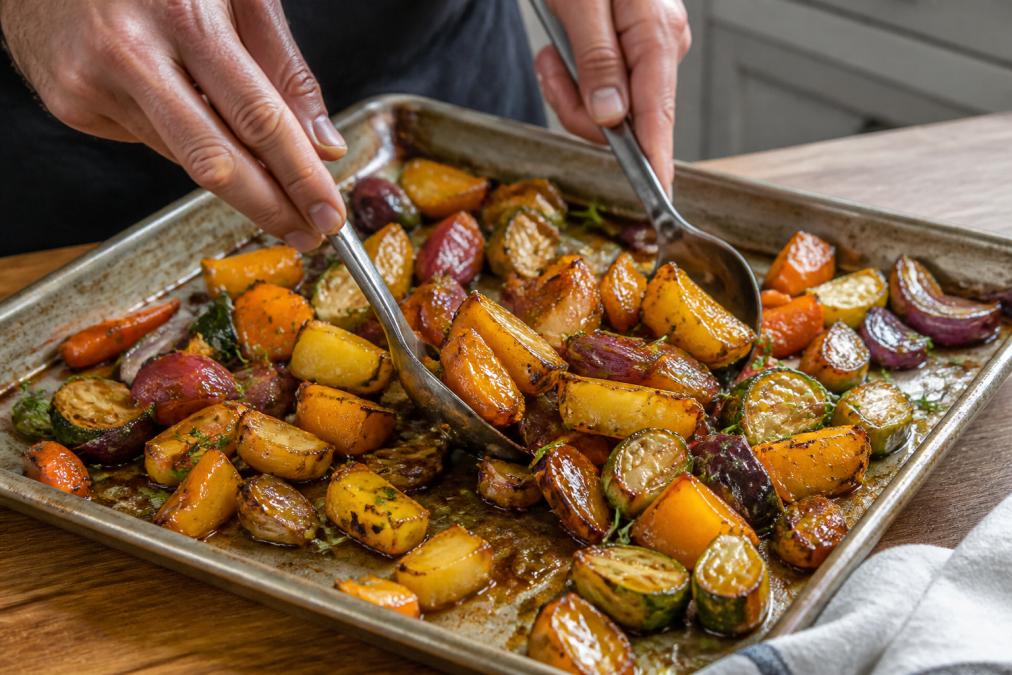
Temperature, timing, and oven rack position
Preheat your oven to 200°C (180°C fan). Position your roasting pan on the middle rack; too high and the glaze burns before vegetables cook through; too low and browning happens unevenly.
Roast vegetables for 20-25 minutes before applying glaze. This initial period allows vegetables to soften slightly and begin browning.
When and how to apply your glaze
Apply glaze in two stages. At the 20-minute mark, brush or drizzle glaze over vegetables and toss to coat evenly. Return to the oven for 8-10 minutes. If vegetables are golden and the glaze is sticky, they're done. If they need more colour, apply a second thin coat and roast for another 5 minutes.
Toss vegetables halfway through the final glazing period to ensure even coating. Watch carefully in the final 5 minutes; glaze can go from perfect to burnt quickly. You're looking for deep golden-brown colour and a sticky, clingy texture.
How Long to Roast Vegetables for Perfect Results
Roasting time depends on vegetable type, size, and your oven's characteristics.
Roasting times by vegetable type
Root vegetables take longest. Beetroot and parsnips need 35-40 minutes total. Carrots and sweet potato fall in the 30-35 minute range. Tender vegetables like broccoli and cauliflower need only 25-30 minutes total. Peppers and mushrooms finish in 20-25 minutes.
Achieving tender-crisp texture and golden brown colour
Pierce vegetables with a fork at the 25-minute mark. They should offer slight resistance. The glaze application will continue cooking them slightly, so aim for vegetables that are just barely tender when you apply the glaze.
Golden brown colour develops gradually during the final 10-15 minutes of roasting as the sugars in your glaze and the vegetables' natural sugars create rich caramel colour.
Using Spicy Jams for Vegetable Glazes
Spicy jams and condiments bring complexity that simple honey glazes can't match.
Adjusting consistency and sweetness levels
Spicy jams tend toward thickness. Thin them by mixing with vinegar, citrus juice, or water. Start with a 3:1 jam-to-liquid ratio and adjust from there. Taste your glaze before applying it to vegetables. If too sweet, add more acid. If too sharp, add a touch of honey or maple syrup.
Flavour combinations with spicy condiments
Spicy jams pair beautifully with specific vegetables. Beetroot loves spicy-sweet combinations; carrots work with almost any spicy jam; parsnips benefit from jams with warm spice notes.
Spicy Rye's Hot Honey Pepper Sauce creates a versatile glaze with honey sweetness, pepper heat, and sticky consistency. Mix it with balsamic vinegar for a glaze that works across nearly every roasted vegetable. Their Honey & Lemon Pepper Sauce brings brightness alongside heat, particularly effective with root vegetables. The Smoky Chipotle BBQ Sauce is less sweet, ideal for those who find traditional glazes cloying, with smoke flavour that elevates humble vegetables.

Preventing Burnt Glaze and Common Mistakes
Burnt glaze is the most common failure point.
Timing glaze application to avoid burning
The most frequent mistake is applying glaze too early. Vegetables need time to soften before glaze goes on. The second mistake is applying too much glaze. A thin coat that's reapplied works far better than a thick single application.
Temperature matters too. If your oven runs hot, reduce the temperature by 10-15°C. If it runs cool, increase by the same amount.
Troubleshooting sticky, burnt, or runny glazes
A sticky glaze that won't brown has too much acid. Add honey or maple syrup, then return to the oven for a few minutes.
A runny glaze needs thickening. Cornstarch mixed with water adds body. Alternatively, reduce your glaze on the stovetop before applying it.
Burnt glaze requires intervention. Remove vegetables from the oven, brush off the burnt bits, and apply a fresh coat of glaze diluted with vinegar or lemon juice. Return to the oven at a lower temperature for 3-5 minutes.
Flavour Variations and Caramelisation Techniques
Creating depth through caramelization and flavour experimentation separates competent cooking from memorable meals.
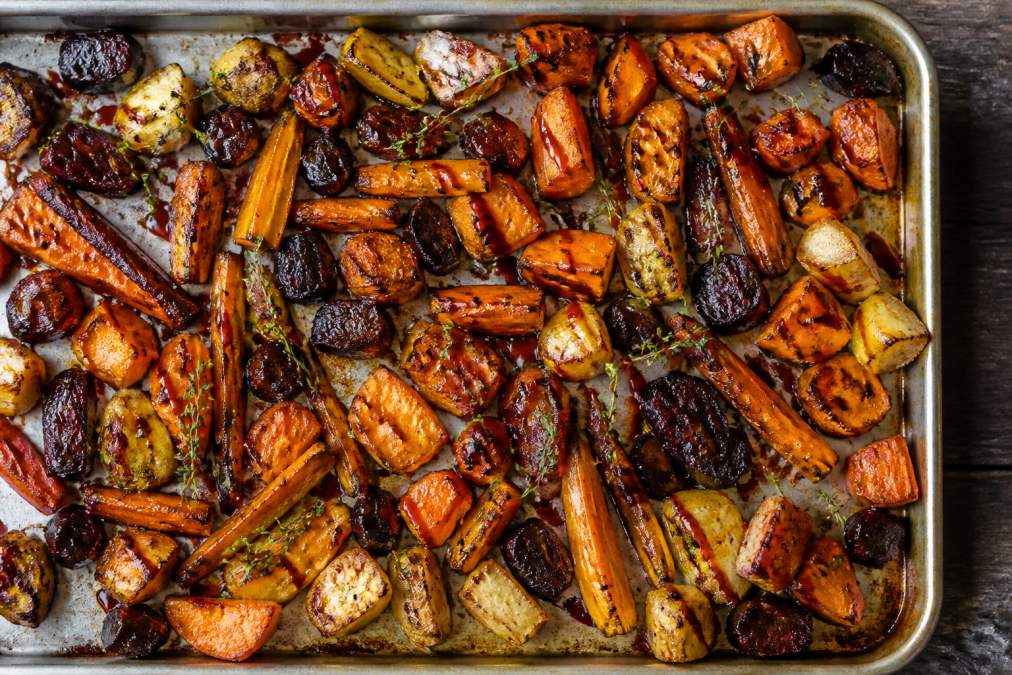
Creating the Maillard reaction for deeper flavour
The Maillard reaction occurs when proteins and sugars interact at temperatures above 140°C, creating hundreds of new flavour compounds and characteristic brown colour (peer-reviewed research on the Maillard reaction).
To maximize this reaction, ensure vegetables have adequate surface area. Pat vegetables dry before roasting; moisture interferes with browning. Use a glaze with sufficient sugar content. Acidic glazes slow browning slightly, but the trade-off is worth it, the acid prevents over-caramelization and burning, allowing deeper, more complex flavours to develop.
Balsamic reduction, maple syrup, and alternative glazes
Balsamic reduction represents simplicity at its finest. Simmer balsamic vinegar until it reduces by half, concentrating flavours and thickening to perfect glaze consistency. Brush on vegetables in the final 10 minutes of roasting.
Maple syrup glazes work best with autumn vegetables like butternut squash, Brussels sprouts, and parsnips. Add a pinch of cayenne or smoked paprika for warmth.
Spicy Rye's Bourbon & Honey BBQ Sauce offers sophistication with bourbon complexity and honey caramelization. Their Cognac & Honey Pepper Sauce brings refinement that makes simple roasted vegetables taste restaurant-quality. The Lemon Pepper Sauce leads with brightness and heat, working beautifully with vegetables that benefit from acidity.

Experiment with combinations. A base of honey mixed with Spicy Rye's Chipotle Vinegar creates a glaze that's sweet, smoky, and tangy all at once.
Glazing roasted vegetables transforms them from side dish to centrepiece. The technique is straightforward, but results depend entirely on understanding how heat, sugar, and acid interact. Start with proper timing, balanced glaze ratios, and the right vegetables, then use premium condiments to push beyond the basics. The difference between competent and exceptional roasted vegetables often comes down to the glaze you choose. Shop now and discover how the right sauce transforms your vegetables.
Frequently Asked Questions
What is a good glaze for oven roasted vegetables?
A good glaze balances sweetness, acidity, and heat. Honey mixed with vinegar creates a classic base, the acid prevents excessive sweetness whilst the honey aids caramelisation. For spiced versions, try Hot Honey Pepper Sauce (£6.95) or Honey & Lemon Pepper Sauce (£6.95), which combine honey with pepper for depth. The key is achieving the right viscosity: thick enough to coat, thin enough to drizzle. Most glazes work best when applied halfway through roasting to allow proper caramelisation without burning.
How long should you roast vegetables before applying a glaze?
Roast vegetables for 15-20 minutes at 200°C before applying glaze, depending on size. Root vegetables like carrots and parsnips need longer; tender varieties like courgettes and peppers need less. Apply the glaze in the final 10-15 minutes of roasting, allowing it to caramelise and stick without burning. This timing ensures vegetables are partially cooked and the glaze has time to develop flavour and colour without charring.
Can I use spicy sauces to glaze roasted vegetables?
Yes, spicy sauces work excellently as glazes. Smoky Chipotle BBQ Sauce (£7.95) adds depth, whilst Cognac & Honey Pepper Sauce (£6.95) brings sophistication. Thinner sauces may need reducing on the hob first to achieve proper glaze consistency. Brush them onto vegetables in the final stages of roasting. If using vinegar-based sauces like Jalapeño or Chipotle Vinegar (£6.95 each), dilute slightly with honey or oil to prevent excessive acidity and improve adhesion to the vegetables.
What's the secret to preventing burnt glaze on roasted vegetables?
Apply glaze only in the final 10-15 minutes of roasting, not at the start. Use medium-high heat (180-200°C) rather than very high temperatures. Sugar in glazes caramelises quickly, so timing is critical. Watch vegetables closely during the final minutes, they should turn golden brown, not black. If glaze appears to be darkening too fast, lower the oven temperature by 20°C or move the sheet pan to a lower rack position where heat is less intense.
This article was written using GrandRanker