
Last Updated: October 23, 2026
Quick Summary
The best aromatics for poaching chicken breasts are bay leaf, peppercorns, fresh thyme, rosemary, parsley stems, ginger, lemongrass, citrus zest and garlic, added to the liquid before the meat goes in. Start with two bay leaves and one teaspoon of black peppercorns per litre for a clean base, then build in fresh herbs or ginger and lemongrass depending on the dish.
- Season the poaching liquid before the pan goes on the heat so the aromatics infuse as the water warms.
- Keep the liquid at a bare simmer and pull the chicken at 74°C in the thickest part.
- Large breasts need 18-22 minutes and smaller fillets 12-15 minutes, followed by a 5-minute rest off the heat.
- Use three or four thyme sprigs, one rosemary sprig and parsley stems from a small bunch per litre.
- Add lemon zest in the last five minutes because it loses its brightness if it simmers throughout.
Table of Contents
- Why Aromatics Make or Break Poached Chicken
- How to Poach Chicken Breasts Without Drying Them Out
- The Best Aromatics for Poaching Chicken Breasts, Ranked
- Building the Right Poaching Liquid for Chicken
- How Long to Poach Chicken Breast (and How to Check Doneness)
- How to Flavour Chicken Breast Beyond the Poaching Pot
- Aromatic Combinations by Flavour Profile
- Conclusion
- Frequently Asked Questions
Why Aromatics Make or Break Poached Chicken
Poaching is the gentlest way to cook chicken, and the least forgiving if you skip the aromatics.
At Spicy Rye's, we cook with aromatics constantly, and we have a simple rule: the poaching liquid is a stock in waiting, so treat it like one.
Most guides list herbs without saying how much to use, when to add them, or which survive a gentle simmer.
How to Poach Chicken Breasts Without Drying Them Out
The technique matters more than any single herb. Chicken breast is lean and dries out fast above a gentle simmer, so keep the liquid at a bare tremble and pull the chicken at 74°C in the thickest part. That temperature removes the guesswork most guides leave to vague timing.
Here is the method we use:
- Start cold. Place the breasts in a single layer in a pan just wide enough to hold them, then cover with cold water or light chicken stock.
- Season the liquid. Add salt and your chosen aromatics before the pan goes on the heat, so they infuse as the water warms.
- Bring to a bare simmer. Small bubbles should break the surface occasionally, not constantly. If the surface is churning, the heat is too high.
- Cook gently. Large breasts need 18-22 minutes; smaller fillets 12-15 minutes. Treat these as a window, not a guarantee.
- Check the centre. Use a digital thermometer and look for 74°C in the thickest part. If you do not have one, slice into the thickest breast: the meat should be opaque all the way through with no pink and juices running clear.
- Rest off the heat. Take the pan off the hob and let the chicken sit in the liquid for 5 minutes before slicing.
For extra insurance on texture, brining chicken before cooking is worth the extra step, and it pairs well with poaching.
Step by Step: From Cold Water to Resting Board
Cold water start, seasoned liquid, gentle heat, then a rest in the pan. The cold start heats the chicken gradually with the liquid, keeping the outside from tightening before the centre cooks through, and resting off the heat finishes the job without extra heat.
Use enough liquid to cover the breasts by about 2cm: too little and the top dries, too much and you dilute the aromatics. A pan that holds the breasts in a single snug layer needs less liquid than a wide one.
Why the Simmer Matters More Than the Timer
A rolling boil contracts the muscle fibres and squeezes out moisture, which is why boiled chicken tastes dry even when safely cooked.
Thickness, not weight, decides timing: a thick breast and a thin fillet can weigh the same and need very different times, so check the centre rather than the clock. As official food safety guidance sets out, poultry should be cooked thoroughly until steaming hot all the way through, with no pink meat and juices running clear (Cooking your food).
Overcooking is the usual failure, not undercooking. Set a timer for the lower end of the range and check early. If the chicken is not there yet, give it another two minutes and check again rather than walking away.
The Best Aromatics for Poaching Chicken Breasts, Ranked
These are ranked by flavour delivered per effort, judged for chicken breast. The best aromatics for poaching chicken breasts are bay leaf and black peppercorns for a clean base, then fresh thyme, rosemary and parsley stems for depth, then ginger and lemongrass for lift.
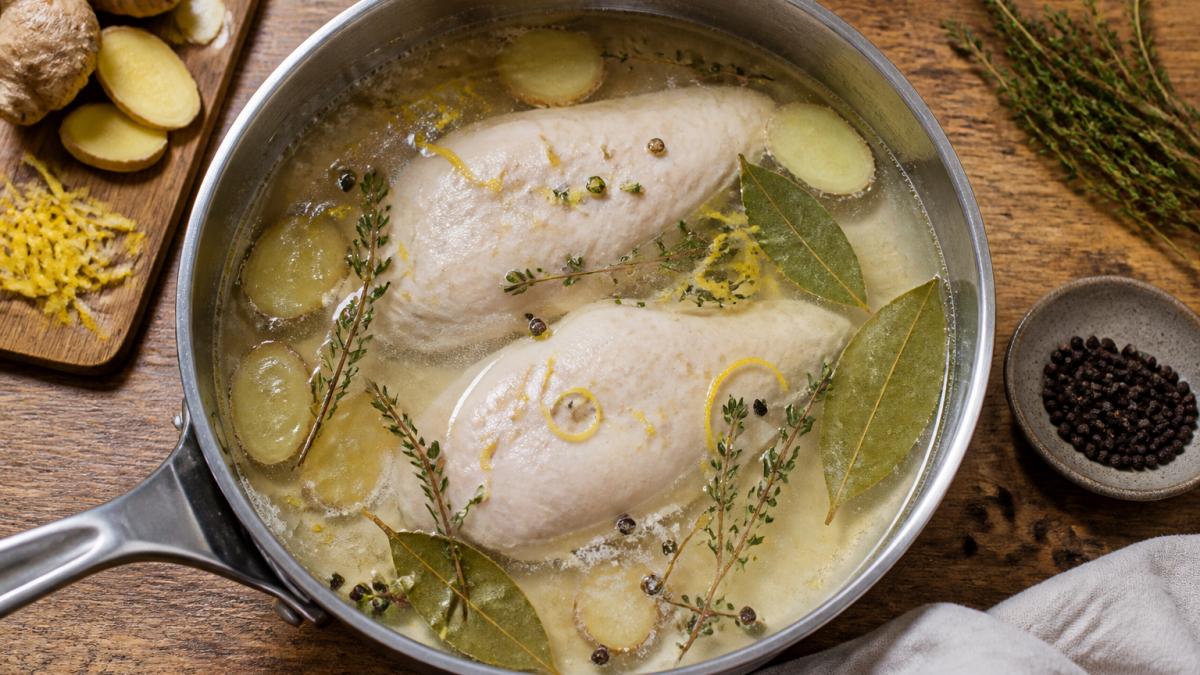
1. Bay Leaf and Black Peppercorns
The foundation pair. Use two bay leaves and one teaspoon of black peppercorns per litre of water, both added at the cold start; peppercorns need the warm-up to release their oils, and dried bay holds up to a long simmer. The result is a savoury, faintly floral base that suits any dish, and the safest choice when you do not know yet what the chicken will become.
2. Fresh Thyme, Rosemary and Parsley Stems
Herbaceous and rounded, this trio is the one we reach for most. Use three or four thyme sprigs, one rosemary sprig and the stems from a small bunch of parsley per litre, adding the thyme and rosemary at the cold start and the parsley stems in the last ten minutes. For that garlic-and-herb profile without tying bundles, a garlic and herb blend does the same job in a pinch.

3. Fresh Ginger, Lemongrass and Spring Onion
This Cantonese-inspired direction is best when the chicken is heading for noodles, rice or a cold salad. Use a 3cm piece of ginger sliced into coins, one lemongrass stalk bruised with the back of a knife, and two spring onions halved, all per litre, added at the cold start. Bruising lemongrass is not optional; unbruised stalks release almost nothing. For a cold salad, fish out the lemongrass after 15 minutes so it does not turn the liquid bitter.
4. Lemon Zest, Coriander Stalks and Garlic
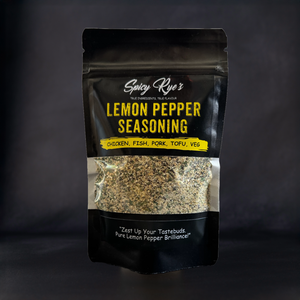
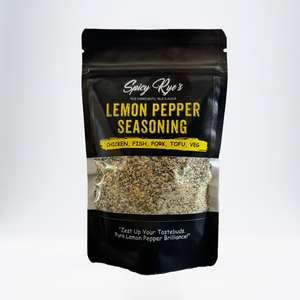
Bright and punchy. Use two strips of lemon zest, a small handful of coriander stalks and two crushed garlic cloves per litre, adding the garlic and coriander stalks at the cold start and the zest in the last five minutes; zest loses its brightness if it simmers throughout. For a ready-made version of this citrus-garlic profile, our lemon pepper seasoning covers similar ground.

5. Fennel Seed and Star Anise
Use sparingly. Half a teaspoon of fennel seed and one star anise per litre give a subtle aniseed sweetness that suits a warm salad or grain bowl. Add both at the cold start but fish the star anise out after 10 minutes; it turns bitter if left for the full poach. Try it once before committing a whole batch.
How to Choose Between Them
Match the aromatic to the final dish. For a sandwich or mayonnaise-based salad, lead with bay and peppercorns so the flavour stays clean. For a pie or roast-style dinner, the thyme and rosemary trio carries better.
Experienced cooks build the liquid in two layers: sturdy aromatics at the cold start, delicate ones late, so the broth tastes seasoned throughout without any single ingredient dominating.
Building the Right Poaching Liquid for Chicken
A good poaching liquid is lightly salted water or stock plus aromatics, and nothing else that fights the chicken. Use roughly 1 teaspoon of salt per litre, or light chicken stock with less salt.
Water versus stock is a real decision. Water lets the aromatics lead; stock adds body but can mask delicate herbs like tarragon.
Add dried herbs at the start so they have time to soften and release.
How Long to Poach Chicken Breast (and How to Check Doneness)
Large breasts need 18-22 minutes at a bare simmer, smaller fillets 12-15 minutes, followed by a 5-minute rest off the heat. Timing depends on thickness, not weight, so always check the centre.
Use a digital thermometer and look for 74°C in the thickest part.
Overcooking is the usual failure, not undercooking. Set a timer for the lower end of the range and check early.
How to Flavour Chicken Breast Beyond the Poaching Pot
Poaching gives you a seasoned base, not a finished dish. The chicken comes out gently flavoured, so the seasoning you add afterwards does most of the heavy lifting. That is where poached chicken beats every other method: it is a blank canvas that has not been seared, charred or sauced into a corner.
Our guide to making chicken flavourful for meal prep goes deeper on this, but the short version is: season after, and season boldly.
Seasonings That Work With Poached Chicken
- Smoky and citrusy: a chicken rub with paprika and lemon zest, rubbed on while the meat is still warm so it sticks.
- Herb-forward: garlic and herb blends sprinkled over sliced chicken for sandwiches and salads.
- Peppery and clean: a salt and triple pepper blend for a sharp finish that cuts through mayonnaise-based salads.
A ready-made chicken seasoning is the fastest route if you are short on time. Warm chicken absorbs more seasoning than cold, so apply it within ten minutes of lifting the meat out of the pot.

Aromatic Combinations by Flavour Profile
Match the aromatics to where the chicken is going.
| Flavour profile | Aromatics | Best for |
|---|---|---|
| Clean and savoury | Bay leaf, black peppercorns, onion | Sandwiches, salads, soup |
| Herbaceous | Thyme, rosemary, parsley stems | Roast-style dinners, pies |
| Bright and citrusy | Lemon zest, coriander stalks, garlic | Wraps, grain bowls |
| Warm and aromatic | Ginger, lemongrass, spring onion | Noodles, rice, Asian-style salads |
| Sweet aniseed | Fennel seed, star anise | Warm salads, couscous |
Fresh versus dried is the other decision. Dried bay, oregano and thyme hold up well in a long poach; fresh tarragon, basil and dill fade fast and are better added late or used raw as a garnish. When in doubt, dried for the pot, fresh for the plate.
Conclusion
The difference between dull poached chicken and chicken you look forward to eating comes down to a handful of aromatics and a gentle hand on the heat.
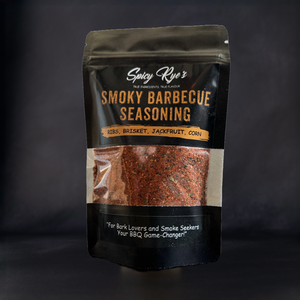
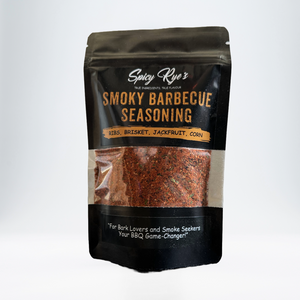
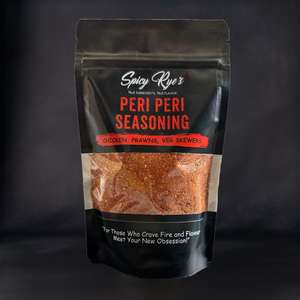
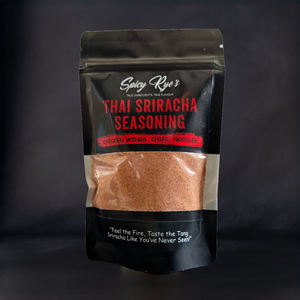
At Spicy Rye's, we make seasonings built for exactly this: finishing plain, gently cooked chicken with real flavour. Our range is crafted with premium ingredients and spans from fiery heat to smoky sweetness, so a poached breast never has to stay plain.
Frequently Asked Questions
Which herbs are best for poaching chicken?
Thyme and bay leaf are the most reliable workhorses because they hold their flavour through a long, gentle simmer. Rosemary adds a piney depth but can overpower delicate fillets, so use one sprig per two breasts. Parsley stems, tarragon and oregano work well in shorter poaches. Dried herbs are fine too: use roughly a third of the fresh quantity and add them at the start so they have time to infuse the poaching liquid for chicken.
How long should chicken breasts poach?
A large breast of around 200g needs roughly 15 to 18 minutes in liquid held at about 80C, just below a simmer. Smaller fillets take 10 to 12 minutes. The reliable test is internal temperature: 75C in the thickest part. Take the pan off the heat and let the breasts rest in the liquid for five minutes, which finishes the cooking gently and keeps them moist. Overcooking is the main reason poached chicken turns dry.
Can you poach chicken with ginger and spring onion?
Yes, and it is one of the best combinations for poaching chicken breasts. Slice a thumb of fresh ginger and bruise three or four spring onions, then add them to the water with a splash of rice vinegar and a pinch of salt. This Cantonese-inspired base gives a clean, savoury flavour that suits noodles, rice bowls and salads. Add lemongrass if you want a brighter, citrusy edge. Strain the liquid afterwards and keep it for a second poach.
Should you add lemon to poaching liquid?
A little lemon zest works better than juice. Zest carries the citrus oils that infuse into the liquid without dropping the pH too far, which can make the outside of the chicken firm up. If you only have juice, add a tablespoon near the end of cooking. For a stronger citrus hit, pair zest with black peppercorns and a bay leaf, then finish the cooked chicken with a squeeze of fresh lemon just before serving.
How can you make poached chicken taste less bland?
Two things matter: season the liquid properly with salt, roughly 10g per litre of water, and give the aromatics time to infuse before the chicken goes in. Simmer the liquid for five minutes first, then lower the heat and add the breasts. After poaching, pat the chicken dry and finish it with a seasoning blend, a drizzle of chilli vinegar or a herb oil. Poached chicken is a blank canvas, so the flavour you add afterwards counts as much as the pot.